
Security
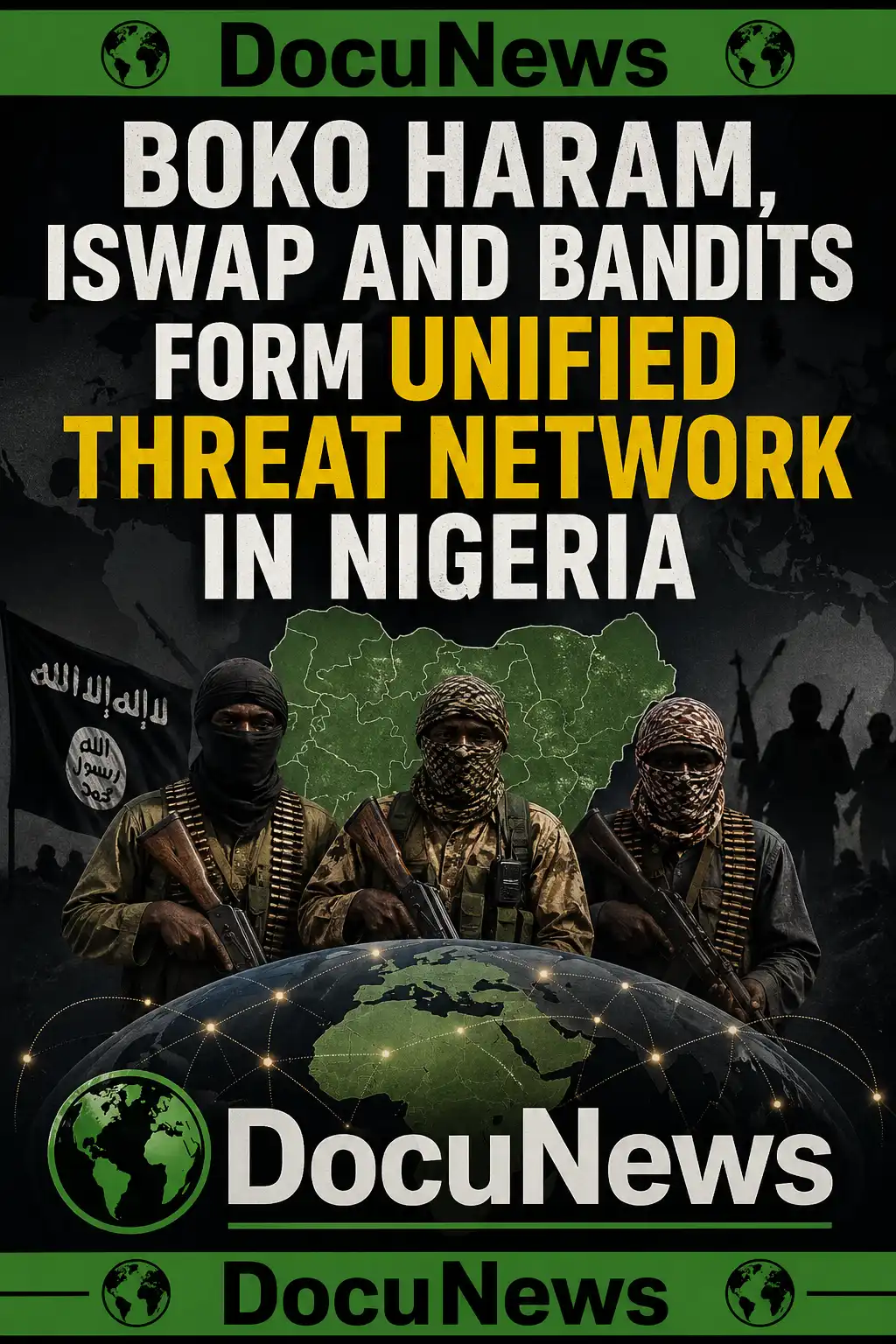
Boko Haram, ISWAP and Bandits Form Unified Threat Network in Nigeria

By Jonadab | DocuNews Central | April 29, 2026
Security developments across Nigeria have triggered renewed concern as emerging reports indicate a possible operational convergence between Boko Haram, ISWAP, and armed bandit groups. Consequently, analysts now describe the situation as a “unified threat network” rather than separate insurgent and criminal entities. Furthermore, intelligence assessments suggest that these groups increasingly share logistics, tactics, and territorial advantages across northern corridors.
Moreover, security observers highlight that this alignment does not necessarily indicate a formal merger. Instead, it reflects tactical cooperation driven by survival interests, financial incentives, and weakened rural governance structures. In addition, multiple field reports indicate overlapping attacks in remote communities where coordination appears more synchronized than in previous years.
On April 2026, in parts of Northern Nigeria including border regions around Borno, Yobe, and Zamfara, security monitoring teams recorded increased cross-group activity. Although no official declaration confirms a unified command structure, intelligence trends strongly suggest operational coordination between insurgent factions and armed bandit networks during this period. Therefore, authorities continue to intensify surveillance across high-risk zones.
What Happened?
Security intelligence indicates that Boko Haram, ISWAP, and armed bandit groups have increasingly aligned their operations. Additionally, field analysts report shared movement patterns, overlapping supply routes, and coordinated attacks in vulnerable rural settlements. Consequently, the distinction between ideological insurgency and financially driven banditry continues to blur.
Furthermore, reports suggest that these groups now exploit similar safe havens in forested regions and borderlands. As a result, coordinated strikes on villages, highways, and isolated communities have become more frequent. In contrast to earlier years, these incidents now show signs of timing synchronization and tactical support among different armed factions.
In addition, intelligence sources emphasize that communication channels between these groups appear more fluid. Consequently, small-scale negotiations and temporary alliances have replaced previously rigid ideological separations. Meanwhile, security agencies continue to investigate the depth of this cooperation.
Also read Boko Haram Burns Village Near Sambisa, Several Killed
Where Did It Happen?
The developments primarily affect Northern Nigeria, especially the North-East and North-West regions. In particular, states such as Borno, Yobe, Katsina, Zamfara, and parts of Kaduna have reported overlapping incidents involving insurgent and bandit groups.
Moreover, rural border corridors near Nigeria’s frontier with Niger, Chad, and Cameroon continue to serve as strategic movement routes. Therefore, these locations allow armed groups to evade security pressure while maintaining logistical flexibility.
Additionally, forest reserves and hard-to-access terrains provide operational cover. Consequently, communities near these areas face increased vulnerability due to limited security presence and difficult surveillance conditions.
Who Is Involved?
Boko Haram remains one of the primary insurgent groups active in Nigeria, with a long history of violent attacks and ideological militancy. Meanwhile, ISWAP, a splinter faction, continues to operate with distinct leadership structures while maintaining similar insurgent objectives.
In addition, armed bandit groups operate largely from economic motivations, focusing on kidnapping, cattle rustling, and extortion. However, recent intelligence suggests increasing tactical cooperation between these criminal networks and insurgent organizations.
Furthermore, local communities, security forces, and humanitarian agencies remain indirectly involved as victims, responders, and monitors of the evolving crisis. Consequently, the security landscape now demands multi-layered response strategies.
Rising Security Concerns
Moreover, analysts warn that the convergence of these groups increases operational complexity for Nigerian security agencies. As a result, traditional counter-insurgency strategies may require significant adaptation. Additionally, joint intelligence coordination has become more critical than ever.
Furthermore, humanitarian organizations report growing displacement in affected regions. Consequently, thousands of civilians continue to move from rural communities toward safer urban centers. Meanwhile, access to farming land and essential services continues to decline.
In contrast to earlier years, attacks now appear more coordinated and less isolated. Therefore, security experts argue that Nigeria faces a hybrid threat combining ideological insurgency and profit-driven banditry.
Government and Security Response
Security agencies continue to expand military operations across affected states. Additionally, joint task forces have intensified patrols along key transit routes. Consequently, authorities aim to disrupt communication and supply networks used by these armed groups.
Moreover, regional cooperation between Nigeria and neighboring countries has increased intelligence sharing. Therefore, cross-border monitoring efforts now play a central role in countering militant movements.
However, experts stress that long-term solutions require more than military intervention. Instead, they emphasize governance reform, rural development, and community engagement as essential components in reducing recruitment and influence.
Expert Analysis and Outlook
Security analysts suggest that the evolving relationship between Boko Haram, ISWAP, and bandit groups reflects adaptive survival strategies. Consequently, fragmented groups now prioritize collaboration over competition in certain operational environments.
Furthermore, experts caution that this trend may complicate future peace-building efforts. In addition, the overlap between ideological insurgency and criminal enterprise makes negotiation frameworks more complex.
Nevertheless, analysts maintain that improved intelligence coordination and sustained regional cooperation could help contain the threat. Therefore, strategic investment in surveillance technology and rural stabilization remains critical.
External References
For further context on Nigeria’s security landscape, readers can consult:
In conclusion, the emerging pattern of cooperation among Boko Haram, ISWAP, and armed bandit groups signals a shift in Nigeria’s security dynamics. Consequently, authorities now face a more complex and interconnected threat environment that continues to evolve across multiple regions.
