
Security
Notorious Bandit Commander Killed by Troops in Zamfara Raid

By Jonadab | April 30, 2026 | DocuNews Central
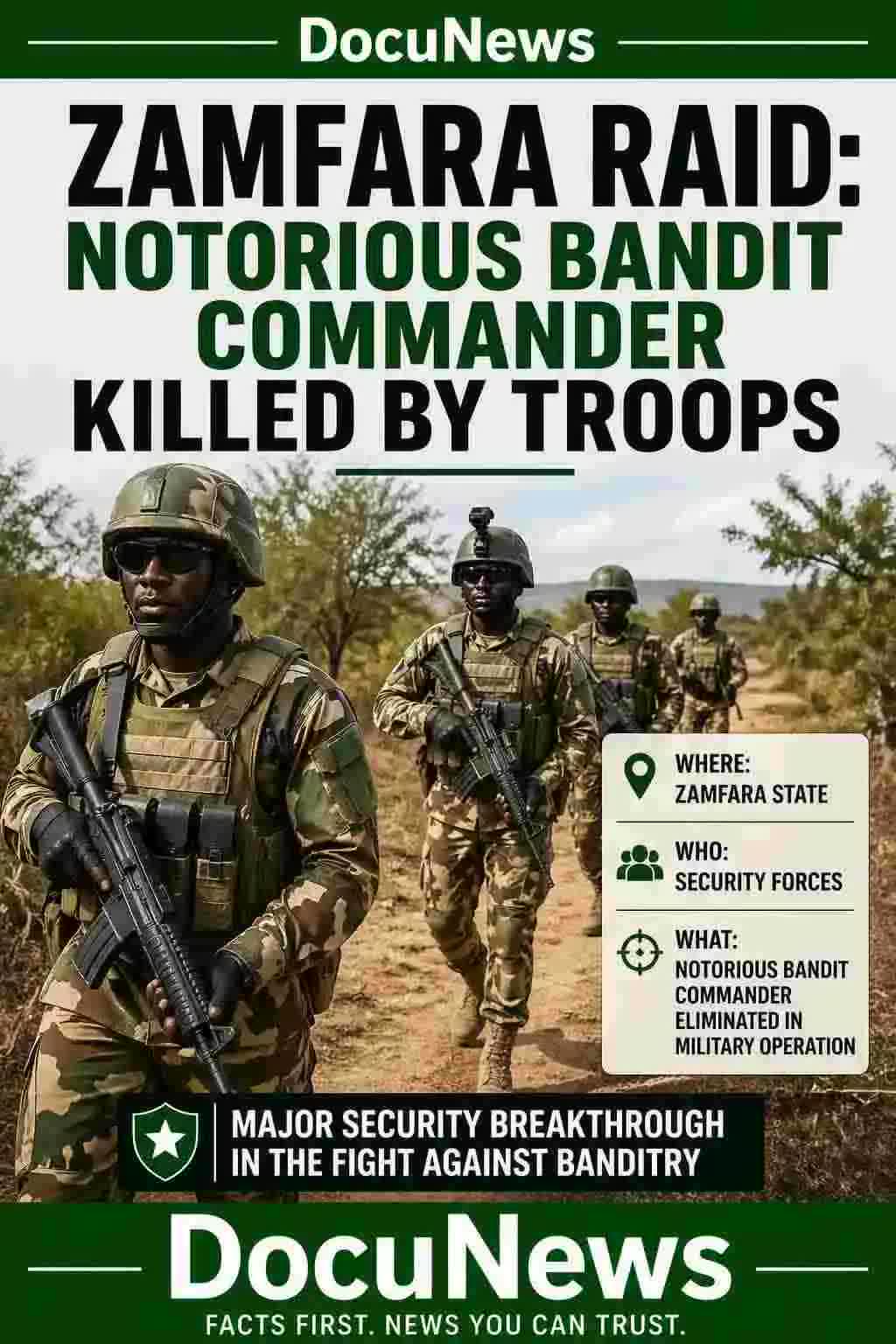
Notorious Bandit Commander Killed Zamfara by Nigerian Troops during a targeted raid linked to ongoing counter-banditry efforts. The development marks another escalation in military pressure across the Zamfara axis.
Reports indicate the operation was driven by actionable intelligence. As a result, troops engaged the armed group in a coordinated assault. Consequently, the commander was neutralised during the encounter.
The incident is linked to recent military operations across Zamfara and neighbouring states. On March 9, 2026, a similar offensive led to the killing of a feared commander identified as Alti, who operated along the Gusau–Funtua corridor in northwestern Nigeria.
Also read Police Sack ASP Ogbegbe, Move to Prosecute Over Misconduct
What Happened?
Troops launched a precision raid targeting a known bandit stronghold. Shortly after, a gun battle broke out between security forces and armed fighters. As a result, the notorious commander was killed on the spot.
The operation followed intelligence reports on bandit movements. In response, troops advanced into the area and executed a coordinated strike. Therefore, the mission achieved its primary objective.
Security sources described the operation as a major tactical success. Notably, the commander had been linked to multiple kidnapping operations and violent attacks across the region. His death is expected to weaken ongoing criminal activities.
Where Did It Happen?
The operation took place in Zamfara State, a region widely affected by armed banditry. Specifically, the raid targeted areas connected to the Gusau–Funtua corridor, a known hotspot for criminal operations.
Over time, the region has experienced repeated attacks on villages and highways. As a result, security forces have intensified operations across forested zones and rural settlements.
In addition, Zamfara shares borders with Katsina and Sokoto states. Therefore, many bandit groups operate across these interconnected territories, complicating security responses.
Who Is Involved?
The operation involved troops of the Nigerian Army and associated security units. These forces have been conducting sustained offensives under ongoing counter-banditry missions.
The killed commander was identified as a high-ranking figure within bandit networks. According to intelligence sources, he coordinated kidnappings, ambushes, and ransom operations across multiple states.
Furthermore, the commander reportedly controlled several operational bases. From these locations, fighters carried out attacks on civilians and key transport routes.
Security analysts say such figures often act as financial coordinators. In many cases, they manage ransom negotiations and logistics for armed groups.
Operational Impact and Security Context
The killing is expected to disrupt bandit operations in the short term. In particular, networks linked to the commander may face leadership gaps. As a result, coordination of attacks could weaken.
However, experts warn that bandit groups often reorganise quickly. Therefore, sustained military pressure remains essential to prevent regrouping.
In recent months, troops have increased operations across the northwest. For instance, earlier offensives targeted camps in Tsafe Local Government Area, leading to significant casualties among fighters.
Meanwhile, coordinated assaults have also resulted in the recovery of weapons and dismantling of hideouts. These actions form part of broader efforts to restore security in affected communities.
Pattern of Banditry in Zamfara
Zamfara remains one of the most affected states in Nigeria’s security crisis. Armed groups frequently carry out kidnappings, cattle rustling, and village raids.
In many cases, victims are held for ransom. Consequently, communities face both economic and psychological pressure.
Additionally, bandit leaders often establish camps in forest areas. These locations provide cover and mobility, making them difficult to target.
Despite these challenges, military operations have continued to record periodic successes. Notably, previous raids have eliminated multiple high-profile commanders and disrupted supply chains.
Military Strategy and Intelligence Operations
The latest raid highlights the growing role of intelligence in military operations. Increasingly, security forces rely on surveillance and local information to track targets.
As a result, operations are becoming more precise. This approach reduces collateral damage while improving mission outcomes.
Moreover, collaboration with local communities has improved intelligence gathering. Residents often provide timely reports on suspicious movements.
Therefore, community engagement remains a critical component of counter-banditry strategy.
Regional Security Implications
The northwest region continues to face interconnected security threats. Bandit groups operate across state borders, complicating enforcement efforts.
However, recent operations suggest increased coordination among security agencies. Joint efforts have targeted key routes and strongholds.
Consequently, there is growing pressure on armed groups. Yet, sustained operations will be required to maintain progress.
Security experts emphasise the need for long-term solutions. These include economic development, improved policing, and regional cooperation.
Outlook
The killing of the notorious commander marks a significant milestone. However, it represents only one phase in a broader security campaign.
Going forward, continued operations will be necessary to dismantle remaining networks. In addition, authorities are expected to intensify surveillance across known hotspots.
Ultimately, the success of these efforts will depend on sustained coordination. Both military action and community support will play key roles in restoring stability.
For more verified security updates, visit Security updates Nigeria Vanguard Nigeria and Punch Nigeria.
