
Breaking news
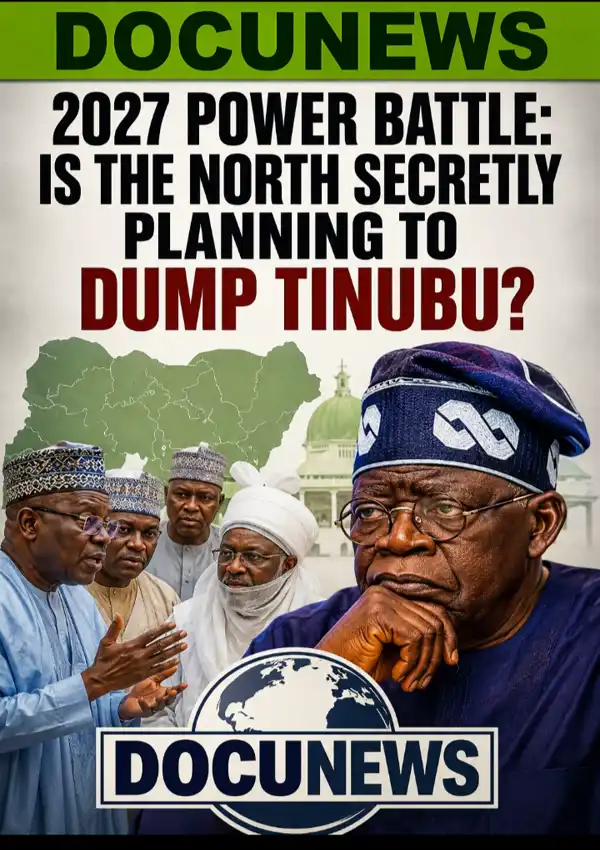
2027 Power Battle: Is the North Secretly Planning to Dump Tinubu?

By Jonadab | Published by DocuNews Central
2026-05-28T14:30:00+01:00
Nigeria’s political landscape has entered another tense phase as discussions about the 2027 presidential election continue to grow across the country. Several opposition politicians and former allies of President Bola Tinubu have intensified consultations ahead of the next general election. As a result, fresh questions have emerged about whether key northern political figures are preparing to withdraw support from the president. The question 2027 Power Battle: Is the North Secretly Planning to Dump Tinubu?
Political meetings, coalition talks, and public statements from opposition leaders have increased in recent months. Consequently, analysts now believe that the battle for power ahead of 2027 has already started. According to DocuNews Central, conversations within major political camps now focus heavily on regional alliances, economic concerns, and voter dissatisfaction.
On April 25, 2026, opposition leaders gathered in Ibadan, Oyo State, where they discussed plans to support a single candidate against President Tinubu in the 2027 election. The meeting involved several political figures from both northern and southern Nigeria. According to reports, the leaders agreed that a united opposition could increase their chances against the ruling All Progressives Congress, APC.
Read Also NDC Opens Path for Peter Obi’s 2027 Presidential Ambition
Opposition Coalition Gains Attention Across Nigeria
Former Vice President Atiku Abubakar remains one of the leading figures behind the opposition coalition movement. In addition, former Kaduna State governor Nasir El-Rufai and Labour Party figure Peter Obi have also participated in discussions aimed at building a broader political alliance.
According to reports published by multiple Nigerian and international media organizations, the coalition seeks to prevent opposition vote division in 2027. The alliance also hopes to present a stronger challenge to President Tinubu and the APC.
Reports from Channels Television stated that opposition politicians agreed during a summit in Ibadan to work toward presenting a single presidential candidate for the next election cycle. The discussions reportedly focused on avoiding fragmented votes. According to DocuNews Central, this strategy resembles the coalition model that defeated the Peoples Democratic Party in 2015.
Furthermore, former Senate President David Mark and other senior politicians have openly supported coalition discussions. Some politicians within the opposition argue that Nigeria needs a broader alliance because of current economic and security challenges affecting many parts of the country.
What Happened?
Several opposition leaders have formed political alliances and consultation groups ahead of the 2027 election. These groups aim to challenge President Tinubu and the APC. Political meetings involving Atiku Abubakar, Peter Obi, Nasir El-Rufai, Rotimi Amaechi, and other senior politicians have already taken place in Abuja and Ibadan.
In addition, public disagreements inside the ruling party have raised questions about political unity ahead of the election. Some northern politicians have expressed concerns about economic hardship, insecurity, and political appointments under the current administration.
However, no official northern political bloc has publicly declared support withdrawal from President Tinubu. Therefore, many of the ongoing discussions remain political speculation and coalition positioning ahead of the campaign season.
Where Did It Happen?
The coalition meetings and political consultations mainly took place in Abuja and Ibadan. However, political negotiations continue across northern and southern Nigeria as politicians hold private consultations ahead of 2027.
Several reports also indicate that political discussions are ongoing in Kaduna, Kano, Lagos, Rivers, and other major states where influential political stakeholders maintain strong structures.
Who Is Involved?
The major figures linked to the growing opposition consultations include former Vice President Atiku Abubakar, Peter Obi, Nasir El-Rufai, Rotimi Amaechi, Babachir Lawal, and former Senate President David Mark.
President Bola Tinubu and the APC leadership also remain central to the political developments. APC National Chairman Abdullahi Ganduje has repeatedly dismissed claims that the coalition can defeat the ruling party.
According to DocuNews Central, several northern governors and political stakeholders are carefully watching the coalition discussions before making any public commitments.
Economic Hardship Continues to Shape Political Debate
Economic conditions remain one of the biggest issues shaping political conversations across Nigeria. Since fuel subsidy removal and currency reforms began under President Tinubu’s administration, many Nigerians have complained about rising food prices, transport costs, and inflation.
Although the federal government insists that the reforms are necessary for long-term recovery, opposition politicians continue to criticize the economic impact on ordinary citizens. Consequently, economic hardship has become a major talking point ahead of the 2027 election.
According to international reports, analysts believe economic frustration could influence voter behavior during the next presidential election. However, the presidency maintains that the administration inherited serious economic problems that require difficult reforms.
Presidential spokesman Bayo Onanuga recently defended the administration and criticized opposition politicians. He accused some coalition figures of pursuing personal political ambitions rather than national interests.
Security Concerns Also Remain Central
Security challenges across parts of northern Nigeria continue to influence political discussions. Bandit attacks, kidnappings, and insurgency-related violence remain major concerns in several states.
Opposition politicians have repeatedly accused the government of failing to adequately address insecurity. However, the federal government insists that military operations against criminal groups continue across affected regions.
According to DocuNews Central, insecurity remains one of the strongest issues capable of shaping voter sentiment ahead of 2027. Political observers also believe northern voters may prioritize security improvements during future campaign discussions.
Is the North Truly Planning to Dump Tinubu?
At the moment, there is no official declaration showing that northern political leaders have abandoned President Tinubu. Nevertheless, several developments suggest that political calculations are already changing ahead of the election.
Some northern politicians who previously supported the APC have openly joined opposition meetings. Others have criticized federal policies publicly. As a result, political speculation about possible regional realignments continues to grow.
Still, analysts caution that northern politics remains highly complex. The region does not vote as a single political bloc. Different states and political interests often support different candidates during elections.
Furthermore, President Tinubu still maintains strong political structures across several northern states through APC governors, lawmakers, and party officials. Therefore, claims that the North has fully turned against him remain unconfirmed.
APC Responds to Coalition Threats
APC leaders have continued to dismiss the growing opposition coalition. Abdullahi Ganduje recently stated that the coalition lacks the political strength needed to defeat President Tinubu.
According to reports, APC officials believe the ruling party still maintains a strong grassroots structure across Nigeria. They also argue that opposition leaders remain divided by personal ambitions and internal disagreements.
Reuters recently reported that internal disputes affected parts of the opposition alliance after Peter Obi and Rabiu Kwankwaso reportedly distanced themselves from coalition arrangements involving the African Democratic Congress, ADC. The development raised fresh concerns about opposition unity.
Political analyst Cheta Nwanze stated that a fragmented opposition could weaken efforts to challenge the APC effectively in 2027. According to DocuNews Central, coalition stability may become one of the biggest deciding factors before the election.
Political Calculations Continue Ahead of 2027
Nigeria’s political environment remains fluid as consultations continue ahead of the election cycle. Many politicians are still weighing alliances, regional interests, and possible ticket arrangements.
Observers also note that several northern politicians may wait until closer to the election season before openly declaring their final political positions. Consequently, current coalition discussions may still change significantly over time.
President Tinubu also retains the advantage of incumbency. Historically, incumbents in Nigeria benefit from strong political networks, institutional influence, and party structures during elections.
However, opposition politicians believe economic hardship and public dissatisfaction could create opportunities for political change. Therefore, coalition talks are expected to continue throughout 2026 and beyond.
Public Reactions Continue Online
Public debate about the 2027 election continues heavily across Nigerian social media platforms and political forums. Some Nigerians believe the opposition needs unity to challenge the APC effectively. Others argue that the ruling party still maintains stronger political structures nationwide.
According to discussions observed on online political forums, opinions remain deeply divided among supporters of President Tinubu, Peter Obi, and Atiku Abubakar. Many citizens also continue to express concerns about insecurity, inflation, and unemployment.
According to DocuNews Central, online political discussions increasingly reflect broader frustrations over governance, economic conditions, and regional political competition ahead of the next election.
Authorities Continue Monitoring Political Activities
The Independent National Electoral Commission, INEC, has not yet officially opened the full campaign season for the 2027 election. However, political consultations and coalition meetings remain legal under Nigerian law.
Security agencies also continue monitoring political activities across the country as major parties prepare for future campaigns. Political observers expect consultations and defections to increase significantly over the next year.
Meanwhile, the presidency continues to defend its economic and security policies while opposition figures intensify criticism of the administration. According to DocuNews Central, the political battle ahead of 2027 may become one of Nigeria’s most competitive elections in recent history.
As coalition talks continue, Nigerians are expected to watch closely for official endorsements, party defections, and possible candidate announcements from both the APC and opposition camps.
Sources of information for this report include: Reuters, Associated Press, Channels Television, BusinessDay Nigeria, THISDAY, Leadership Newspaper, Legit.ng, and Independent Newspaper Nigeria.
Additional reporting and compilation by DocuNews Central.