
Breaking news
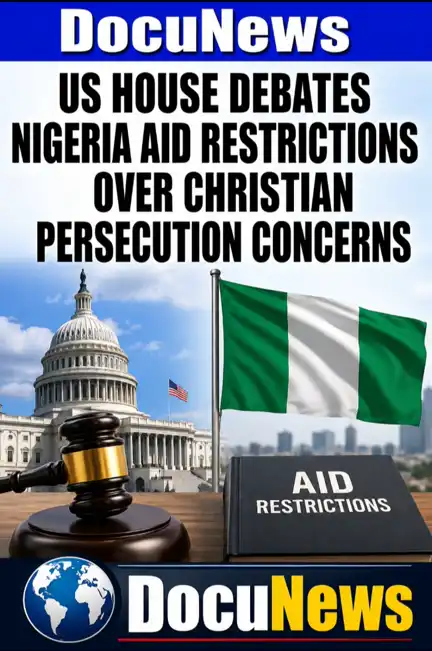
US House Debates Nigeria Aid Restrictions Over Christian Persecution Concerns

Date: July 16, 2026
WASHINGTON, D.C., United States — The issue of religious freedom in Nigeria has returned to the spotlight in the United States Congress as lawmakers continue discussion. Yes. US House Debates Nigeria Aid Restrictions Over Christian Persecution Concerns, a development that has drawn significant international attention. During the ongoing debate, members of the U.S. House of Representatives examined whether future American assistance to Nigeria should face new conditions over concerns relating to the safety and protection of Christian communities. According to DocuNews Central, the discussions have renewed global focus on religious violence, human rights, and the broader security challenges confronting Nigeria.
The debate comes at a time when Nigeria continues to battle insecurity across several regions. Consequently, lawmakers argued that U.S. foreign policy should reflect America’s commitment to defending religious freedom worldwide. At the same time, several members stressed the importance of maintaining strong diplomatic relations with Nigeria while encouraging meaningful reforms that protect every citizen regardless of religious affiliation.
During the congressional discussions, supporters of the proposal expressed concern over reports of attacks on Christian communities in different parts of Nigeria. They argued that continued violence, displacement, and the destruction of places of worship deserve stronger international attention. Therefore, some lawmakers suggested that portions of U.S. assistance should become conditional upon measurable improvements in protecting vulnerable communities and ensuring accountability for perpetrators.
Furthermore, advocates of the proposal maintained that foreign assistance should promote democratic values, human rights, and religious liberty. They emphasized that American taxpayers expect foreign aid to encourage positive governance and stronger protection for civilians. As a result, they called for closer monitoring of how security assistance and development funding are utilized.
However, not every lawmaker supported imposing new restrictions. Instead, several representatives cautioned that limiting assistance could unintentionally weaken Nigeria’s ongoing efforts to combat terrorism, armed banditry, and violent extremism. They argued that Nigeria remains one of America’s most important security partners in Africa. Consequently, reducing support could affect intelligence cooperation, counterterrorism operations, and regional stability.
Also read Gunmen Attack Kwara Community, Abduct Two Victims
Several members also noted that Nigeria faces multiple security threats beyond religious violence. For example, terrorist groups, criminal gangs, kidnappers, and separatist violence continue to stretch the country’s security resources. Therefore, they argued that broader cooperation rather than stricter conditions may produce better long-term results.
Throughout the debate, lawmakers repeatedly referred to reports from religious freedom advocates, humanitarian organizations, and international monitoring groups. Those reports have documented attacks affecting various communities in different parts of Nigeria. Nevertheless, speakers emphasized the importance of relying on verified information before adopting significant foreign policy changes.
According to DocuNews Central, the congressional discussions are expected to continue as lawmakers examine available evidence, review existing U.S. assistance programs, and consult officials responsible for American foreign policy in Africa. Consequently, no immediate change has yet taken effect, although the debate itself signals growing concern within Washington over developments in Nigeria.
Foreign policy analysts believe the discussions could influence future diplomatic engagement between both countries. Moreover, they noted that congressional debates often shape broader policy directions even before legislation becomes law. Therefore, Nigerian officials will likely continue monitoring the proceedings closely.
The United States has historically provided Nigeria with various forms of assistance. These include humanitarian aid, healthcare support, agricultural development, education initiatives, economic partnerships, and security cooperation. In addition, both countries have collaborated on efforts aimed at countering terrorism and strengthening regional security across West Africa.
Because of that long-standing relationship, many experts argue that any adjustment to U.S. assistance would require careful consideration. While some believe stricter conditions could encourage reforms, others warn that sudden restrictions might affect ongoing development projects benefiting millions of Nigerians regardless of religion.
Human rights advocates welcomed the renewed attention to religious freedom issues. According to several observers, international scrutiny can encourage governments to strengthen law enforcement, improve judicial processes, and increase protection for vulnerable populations. Furthermore, they argued that accountability remains essential for preventing future attacks and restoring public confidence.
Meanwhile, diplomatic observers urged both governments to continue constructive engagement. They emphasized that sustained dialogue often produces more durable outcomes than confrontational approaches alone. Therefore, they encouraged continued cooperation on security, governance, economic development, and human rights.
Security experts also highlighted the complexity of Nigeria’s challenges. Although some attacks have clear religious dimensions, many incidents also involve disputes over land, criminal activity, ethnic tensions, terrorism, and competition for resources. Consequently, analysts cautioned against viewing every violent incident through a single lens.
Nevertheless, congressional supporters of the proposal insisted that documented attacks against Christian communities deserve serious international attention. They maintained that religious freedom remains a fundamental human right protected under international law. Therefore, they argued that stronger oversight of foreign assistance aligns with longstanding American values.
On the other hand, opponents maintained that partnership rather than punishment offers the best opportunity for lasting progress. They argued that Nigeria’s security institutions require additional resources, training, and intelligence cooperation instead of reduced assistance. Furthermore, they stressed that collaborative efforts have already produced important gains against several extremist organizations.
International relations specialists believe the debate may also influence conversations among other Western governments. Consequently, allies could examine their own policies toward Nigeria while monitoring developments in Washington. Even so, no coordinated international policy changes have been announced at this stage.
Nigerian authorities have consistently maintained that the government remains committed to protecting all citizens irrespective of religion, ethnicity, or background. Officials have also pointed to ongoing military operations, police deployments, intelligence efforts, and community engagement initiatives aimed at improving national security across affected regions.
According to DocuNews Central, many observers expect Nigerian officials to continue engaging American counterparts through diplomatic channels while emphasizing ongoing reforms and security operations. Likewise, policymakers in Washington are expected to seek additional briefings before reaching final decisions regarding any proposed aid conditions.
The debate has also generated widespread discussion among international religious organizations, foreign policy experts, and members of the Nigerian diaspora. Consequently, public interest continues to grow as stakeholders await further developments from Capitol Hill.
Although the outcome remains uncertain, analysts agree that the discussions underscore the strategic importance of Nigeria within U.S. foreign policy. As Africa’s most populous nation and one of its largest economies, Nigeria plays a critical role in regional security, economic growth, and diplomatic cooperation. Therefore, any significant policy adjustment could carry broader implications beyond bilateral relations.
For now, the congressional debate continues without a final resolution. Lawmakers are expected to review additional testimony, assess policy recommendations, and examine existing assistance programs before determining whether new legislative measures should advance. Until then, both governments are likely to maintain close diplomatic engagement while monitoring the evolving discussions.
According to DocuNews Central, the outcome of the debate could shape future conversations on U.S.–Nigeria relations, religious freedom, and international security cooperation. Regardless of the final decision, the proceedings have already placed renewed global attention on Nigeria’s security challenges and the continuing international call for stronger protection of all citizens, accountability for violence, and lasting peace across affected communities.
For more breaking news, please visit www.docunewscentral.com or Legit.ng