
Security updates Nigeria
Plateau Violence Escalates Despite Increased Military Presence

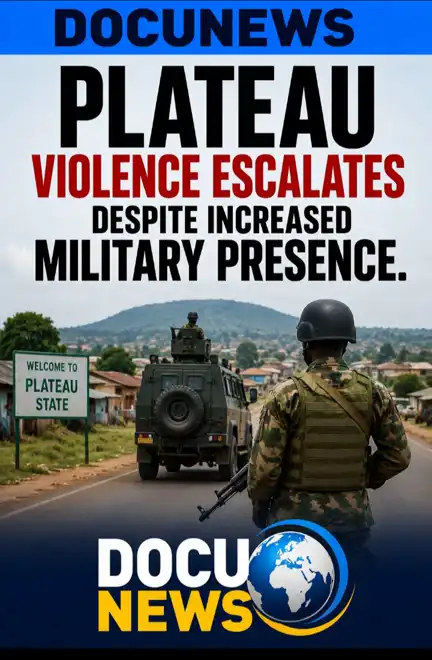
Date: July 15, 2026
Fresh violence has continued to spread across parts of Plateau State despite the increased deployment of security personnel, raising new concerns about the effectiveness of ongoing military operations. Several communities have reported renewed attacks, while residents continue to call for stronger protection and faster emergency responses. According to DocuNews Central, the latest developments have intensified public concern because many people expected the reinforced security presence to reduce the frequency of deadly incidents.
Location: Plateau State, Nigeria
Although security agencies have maintained an active presence in several parts of Plateau State, reports from affected communities indicate that attacks have continued in some areas. As a result, many residents have questioned why violence has persisted despite the deployment of additional troops and other security personnel. Furthermore, local leaders have continued to urge the government to strengthen preventive measures instead of relying only on responses after attacks occur.
The renewed violence has once again placed Plateau State at the center of Nigeria’s security challenges. Communities that have experienced repeated attacks now face fresh uncertainty, while families continue to worry about their safety. Consequently, many residents have limited movement, reduced farming activities, and avoided traveling to nearby villages because of growing fears.
According to information gathered by DocuNews Central, the latest incidents have renewed discussions about the overall security strategy in affected areas. While security forces continue to carry out patrols and operations, several observers believe that additional measures may be necessary to prevent further attacks before they occur. Therefore, many stakeholders have called for improved intelligence gathering, stronger cooperation with local communities, and quicker emergency responses whenever security threats emerge.
Security experts have repeatedly explained that troop deployment alone may not completely address complex security threats. Instead, they argue that intelligence plays a central role in identifying suspicious movements before attacks happen. Moreover, effective communication between security agencies and local communities often increases the chances of preventing violence. Because of this, several analysts have stressed the importance of expanding intelligence networks throughout vulnerable communities.
Community leaders have also emphasized the need for stronger collaboration between residents and security agencies. Many believe local information can help security personnel identify unusual activities much earlier. In addition, traditional rulers, youth leaders, religious organizations, and community associations can support peace efforts by encouraging residents to report suspicious movements immediately. Such cooperation may improve early warning systems and reduce future risks.
also read Top 10 Herbal Remedies in Nigeria | DocuNews Central
Meanwhile, humanitarian concerns continue to grow as more families struggle with the consequences of repeated violence. Some residents have reportedly left their homes in search of safer locations, while others now depend on relatives and community support for daily survival. Furthermore, many children have experienced interruptions to their education because insecurity has affected access to schools in several communities.
Healthcare services have also faced significant pressure. Medical workers in affected areas continue to respond to emergency situations while dealing with limited resources. Consequently, humanitarian organizations have continued to monitor developments closely. They have also appealed for additional support to assist vulnerable families whenever displacement occurs.
Economic activities have suffered another setback as insecurity continues to affect farming and local businesses. Farmers remain concerned about accessing their farmlands, especially during critical farming periods. Likewise, traders have experienced reduced commercial activities because many residents now avoid unnecessary travel. As a result, household incomes have declined in several communities that depend heavily on agriculture and local markets.
The continued violence has also affected public confidence. Many residents acknowledge the efforts of security personnel serving in difficult conditions. However, they continue to request stronger protection, quicker intervention, and more visible preventive measures. In addition, they believe security agencies should maintain regular engagement with community leaders to improve trust and information sharing.
Several security analysts have pointed to intelligence challenges as one of the major issues requiring urgent attention. They argue that successful security operations depend not only on manpower but also on timely, reliable, and actionable intelligence. Therefore, improving surveillance systems, expanding information networks, and increasing coordination among security agencies could strengthen ongoing operations.
Experts have also highlighted the importance of technology in addressing modern security threats. Surveillance equipment, communication systems, aerial monitoring, and data analysis can improve operational effectiveness when combined with community intelligence. Furthermore, continuous training for security personnel may enhance response capabilities during emergency situations.
Have you seen this Will the Killing of 300 Bandits End the Zamfara Crisis?
Community security remains another important area receiving attention. Local vigilance groups, when properly regulated and supervised by lawful authorities, may provide valuable support through information sharing and neighborhood awareness. Nevertheless, security experts continue to stress that all community security initiatives should operate within the law and under appropriate government oversight.
The humanitarian impact of the violence extends beyond immediate physical damage. Families affected by repeated attacks often experience emotional trauma, financial hardship, and long-term uncertainty. Children may struggle to continue their education, while elderly residents often require additional care and support. Consequently, humanitarian assistance remains an important part of recovery efforts alongside security operations.
Religious leaders, civil society organizations, and peace advocates have continued to encourage dialogue among communities. They believe peaceful coexistence remains essential for long-term stability. At the same time, they have urged all parties to reject violence and cooperate with lawful authorities whenever security concerns arise.
Government officials have repeatedly stated their commitment to restoring lasting peace across Plateau State. Security agencies have also continued various operations aimed at protecting lives and property. Nevertheless, many observers believe consistent evaluation of existing strategies will remain necessary as security conditions continue to evolve.
According to DocuNews Central, many Nigerians are closely monitoring developments because Plateau State has experienced recurring security challenges over the years. Citizens across the country continue to hope that stronger intelligence coordination, improved community engagement, and sustained security operations will gradually reduce violence and restore lasting stability.
Furthermore, policy experts believe that long-term peace will require more than military deployments alone. They recommend combining effective intelligence, economic development, community reconciliation, justice, and humanitarian support into one coordinated strategy. Such an approach may address both immediate security threats and some of the underlying factors that contribute to recurring violence.
As investigations into the latest attacks continue, authorities are expected to review available intelligence and assess operational responses. Meanwhile, affected communities continue to appeal for greater protection, rapid humanitarian assistance, and lasting peace. They also hope future security efforts will prevent additional attacks instead of responding after violence has already occurred.
The situation remains closely watched because every new development carries significant implications for security, humanitarian conditions, and public confidence. Therefore, security agencies, government officials, humanitarian organizations, and community leaders are expected to continue working together in pursuit of sustainable peace.
You may have missed this Nigerian Troops Arrest Four Suspects Over Kumm Village Attack in Plateau
According to DocuNews Central, the coming days will likely determine whether strengthened intelligence efforts, improved community cooperation, and sustained security operations can slow the cycle of violence and provide affected residents with the stability they urgently seek.
For All security Updates please visit Security updates Nigeria or www.saharareporters.com