
Israeli-Iran-U.S War
How Many Iranian Commanders Have The Israeli Air Force Eliminated?

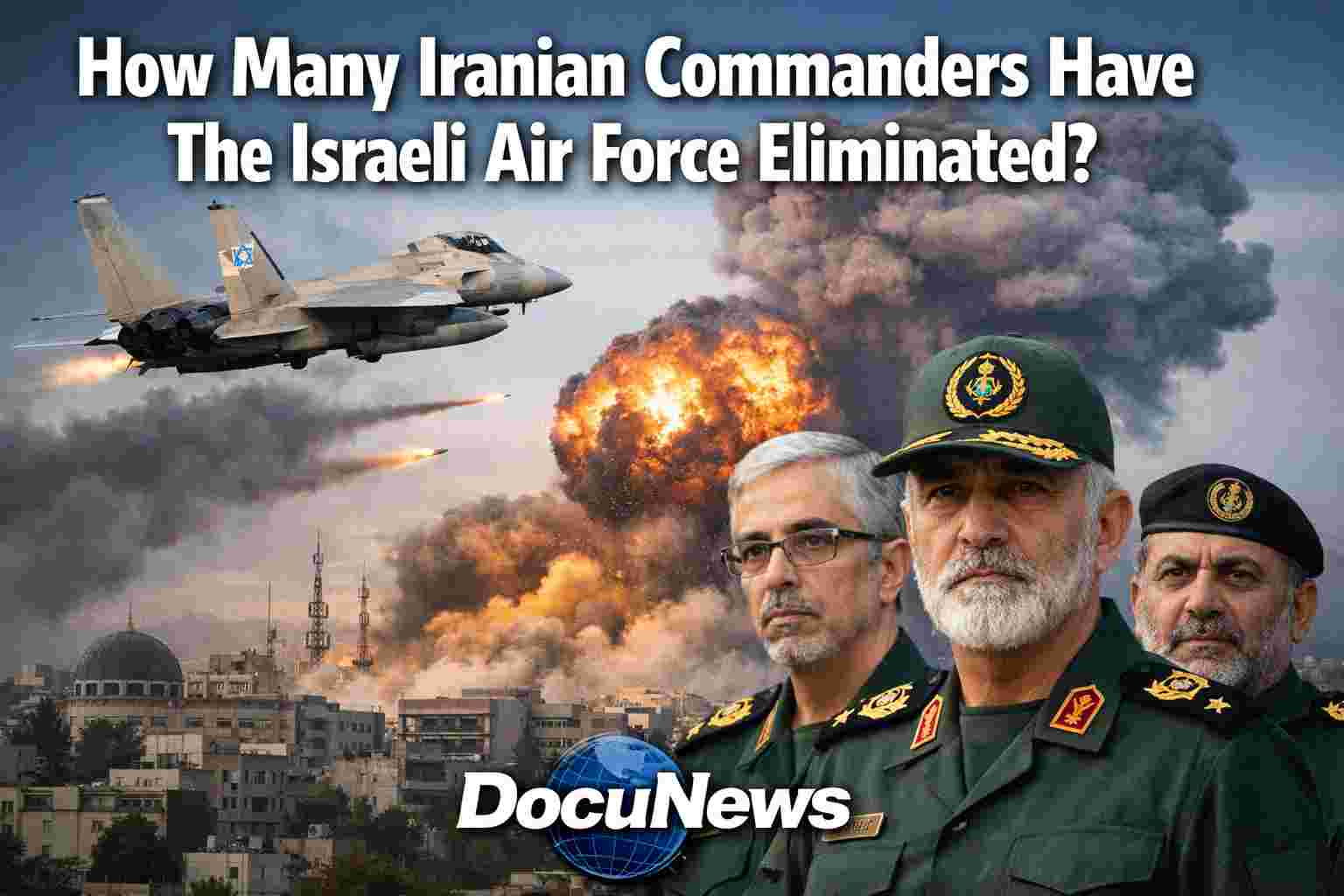
The question dominating global headlines right now is clear and direct: How many Iranian commanders have the Israeli Air Force eliminated? Since March 1, 2026, reports from multiple international outlets, military briefings, and intelligence updates have pointed to a dramatic escalation between Israel and Iran. The Israeli Air Force (IAF), operating in coordination with advanced intelligence systems and reportedly with U.S. support, launched precision airstrikes targeting Iran’s senior military leadership. According to official Israeli Defense Forces statements and international reporting that is available with DocuNews Central, at least 40 senior Iranian commanders were eliminated in the opening phase of the operation. Some U.S. sources later suggested that as many as 48 top Iranian leaders, including military officials, died in the strikes. These numbers continue to shape global security discussions.
According to DocuNews Central, the operation began on March 1, 2026, with primary targets located in Tehran, Iran, although additional strategic sites across multiple cities were reportedly hit. Military briefings indicated that Israeli fighter jets conducted simultaneous strikes against high-level command facilities, security compounds, and strategic coordination centers. The goal, according to Israeli officials, focused on disrupting Iran’s military command structure and weakening its ability to coordinate missile and drone responses. As a result, the reported elimination of dozens of senior commanders marked one of the most consequential military decapitation strikes in modern Middle East history.
Moreover, the scale and precision of the assault surprised many defense analysts. Within minutes, multiple command hubs were struck. Consequently, the leadership losses appeared to occur almost simultaneously. This development amplified the significance of the numbers now circulating in global media.
Read also Reasons Why US and Israel Are Attacking Iran – Full Details
Breaking Down the Confirmed Figures
So far, the most widely cited figure remains 40 senior Iranian commanders eliminated during the initial wave of Israeli air operations. Israeli military officials described the strike as a coordinated effort to neutralize Iran’s upper command tier in one decisive action. In addition, U.S. officials later referenced a broader figure of 48 Iranian leaders killed, although that total appears to include both military and political figures.
It is important to separate the categories. The confirmed number directly tied to Iranian military commanders stands at approximately 40. Meanwhile, the larger figure includes additional leadership roles that extend beyond strictly military command positions. Therefore, when answering the headline question, the most accurate response based on available information remains: At least 40 Iranian commanders have been eliminated by the Israeli Air Force since March 1, 2026.
Furthermore, defense analysts caution that casualty figures in active conflict zones often evolve. Verification requires time. Intelligence agencies continue to cross-check names and ranks. Nevertheless, multiple credible sources have consistently repeated the 40-commander figure, strengthening its reliability.
How the Israeli Air Force Conducted the Operation
The operational structure of the Israeli Air Force played a critical role in achieving such a high-level impact. First, intelligence gathering identified key locations where senior Iranian commanders convened. Then, advanced surveillance technology tracked movements and communications. Afterward, Israeli fighter jets launched precision-guided munitions designed to minimize collateral damage while maximizing strategic effect.
Notably, reports indicate that the operation unfolded in under one minute during its opening strike phase. Simultaneous targeting ensured that senior officials could not coordinate an immediate response. As a result, Iran’s central military command structure reportedly suffered instant disruption.
Additionally, electronic warfare systems likely suppressed portions of Iran’s air defense network. This allowed Israeli aircraft to strike deep inside Iranian territory with limited interception. Consequently, the rapid success of the mission stunned military observers worldwide.
You may have missed this Kuwait Air Defense Systems Destroy Dozens Of Iranian Missiles and Hundreds of Drones
Who Were the Iranian Commanders Reportedly Eliminated?
While complete independent verification remains ongoing, several high-ranking officials have been widely reported among those killed. These include top figures within Iran’s Armed Forces and the Islamic Revolutionary Guard Corps (IRGC). Among the names mentioned in international coverage:
- Abdolrahim Mousavi – Chief of Staff of Iran’s Armed Forces.
- Mohammad Pakpour – Senior IRGC commander.
- Aziz Nasirzadeh – Iran’s Defense Minister.
- Additional high-ranking intelligence and defense research officials.
Each of these individuals played a central role in shaping Iran’s military doctrine, missile development, and regional operations. Therefore, their elimination represents more than a statistical milestone. It signals a structural shift within Iran’s defense hierarchy.
Furthermore, the removal of experienced leadership creates operational gaps. Military institutions rely heavily on continuity and institutional memory. When multiple senior commanders disappear simultaneously, strategic coordination becomes more difficult.
Why These Numbers Matter Globally
The elimination of approximately 40 Iranian commanders does not exist in isolation. Instead, it directly affects regional security calculations. First, Iran must rapidly appoint replacements. Second, those replacements must rebuild coordination systems under active pressure. Third, regional actors adjust their strategies based on perceived Iranian vulnerability.
At the same time, global energy markets reacted sharply. Oil prices fluctuated due to fears of expanded conflict. International shipping routes faced heightened risk assessments. Therefore, the number of commanders eliminated carries economic consequences beyond military strategy.
Moreover, diplomatic tensions escalated. Several countries called for emergency United Nations meetings. Others issued statements condemning the escalation. Meanwhile, some Western governments defended Israel’s right to preemptive action. As a result, the broader geopolitical environment became more volatile.
Iran’s Immediate Response
Following the strikes, Iran launched missile and drone barrages targeting Israeli territory and regional military installations. Iranian state media described the retaliation as proportional and justified. However, the loss of numerous senior commanders reportedly slowed the coordination of Iran’s initial counter-strike.
Additionally, Iran announced interim appointments to fill leadership vacancies. These emergency promotions aimed to stabilize the command chain. Nevertheless, rebuilding a disrupted military hierarchy requires time, especially during active hostilities.
Therefore, while Iran responded militarily, the internal restructuring process remains ongoing.
Strategic Impact on the Balance of Power
Eliminating 40 senior Iranian commanders alters strategic calculations throughout the Middle East. First, it weakens Iran’s immediate command efficiency. Second, it signals Israel’s capability to penetrate heavily defended airspace. Third, it raises deterrence stakes across the region.
Furthermore, regional rivals observe the precedent. Precision strikes targeting leadership structures represent a high-risk, high-impact strategy. If replicated elsewhere, such tactics could redefine modern warfare in the region.
Consequently, military planners worldwide are analyzing the operation carefully.
Information Verification and Reporting Challenges
In any active conflict, information spreads quickly but verification moves slower. Governments release figures to shape narratives. Independent journalists require access. Intelligence leaks emerge gradually. Therefore, while the 40-commander figure appears consistent across several reports, analysts continue monitoring updates.
Moreover, some discrepancies arise when differentiating between “commanders,” “leaders,” and “officials.” Clear terminology ensures accurate public understanding. For now, the most defensible and frequently repeated figure remains approximately 40 Iranian commanders eliminated by Israeli airstrikes beginning March 1, 2026.
DocuNews Central Opinion
From the perspective of DocuNews Central, the elimination of roughly 40 Iranian commanders represents one of the most consequential military actions in recent Middle Eastern history. The precision, timing, and scope of the operation demonstrate a shift toward leadership-targeted warfare. However, long-term regional stability remains uncertain.
While the immediate tactical success is evident, broader diplomatic fallout continues to unfold. Regional actors now reassess alliances. Energy markets monitor supply disruptions. International institutions attempt de-escalation efforts. Therefore, although the numerical figure answers today’s headline, its ripple effects will likely influence geopolitical dynamics for years.
Conclusion
To answer the headline clearly and directly: At least 40 Iranian commanders have been eliminated by the Israeli Air Force since March 1, 2026. Additional claims expand the figure to 48 Iranian leaders when including non-military officials. However, the core confirmed number of senior military commanders remains approximately 40.
These events have reshaped the strategic environment across the Middle East. Furthermore, they have intensified global diplomatic tensions and economic uncertainty. As verification efforts continue and both sides adapt, the confirmed elimination of dozens of top Iranian commanders stands as a defining development in the ongoing conflict.
For more updates on the Current situation is middle East war, Visit Israeli-Iran War here at DocuNews Central