
World
Massive Overnight Blasts: US-Israel Strikes Hit Tehran and Karaj Oil Depots

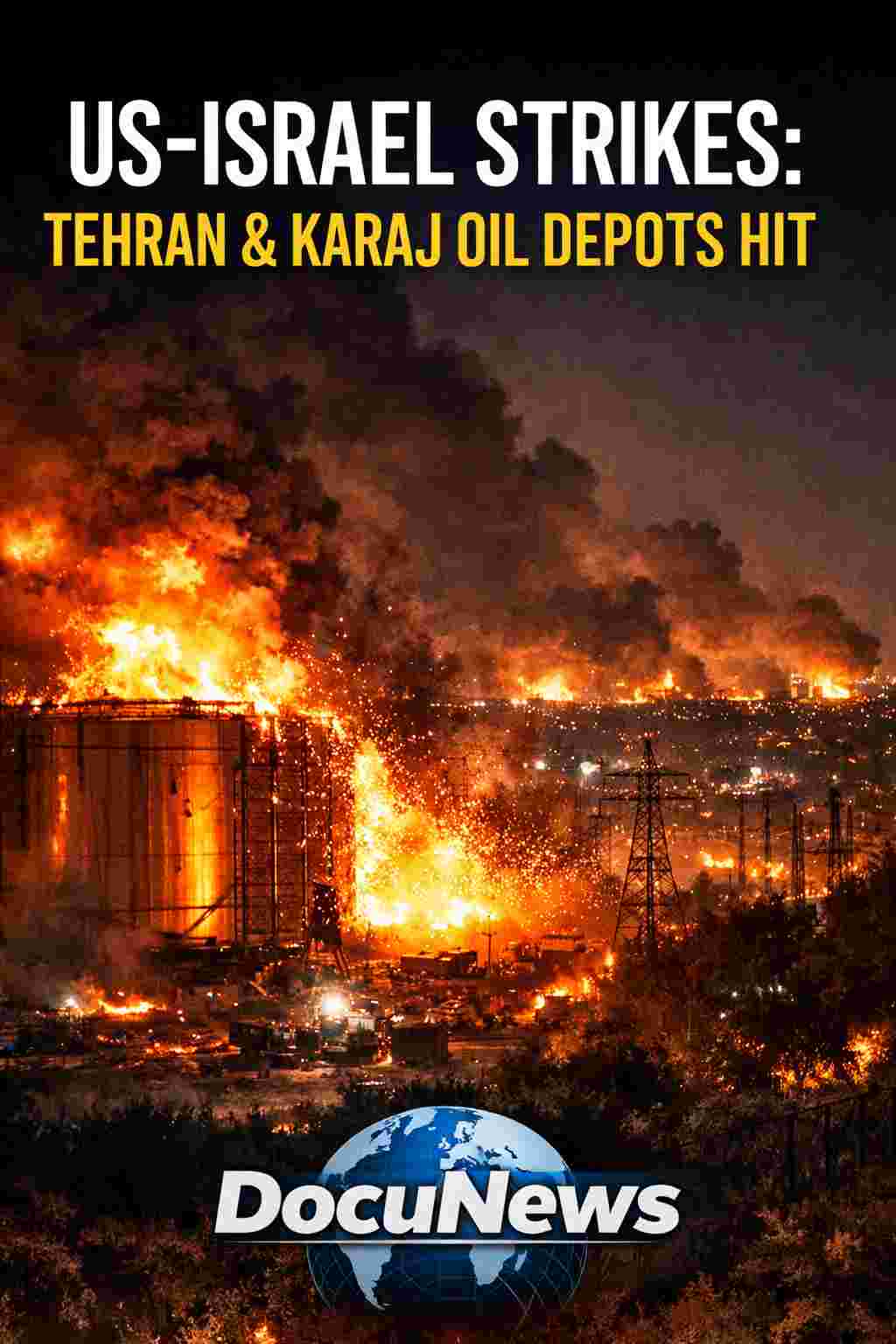
US-Israel strikes Tehran oil depots have triggered global alarm after powerful overnight explosions reportedly damaged key fuel storage facilities in Iran. The dramatic escalation has intensified fears of a wider Middle East conflict and raised fresh concerns about global energy security.
According to Docunews Central, In the early hours of March 9, 2026, multiple explosions were reported near strategic oil depots located in Tehran and the nearby city of Karaj. According to preliminary reports, the attacks were carried out during a coordinated overnight assault attributed to United States and Israeli forces. Fires erupted at several fuel storage tanks, sending massive plumes of smoke into the sky and creating scenes of panic across nearby neighborhoods.
Oil depots serve as critical infrastructure within Iran’s energy network. These facilities store large quantities of crude oil and refined petroleum products that support transportation, electricity generation, and industrial production across the country. Damage to such sites could disrupt fuel distribution networks and place additional pressure on an economy already affected by sanctions and geopolitical tensions.
Iranian authorities later acknowledged that several facilities suffered damage, although a full assessment of the destruction remains ongoing. Emergency crews were deployed immediately to contain fires and prevent additional explosions while investigators began evaluating the scale of the attack.
Also Read Night Attack: Iranian Drone Hits Radar Tower at US Base in Kuwait.
How the US-Israel Strikes Hit Tehran Oil Depots Overnight
Residents of Tehran and Karaj described terrifying moments when explosions shattered the silence of the night. Many people were asleep when the blasts occurred, prompting families to rush outside their homes in confusion and fear.
Eyewitnesses reported hearing multiple detonations in quick succession before flames erupted from fuel storage areas. Within minutes, emergency sirens echoed across nearby districts as firefighters and rescue crews rushed toward the affected facilities.
Several residents said the blasts shook nearby buildings, while others described seeing bright flashes in the sky followed by towering flames rising from the oil depots. Thick black smoke could reportedly be seen from miles away.
Images circulating on social media appeared to show massive fires burning inside industrial zones, illuminating the night sky with intense orange light. Some residents compared the scenes to an industrial disaster, saying the explosions briefly turned night into day.
Why the Tehran and Karaj Oil Depots Were Strategic Targets
The oil depots in Tehran and Karaj play a vital role in Iran’s domestic fuel distribution system. These facilities store petroleum products that are transported across the country through pipelines, tanker trucks, and rail networks.
Tehran, the capital city, is a major economic hub where fuel supplies support millions of residents, transportation networks, and countless industries. Karaj, located just west of Tehran, has grown into a major industrial and residential center, making it an important logistical location for energy storage.
Military analysts note that targeting fuel storage facilities can create logistical challenges without necessarily destroying oil production capacity. Such attacks can disrupt transportation networks and complicate the movement of petroleum products across the country.
According to analysis from the International Energy Agency, disruptions to energy infrastructure can significantly impact national supply chains, especially in countries heavily dependent on oil revenue.
Panic and Disruption Among Local Communities
The explosions triggered immediate panic among residents living near the affected areas. Many families evacuated their homes overnight, fearing that additional blasts might occur.
Traffic increased across several districts as residents attempted to leave the vicinity of the fires. Authorities urged citizens to avoid the affected industrial zones while emergency crews worked to contain the situation.
The fires generated intense heat and thick smoke that spread across surrounding neighborhoods. Some residents reported smelling burning fuel in the air, raising concerns about air quality and public safety.
Local businesses were also impacted. Several shops closed early as owners prioritized safety amid uncertainty about the scale of the destruction.
International Reactions to the Tehran Oil Depot Attack
The reported US-Israel strikes Tehran oil depots quickly became a major topic of international debate. Governments and diplomatic organizations around the world began monitoring the situation closely.
Some countries expressed concern that attacks on critical infrastructure could escalate tensions across the Middle East. Others emphasized the need for restraint and urged all parties to avoid further military confrontation.
Major international news organizations such as BBC News and Al Jazeera have been closely tracking developments and providing ongoing updates.
Security analysts warn that incidents involving strategic energy infrastructure can alter geopolitical calculations and influence diplomatic relations between multiple countries.
Global Oil Markets React to US-Israel Strikes in Iran
Energy markets responded quickly to reports of the attacks. Oil prices are highly sensitive to geopolitical developments, particularly when they involve key producing regions or major transportation routes.
Disruptions affecting Iran’s oil infrastructure could potentially influence global supply expectations. Even temporary logistical challenges can create uncertainty in energy markets.
Market analysts cited by Reuters Energy noted that geopolitical tensions involving oil-producing countries often trigger short-term price volatility.
If the damage to storage facilities significantly affects distribution networks, Iran may face logistical hurdles in maintaining stable domestic fuel supply.
Economic Impact of the US-Israel Strike on Iran’s Oil Infrastructure
The economic consequences of the strikes could extend far beyond the immediate destruction caused by the explosions. Iran’s economy relies heavily on its oil sector, which generates significant government revenue and supports numerous industries.
Damage to storage facilities and distribution networks can disrupt fuel logistics and increase operational costs for the energy sector. Repairs to such infrastructure may require substantial financial resources and technical expertise.
Industries dependent on fuel supplies—including transportation, manufacturing, and agriculture—could face temporary disruptions if distribution networks are affected.
Conclusion
The reported US-Israel strikes Tehran oil depots represent a major escalation in regional tensions. The attacks have damaged critical energy infrastructure, triggered panic among residents, and drawn intense international attention.
As emergency crews continue managing the aftermath and investigators assess the full scale of the destruction, global leaders are closely watching how the situation unfolds.
The consequences of these events could extend far beyond Iran’s borders, potentially affecting global energy markets, geopolitical alliances, and regional security dynamics.
Frequently Asked Questions
Why were Tehran and Karaj oil depots targeted?
The oil depots are key fuel storage and distribution centers in Iran’s energy infrastructure, making them strategic targets during military operations.
Did the US and Israel confirm the strikes?
Official confirmations vary depending on the sources reporting the incident, and investigations into the full details of the strikes are still ongoing.
Will the strikes affect global oil prices?
Any disruption to Middle East oil infrastructure can influence global energy markets and potentially lead to price volatility.
What is the strategic importance of Iran’s oil depots?
Oil depots store petroleum products used for domestic consumption and export. Damage to these facilities can disrupt fuel distribution and energy stability.
Could the attacks escalate regional conflict?
Analysts warn that strikes targeting critical infrastructure could trigger retaliatory actions and increase tensions across the Middle East.
Disclaimer
The information presented in this article is based on currently available reports and may change as new details emerge. Readers are encouraged to consult multiple reliable news sources for ongoing updates.
