
Israeli-Iran-U.S War
Iran Hit Israeli Military Headquarter, US Bases in Sixth Retaliatory Wave- Full Details & Updates

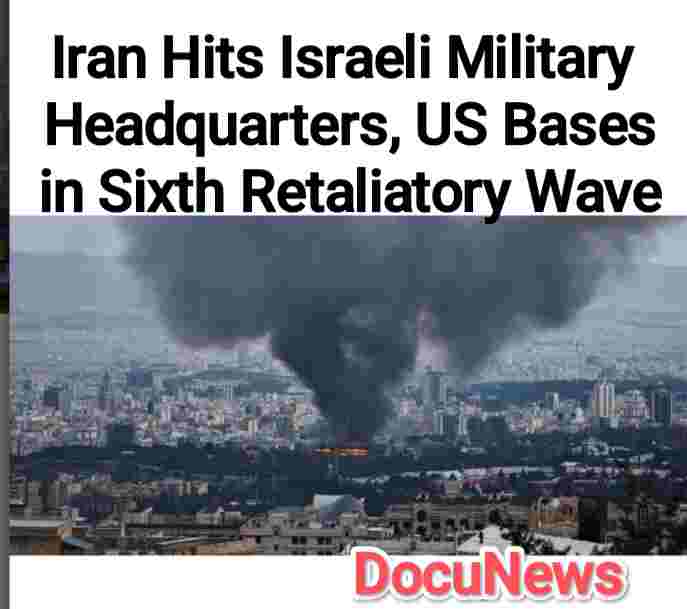
Iran Hit Israeli Military Headquarter, US Bases in Sixth Retaliatory Wave has became the dominant global headline on March 1, 2026, after Tehran confirmed a coordinated barrage targeting Israeli military command structures and American installations across the Middle East. According to Docunews Central, the operation followed the confirmed death of Supreme Leader Ayatollah Ali Khamenei in a joint United States and Israel strike inside Iran. As tensions intensified across the region, search engines recorded rising interest in keywords such as Iran strikes Israel, US bases targeted by Iran, sixth retaliatory wave, and Ayatollah Khamenei death. The escalation marked a decisive shift in regional security dynamics and signaled a volatile new chapter in Middle East geopolitics.
The critical events unfolded between February 28 and March 1, 2026. Iranian state media confirmed the death of Ayatollah Ali Khamenei in Tehran following coordinated strikes reportedly conducted by the United States and Israel. Within hours of the announcement, missile sirens sounded in Tel Aviv as Iranian forces launched what officials described as the sixth retaliatory wave. United States military bases in Iraq and Syria reported defensive interceptions soon afterward, confirming the broad geographic scope of the confrontation.
As soon as this happened, Governments across the Middle East immediately tightened security. Airspace restrictions followed. Military commanders convened emergency meetings. Financial markets reacted within hours. Oil prices surged amid fears of supply disruption. Meanwhile, citizens across the region watched developments with concern as political leaders attempted to contain the situation. The central question driving global discussion remains direct and unavoidable: who killed Ayatollah Ali Khamenei, and how will Iran’s sixth retaliatory wave reshape regional power structures?
Read also Who Killed Iranian Leader Ayatollah Ali Khamenei?
Who Killed Ayatollah Ali Khamenei?
Iranian authorities confirmed that a precision strike targeted high-level facilities in Tehran, killing the Supreme Leader alongside senior military officials. Iranian leadership publicly accused Israel and the United States of orchestrating the operation. But Washington rejected direct involvement in assassination claims, while Israeli officials avoided detailed public confirmation. However, security analysts suggest that the strike bore the hallmarks of coordinated intelligence planning and advanced military execution.
From the research carried out by http://docunewscentral, For years, Israel and Iran have engaged in indirect confrontation. Cyber operations, intelligence sabotage, and covert missions have characterized that rivalry. The United States has also maintained strategic pressure on Iran over its missile and nuclear development programs. Therefore, the possibility of a joint or aligned operation gained immediate traction among observers. Nevertheless, without transparent forensic evidence, definitive attribution remains under active investigation.
The death of Ayatollah Khamenei represents more than the loss of a political figure. The Supreme Leader held ultimate authority over Iran’s armed forces, judiciary, and strategic direction. His influence shaped both domestic governance and foreign policy. Consequently, his assassination has created uncertainty within Iran’s political hierarchy. The Assembly of Experts must now manage the succession process, while the Islamic Revolutionary Guard Corps continues to project authority and operational readiness.
Details of the Sixth Retaliatory Wave
Iran described the sixth retaliatory wave as a calibrated and structured response. According to official statements, missile and drone salvos targeted Israeli military headquarters in Tel Aviv, including command and intelligence centers considered vital to Israel’s operational planning. Additional projectiles aimed at American installations across Iraq and Syria, locations that support United States regional military presence.
On the side of Israel and US, Air defense systems intercepted multiple incoming threats. However, the operation demonstrated Iran’s ability to coordinate long-range strikes using a combination of ballistic missiles and unmanned aerial vehicles. Military experts noted the layered approach of the attack. Drones often serve to overwhelm radar systems, while missiles follow to test interception capabilities. This tactic underscores Iran’s evolving military doctrine.
Israeli defense authorities confirmed activation of advanced missile defense systems. The United States Central Command also confirmed readiness measures to protect personnel. Although defensive systems prevented catastrophic damage, the psychological and strategic message carried weight. Iran aimed to signal deterrence capability and national resolve following the assassination of its Supreme Leader.. Read also Iranian Leader Ayatollah Ali Khamenei Has Been Confirmed Dead – Full Details
Regional Security Implications
The sixth retaliatory wave significantly altered regional security calculations. Israel elevated its threat level and reinforced defensive assets. The United States repositioned certain naval and air assets to ensure rapid response capability. Gulf states increased patrols around strategic infrastructure, including oil production facilities and shipping routes.
This escalation carries risk of miscalculation. Direct exchanges between state actors raise the possibility of unintended expansion. Military planners must now operate under heightened alert conditions. Therefore, communication channels become even more critical to prevent further destabilization.
Furthermore, non-state actors aligned with regional powers may interpret these developments as signals to intensify localized engagements. That possibility adds complexity to diplomatic efforts aimed at de-escalation. Stability in the Middle East depends on disciplined decision-making and coordinated diplomatic intervention.
Economic and Energy Market Effects
Energy markets reacted swiftly to the news. Oil futures climbed as investors priced in potential disruption to supply chains. The Strait of Hormuz, a vital maritime corridor for global energy transport, came under renewed scrutiny. Shipping insurers adjusted risk premiums. Airlines altered flight routes to avoid contested airspace.
Financial markets in Asia, Europe, and North America reflected volatility. Investors shifted toward safe-haven assets. Currency fluctuations followed. These economic reactions demonstrate how regional conflict carries global financial consequences. The interconnected nature of energy markets amplifies even limited military engagement.
In addition, businesses operating within the region implemented contingency plans. Governments advised citizens traveling in affected areas to monitor updates closely. Diplomatic missions reviewed security protocols. Therefore, the sixth retaliatory wave influenced not only military calculations but also economic stability worldwide.
Political Transition Inside Iran
Leadership transition now stands at the center of Iran’s domestic focus. The Assembly of Experts holds constitutional authority to appoint a new Supreme Leader. Potential successors must command respect among clerical institutions and maintain alignment with security forces. The Islamic Revolutionary Guard Corps plays a pivotal role in ensuring continuity.
Political observers emphasize that stability within Iran depends on unified messaging from senior officials. Public mourning ceremonies reinforce national cohesion. However, internal debate regarding strategic direction may intensify behind closed doors. Decisions made during this transition period will shape Iran’s diplomatic and military posture moving forward.
The international community monitors these developments carefully. A leadership transition can either open diplomatic space or entrench hardline positions. Much will depend on how Iran balances national pride with pragmatic statecraft in the weeks ahead.
International Diplomatic Response
The United Nations called for restraint and scheduled emergency consultations. European Union representatives urged transparent investigation into the assassination and encouraged immediate dialogue between parties. Several Gulf nations offered mediation channels, recognizing the regional stakes.
Global powers including China and Russia expressed concern regarding widening conflict. Diplomatic statements emphasized the need to prevent further escalation. Meanwhile, humanitarian organizations highlighted the importance of protecting civilians and critical infrastructure.
Diplomacy remains the most viable path to stability. Military escalation rarely resolves underlying disputes. Therefore, sustained international engagement will determine whether this confrontation remains contained or expands into broader conflict.
DocuNews Central Opinion
At DocuNews Central, we recognize that the assassination of Ayatollah Ali Khamenei and the sixth retaliatory wave represent a historic inflection point. The developments underscore how fragile regional stability has become. Direct confrontation between Iran, Israel, and the United States carries enormous strategic consequences.
While retaliation may serve short-term political messaging, it also increases the risk of prolonged instability. Leadership on all sides must prioritize transparency and restraint. Clear communication reduces misunderstanding. Diplomatic engagement reduces escalation risk.
We encourage continued monitoring of verified updates and responsible analysis. For ongoing coverage and expert insight, visit DocuNews Central.
Conclusion
Iran Hit Israeli Military Headquarter, US Bases in Sixth Retaliatory Wave stands as one of the most consequential developments in recent Middle Eastern history. The confirmed death of Ayatollah Ali Khamenei triggered immediate retaliation and reshaped geopolitical calculations across multiple continents. Defensive systems limited destruction in several areas, yet the broader strategic impact continues to unfold.
As investigations proceed and diplomatic channels remain active, the international community must remain vigilant. Stability depends on strategic restraint, transparent leadership, and sustained diplomatic effort. The coming weeks will determine whether this moment becomes a turning point toward deeper conflict or renewed negotiation.
Also visit here for updates on this ongoing war Israeli-Iran War