
World
Iran Strikes Kuwait Airport and Bahrain Water Plant-Full Details

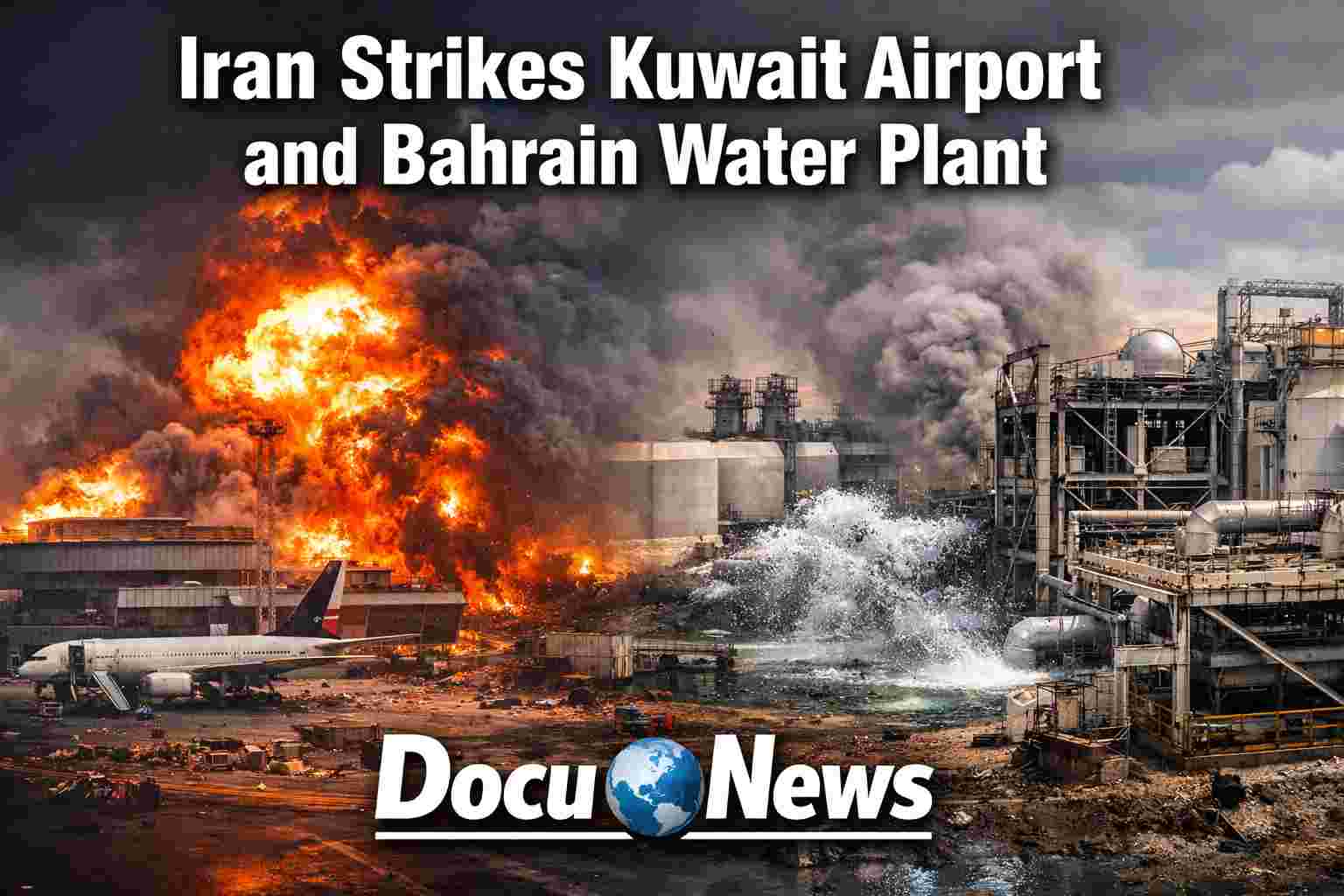
Iran strikes Kuwait airport and Bahrain water plant in a fresh wave of tension across the Gulf region. The attack targeted critical infrastructure that supports aviation fuel supply and drinking water production. Security analysts say the strikes show the growing role of drones in modern conflict. Reports indicate that the Iran strike on Kuwait airport and Bahrain water plant could deepen regional security concerns and trigger stronger defensive measures across the Middle East.
According to DocuNews Central, on March 8, 2026. Authorities in Kuwait and Bahrain confirmed that drones hit fuel storage facilities at Kuwait International Airport and a desalination plant in Bahrain. Emergency teams rushed to both locations and worked to control fires and assess damage. Officials reported casualties and infrastructure damage, although emergency services restored essential operations within hours.
The incidents occurred during a period of rising regional tension involving several Middle Eastern states. Security forces increased alert levels immediately after the strikes. Air defense systems in several Gulf countries also activated to prevent additional drone attacks.
Also read Iran Missile and Drone Attack Hits U.S. Helicopter Base in Kuwait – Full Updates
Drone Strike Targets Fuel Tanks at Kuwait Airport
The Iran drone attack on Kuwait airport focused on aviation fuel storage tanks located within the airport complex. These tanks supply aircraft with fuel required for passenger and cargo flights. Because the facility supports regional transportation, the site represents an important logistical asset.
Witnesses reported a loud explosion followed by large flames and thick smoke rising from the fuel depot. Emergency crews arrived quickly and began containment operations. Firefighters managed to control the blaze before it could spread to nearby fuel storage areas.
Authorities stated that airport safety systems activated immediately after the explosion. Security teams secured the surrounding area and carried out inspections across the facility. Although some flights experienced delays, the airport resumed operations after safety officials completed their assessments.
Airport officials emphasized that aviation infrastructure must remain protected during times of conflict. They also warned that attacks on fuel depots could disrupt transportation networks and supply chains.
For global aviation safety standards, visit International Civil Aviation Organization Safety Standards.
Bahrain Desalination Plant Hit in Strategic Infrastructure Strike
The second drone strike damaged a desalination facility responsible for producing drinking water in Bahrain. The Iran drone attack on Bahrain water plant raised concerns about the vulnerability of water infrastructure in the Gulf region.
Desalination plants convert seawater into potable water through complex filtration systems. Many Gulf countries depend heavily on these facilities because natural freshwater sources remain limited.
Officials reported that emergency crews quickly assessed the damage and launched repair operations. Backup systems allowed water distribution to continue while engineers inspected the affected equipment.
Water security experts warn that repeated attacks on desalination plants could disrupt supplies across densely populated areas. Even limited damage can reduce production capacity if repairs take time.
More information about desalination systems worldwide is available through International Desalination Association.
Critical Infrastructure Increasingly Targeted in Modern Conflict
The Iran strike on Kuwait airport and Bahrain water plant fits a broader pattern of attacks on infrastructure during modern conflicts. Military analysts say drones now allow forces to strike distant targets without deploying large numbers of troops.
Critical infrastructure often becomes vulnerable because it covers large areas and supports essential services. Airports, power stations, water facilities, and oil terminals all represent potential targets during geopolitical confrontations.
Drone technology has developed rapidly during the past decade. Modern drones can travel long distances and carry explosive payloads capable of damaging industrial facilities.
Because drones are relatively inexpensive, many armed groups and governments use them as strategic tools. They allow attackers to create disruption while avoiding direct confrontation.
Why Kuwait Airport Holds Strategic Importance
Kuwait International Airport serves as one of the region’s key transportation hubs. Passenger flights, cargo shipments, and logistical operations depend on the airport’s infrastructure.
The Iran strike on Kuwait airport fuel tanks highlighted the importance of aviation fuel supply chains. Aircraft cannot operate without reliable fuel storage and distribution systems.
Damage to fuel depots can disrupt flight schedules and increase operational costs for airlines. Authorities therefore treat such facilities as high-priority security locations.
Security experts explain that airports also support international trade. Cargo aircraft move goods across continents every day. Any disruption can affect businesses that rely on rapid transportation.
For more information on aviation security standards, see IATA Aviation Security Resources.
The Strategic Role of Water Infrastructure in the Gulf
The Iran drone strike on Bahrain desalination plant illustrates another critical vulnerability. Water infrastructure supports daily life across the Gulf region.
Unlike many other parts of the world, Gulf countries receive very little rainfall. Rivers and freshwater lakes are scarce. As a result, governments built desalination plants to convert seawater into drinking water.
These facilities now produce a large share of the world’s desalinated water. Millions of people depend on them for clean drinking water every day.
Because of this dependence, water infrastructure requires strong protection. Security planners often treat desalination plants as essential national assets.
Experts warn that attacks on such facilities could disrupt supply systems if multiple plants become damaged at the same time.
Regional Reactions to the Drone Attacks
Governments across the Gulf reacted quickly to the Iran drone attack on Kuwait airport and Bahrain water plant. Officials condemned the strikes and called for greater protection of civilian infrastructure.
Diplomatic discussions began soon after the incidents. Regional leaders held consultations to prevent further escalation and maintain stability.
Military forces also increased readiness levels. Several countries activated air defense systems and began monitoring regional airspace more closely.
Security analysts believe these defensive measures aim to intercept drones before they reach sensitive facilities.
Impact on Aviation and Travel
The attack on Kuwait airport caused temporary disruptions for travelers. Airport authorities delayed several flights while emergency crews secured the fuel storage area.
After completing safety inspections, officials allowed operations to resume. Airlines adjusted schedules to reduce passenger inconvenience.
Despite the disruption, authorities confirmed that the airport remained operational. Safety teams continue to monitor the facility as repairs proceed.
Travel experts expect increased security checks at airports throughout the Gulf region during the coming weeks.
The Growing Role of Drone Warfare
The Iran drone strike on Kuwait airport and Bahrain water plant reflects the expanding role of unmanned aerial systems in modern warfare. Military planners now integrate drones into strategic operations because they provide flexibility and precision.
Drones can fly long distances and approach targets from multiple directions. Their smaller size makes them difficult to detect using traditional radar systems.
Governments therefore invest in counter-drone technologies. These systems include electronic jamming devices, advanced radar detection, and laser interception equipment.
Defense experts believe that counter-drone systems will become essential for protecting infrastructure in the coming years.
Economic Implications for the Gulf Region
Beyond security concerns, the Iran strike on Kuwait airport and Bahrain water plant could influence regional economic stability. Infrastructure security remains vital for trade, energy production, and transportation networks.
The Gulf region hosts major shipping routes and energy facilities that supply global markets. Any threat to infrastructure can affect investor confidence and international trade flows.
Energy analysts often monitor geopolitical developments in the region closely. Even limited incidents may influence market expectations and transportation planning.
Therefore governments continue strengthening security systems around strategic infrastructure to maintain economic stability.
DocuNews Central Opinion
From the perspective of DocuNews Central, the recent strikes reveal a major shift in how conflicts unfold in the modern era. Military confrontation no longer occurs only on traditional battlefields.
Instead, strategic infrastructure increasingly becomes a focal point. Airports, water plants, and energy facilities support daily life and national economies. When these systems face attacks, the consequences can extend far beyond military objectives.
Governments must therefore balance defense readiness with diplomatic engagement. Protecting civilian infrastructure should remain a priority for regional and global stability.
Conclusion
The Iran strike on Kuwait airport and Bahrain water plant marks another serious development in the evolving tensions across the Middle East. Drone attacks targeting aviation fuel depots and desalination facilities demonstrate how infrastructure now plays a central role in modern conflicts.
Emergency crews in Kuwait and Bahrain responded quickly and prevented wider damage. Nevertheless, the incidents highlight the vulnerability of critical systems that support transportation and water supply.
As regional tensions continue, governments may strengthen defenses around key infrastructure while diplomatic efforts attempt to prevent further escalation.
Disclaimer
This report relies on available information from official statements, regional media coverage, and open-source analysis at the time of publication. Details may change as authorities release further updates. DocuNews Central provides news coverage for informational purposes and does not claim responsibility for real-time developments during ongoing geopolitical events.
For more information Visit Israeli-Iran-U.S War
