
Security updates Nigeria
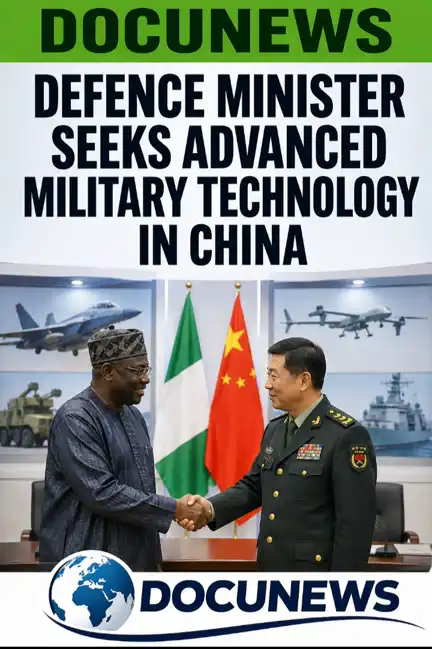
Nigerian Defence Minister Seeks Advanced Military Technology in China.

Date: July 14, 2026
Nigeria’s Defence Minister is seeking stronger defence cooperation with China as the Federal Government continues efforts to strengthen the country’s security architecture. The move focuses on acquiring advanced military technology, expanding defence partnerships, and improving Nigeria’s ability to combat terrorism, banditry, kidnapping, and other asymmetric threats. According to DocuNews Central, the latest engagement reflects Nigeria’s determination to modernize its armed forces and improve national security through international collaboration.
Location: Beijing, China
The latest development comes as Nigeria faces persistent security challenges across several regions. Terrorist attacks, banditry, kidnapping for ransom, and other violent crimes continue to threaten communities. Therefore, the Federal Government is exploring new partnerships that can provide modern equipment, technical expertise, and long-term defence solutions.
According to reports by The Guardian Nigeria, the Defence Minister emphasized the importance of expanding military cooperation with China. He explained that Nigeria is interested not only in purchasing military hardware but also in securing technology transfer that can strengthen local defence capabilities. Such cooperation could help Nigeria improve military operations while building domestic capacity for future security needs.
Also read Benue Crisis Deepens as Otukpo Communities Report New Attacks
According to DocuNews Central, the proposed partnership goes beyond the acquisition of weapons. Instead, it focuses on knowledge sharing, advanced research, technical training, and the development of defence industries that can support Nigeria’s long-term security objectives. This broader approach aims to ensure that Nigeria benefits from sustainable military development rather than relying solely on imported equipment.
Furthermore, the Defence Minister stressed that terrorism and other asymmetric threats require modern responses. Traditional military strategies remain important. However, today’s security environment also demands advanced surveillance systems, intelligence technology, cybersecurity tools, drones, communication systems, and precision equipment. Therefore, Nigeria is seeking access to technologies that can improve operational effectiveness.
China has become one of the world’s leading producers of defence technology. Consequently, many developing countries have expanded defence relationships with Beijing in recent years. Nigeria has also maintained diplomatic and economic relations with China for decades. Therefore, expanding defence cooperation represents another stage in the growing relationship between both countries.
Security experts believe that modern military technology can improve intelligence gathering and strengthen operational planning. Moreover, advanced surveillance systems can help security agencies detect threats before attacks occur. Better communication equipment can also improve coordination among military units operating in difficult environments.
The Defence Minister also highlighted the importance of technology transfer. Rather than depending entirely on imported systems, Nigeria hopes to strengthen its own defence manufacturing capacity. This strategy could encourage local production, improve technical skills, and reduce future dependence on foreign suppliers.
In addition, stronger defence cooperation may provide opportunities for specialized military training. Nigerian military personnel could receive advanced instruction on operating modern equipment, maintaining sophisticated systems, and applying emerging technologies during security operations. Such training would further strengthen operational readiness.
Nigeria continues to face multiple security challenges across different regions. Terrorist groups remain active in parts of the North-East. Meanwhile, armed bandits continue attacks in parts of the North-West. Kidnapping incidents also remain a major concern in several states. Therefore, improving military capability remains a top priority for the Federal Government.
According to DocuNews Central, security analysts have repeatedly argued that defeating modern criminal networks requires intelligence-led operations supported by advanced technology. Criminal groups often exploit difficult terrain, communication gaps, and limited surveillance coverage. Consequently, modern technological tools can provide security agencies with valuable operational advantages.
Check this out Fresh Tension as Death Toll Sparks Protests in Benue
The Defence Minister explained that stronger international cooperation remains important because security threats continue to evolve. Terrorist organizations increasingly adopt new tactics and technologies. Therefore, security forces must also improve their capabilities through continuous modernization and strategic partnerships.
Furthermore, technology transfer could create economic benefits beyond security. Local defence production may encourage investment, create skilled jobs, promote engineering development, and strengthen Nigeria’s industrial base. As a result, defence cooperation may contribute to broader national development alongside improved security.
China has invested significantly in military innovation over the past two decades. Today, the country produces a wide range of defence equipment, including drones, surveillance systems, armored vehicles, radar technology, communication networks, and naval platforms. Consequently, many countries view China as an important defence partner.
The Nigerian government has continued to pursue multiple security reforms while increasing military operations against armed groups. Security agencies have intensified operations in several regions. At the same time, authorities continue to explore diplomatic partnerships that can improve military capacity over the long term.
According to DocuNews Central, expanding defence cooperation does not replace ongoing military operations. Instead, it complements existing efforts by providing better tools, stronger technology, and improved operational capabilities for security personnel working across the country.
Experts also note that technology alone cannot eliminate insecurity. Effective intelligence sharing, strong leadership, community cooperation, judicial reforms, and sustained military professionalism remain essential components of successful counterterrorism strategies. Nevertheless, advanced technology can significantly improve operational efficiency when integrated into broader national security planning.
The Defence Minister reiterated Nigeria’s commitment to maintaining peaceful international relationships while strengthening national defence. He noted that cooperation based on mutual respect and shared interests can benefit both countries. Therefore, discussions with Chinese officials focused on practical areas that could strengthen Nigeria’s security capacity.
The Federal Government has consistently stated that protecting citizens remains one of its highest priorities. Consequently, investments in defence modernization continue to receive significant attention as security agencies respond to evolving threats across the country.
According to DocuNews Central, many Nigerians will closely monitor the outcome of these discussions. Citizens hope that stronger international cooperation will translate into measurable improvements in national security. They also expect any future agreements to deliver practical benefits for the Armed Forces and improve the protection of communities affected by violence.
If successfully implemented, expanded technology cooperation could strengthen surveillance, improve intelligence collection, enhance operational coordination, and support more effective counterterrorism efforts. Moreover, local capacity development could position Nigeria for greater defence self-reliance in the years ahead.
Have you seen this? Gunmen Attack Funeral Mourners in Benue, Multiple Feared Dead
For now, discussions remain focused on expanding defence cooperation, improving technology transfer, and identifying areas where both countries can work together. The Federal Government believes these efforts will contribute to stronger military capability and improved national security as Nigeria continues confronting terrorism and other asymmetric threats.
As security challenges continue to evolve, defence modernization remains an important national priority. Therefore, Nigeria’s engagement with China reflects a broader strategy aimed at equipping the country’s Armed Forces with advanced capabilities that can improve operational effectiveness, strengthen national resilience, and support the ongoing fight against terrorism and other emerging security threats.
For more security Updates, please visit Security updates Nigeria and www.saharareporters.com