
Security updates Nigeria
Suspected Herdsmen Kill Four, Injure 45 in Nasarawa Attack

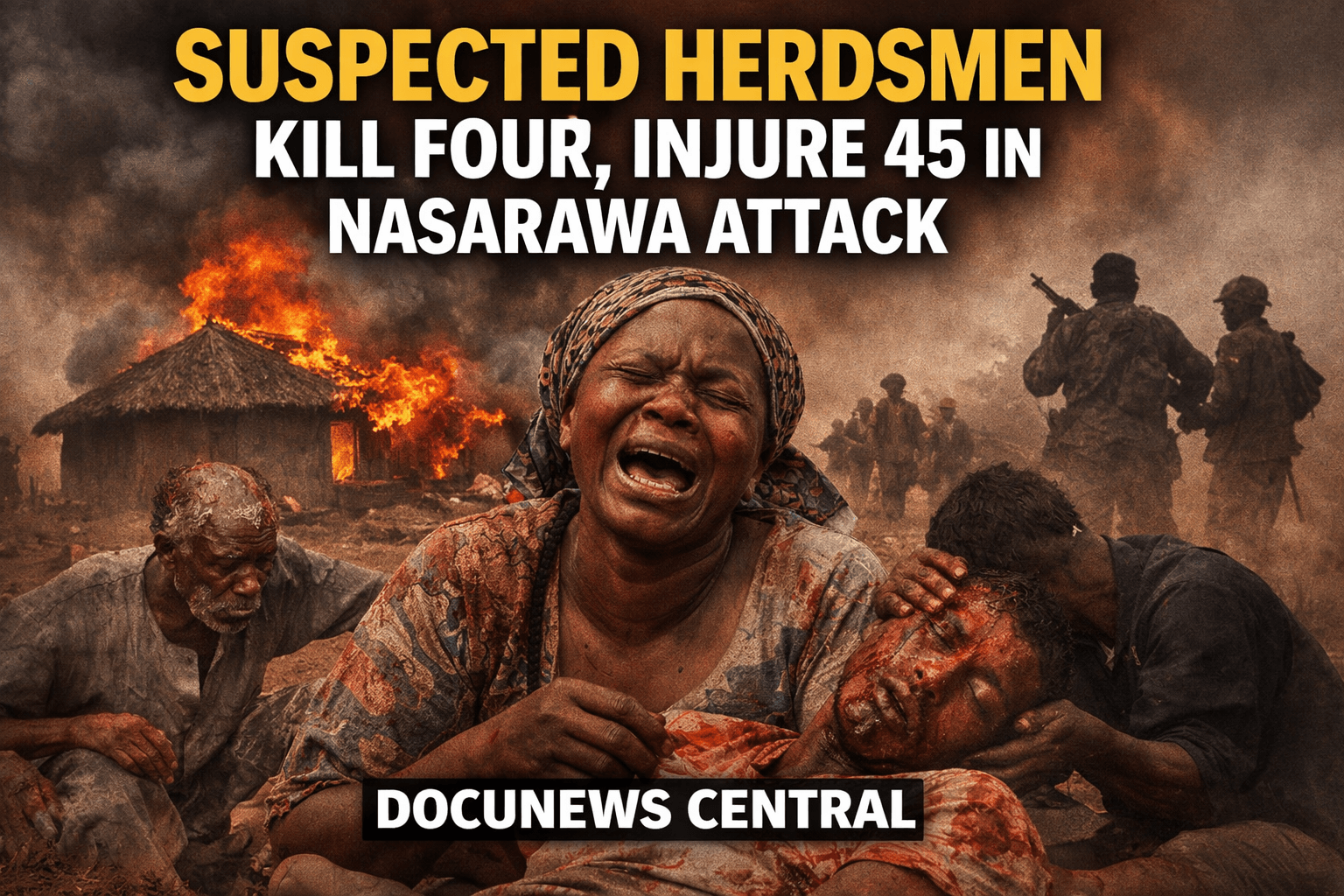
Fear and uncertainty spread rapidly across parts of Nasarawa State on Tuesday after a violent attack on Akunza-Ashigye community near Assakio left at least four people dead and more than 45 others nursing various injuries. The assault, which residents blamed on suspected Fulani herdsmen, disrupted daily life and reopened long-standing security concerns in the region.
According to eyewitness accounts, the attackers arrived in large numbers during the early hours, moving swiftly through residential areas and farmlands. As panic set in, many villagers fled into nearby bushes while others sought refuge in neighboring settlements. However, several residents were caught in the chaos, leading to fatalities and widespread injuries. Read More about Gunmen Kill 7, Burn Homes in Plateau on New Year Eve
The incident marked another troubling chapter in the ongoing cycle of violence affecting rural communities in central Nigeria. Although local leaders had repeatedly called for stronger security presence, residents said the response came only after significant damage had already occurred.
Suspected Herdsmen Kill Four as Nasarawa Community Faces Fresh Violence
Residents of Akunza-Ashigye described a terrifying scene as gunshots echoed through the community. Many said the attackers moved from house to house, setting some structures ablaze and attacking anyone who attempted to resist or escape. As a result, four lives were lost, including elderly villagers who could not flee in time.
Community youth leader, Markus Gyang, told reporters that the attackers appeared well-coordinated and heavily armed. He explained that the assault lasted for several hours before security personnel arrived. By then, the damage had already been done.
“People were screaming and running in different directions,” Gyang said. “We tried to protect our families, but the attackers overwhelmed us. We lost four of our people, and many others sustained serious injuries.”
Furthermore, local volunteers transported the injured to nearby clinics and hospitals in Lafia and Keffi. Medical workers confirmed that several victims suffered gunshot wounds, machete cuts, and fractures caused by stampedes during the attack.
Despite repeated appeals from residents, security patrols reportedly arrived late. This delay, according to locals, worsened the situation and allowed the attackers to retreat without immediate confrontation.
Related national security coverage
Nasarawa Attack Leaves Families Mourning, Over 45 Injured
In the aftermath of the Nasarawa attack, grief and frustration dominated the atmosphere in Akunza-Ashigye. Families gathered to identify victims while others searched for missing relatives. Traditional leaders held emergency meetings to assess the damage and coordinate relief efforts.
According to health officials, over 45 injured persons were admitted to different medical facilities. While some received treatment for minor wounds, others required urgent surgical intervention. Medical staff described the situation as overwhelming, noting shortages of essential supplies.
Meanwhile, displaced residents appealed for government assistance. Many said they lost personal belongings, food supplies, and livestock. Without immediate support, they feared worsening humanitarian conditions.
The Chairman of Lafia Local Government Area visited the community and promised to relay residents’ concerns to the state government. He assured them that investigations had begun and that security measures would be strengthened. People are reacting to this New Year’s Day Attack: Ondo Police Station Set Ablaze by Terrorists
However, residents expressed skepticism, citing previous attacks where similar promises were made without lasting results. They urged authorities to deploy permanent security units to vulnerable communities rather than relying on temporary patrols.
Suspected Herdsmen Kill Four in Nasarawa as Tensions Rise
The latest violence has intensified tensions between farming communities and nomadic groups in Nasarawa State. Over the years, disputes over land use, grazing routes, and water access have escalated into deadly confrontations.
Security analysts believe weak enforcement of grazing regulations has contributed to the recurring clashes. Although anti-open grazing laws exist in some neighboring states, inconsistent implementation has limited their impact.
In Akunza-Ashigye, residents said farmlands had been destroyed repeatedly, leaving farmers frustrated and angry. Community elders warned that continued attacks could push youths toward self-defense measures, which may further escalate the conflict.
Religious leaders also weighed in, calling for restraint and dialogue. They urged both parties to avoid reprisals and instead engage in peaceful conflict resolution mechanisms.
At the state level, Nasarawa authorities reiterated their commitment to peace. A spokesperson for the state police command confirmed that patrols had been intensified and that suspects were being tracked.
Community Leaders Demand Action After Suspected Herdsmen Kill Four
Following the deadly incident, community leaders demanded swift justice and long-term solutions. They called on the federal government to address the root causes of herder-farmer conflicts, including climate pressures and resource scarcity.
Several civil society organizations condemned the attack and urged authorities to protect rural populations. They stressed that failure to act decisively could encourage further violence.
Meanwhile, humanitarian groups began preliminary assessments to determine the scale of displacement. Early reports suggested dozens of families had been forced to abandon their homes.
As investigations continue, residents of Akunza-Ashigye remain on edge. Night patrols organized by community youths have become common, although leaders warned against vigilantism.
The tragedy has once again highlighted the fragile security situation in parts of Nigeria’s Middle Belt. Without sustained intervention, experts warn that similar attacks may continue to threaten lives and livelihoods.
Calls for Security Reforms After Nasarawa Attack
Policy experts emphasized the need for comprehensive security reforms. They recommended improved intelligence gathering, community policing initiatives, and stronger collaboration between state and federal agencies.
In addition, agricultural experts suggested modern grazing systems as a long-term solution. They argued that ranching could reduce conflicts while improving livestock productivity.
For now, residents are focused on healing and rebuilding. Burial arrangements for the deceased were conducted quietly, reflecting the community’s grief and fear.
As Nigeria continues to grapple with insecurity, the Akunza-Ashigye attack serves as a painful reminder of the human cost of unresolved conflicts.
Editor’s Note: This report will be updated as more details emerge.