
Security updates Nigeria
Nigerian Army Records Major Gains Against ISWAP, Boko Haram

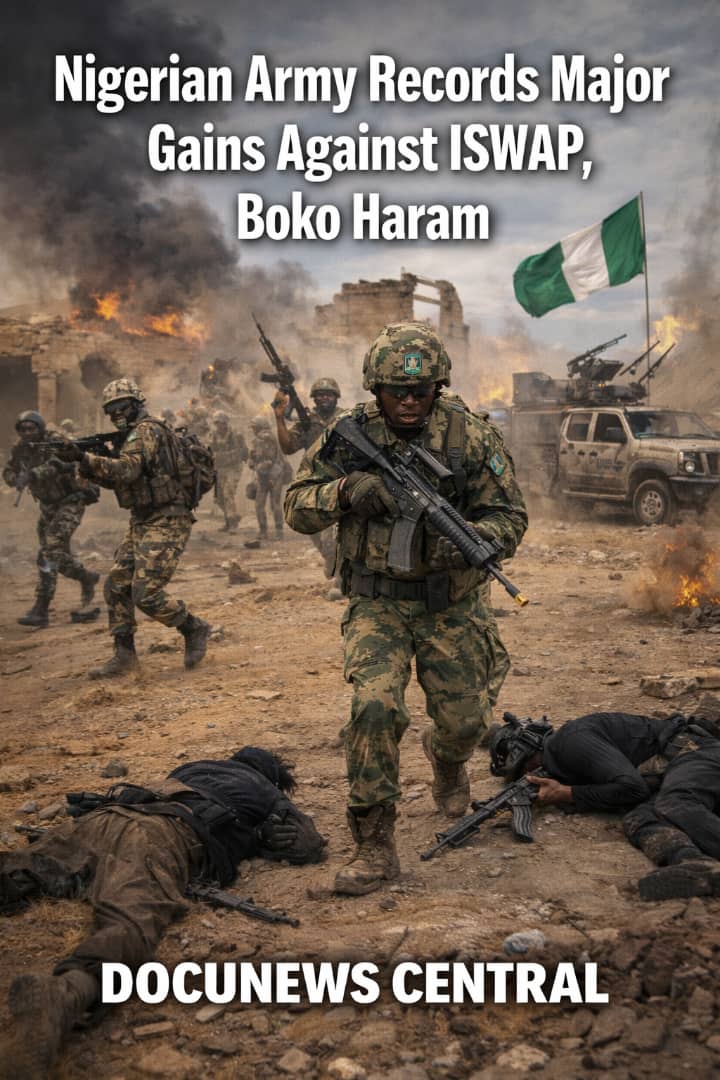
Maiduguri, Borno State — Monday, January 6, 2026 (6:45 AM) — Nigerian military forces have intensified coordinated offensive operations across the Northeast, leading to significant territorial advances and operational success against insurgent elements entrenched in the region.
According to multiple security and field sources, troops under Operation Hadin Kai launched synchronized ground and air assaults across parts of Borno and Yobe states in the early hours of Monday. As a result, forward operating bases expanded, supply routes reopened, and several strategic corridors previously threatened by violent extremists came under firm military control.
Importantly, commanders on the ground confirmed that the renewed offensive followed weeks of intelligence-led planning, inter-agency coordination, and community-based surveillance. Consequently, the operation avoided civilian areas while maintaining steady pressure on fleeing fighters.
The latest development marks one of the most coordinated military pushes recorded in recent months. Moreover, it reflects a shift from reactive defense to proactive battlefield dominance across the Northeast theatre. Read also NAF JF-17 Jets Kill 500 ISWAP, Boko Haram Fighters in Borno
Offensive Operations Strengthen Nigerian Army Positions in the Northeast
The main thrust of the operation focused on remote enclaves within the Sambisa axis, parts of Marte Local Government Area, and border communities linking Nigeria to neighboring Lake Chad territories. Troops moved swiftly, clearing hideouts, neutralizing logistics camps, and dismantling supply chains used by armed groups.
Meanwhile, air component units provided sustained close air support. These strikes disrupted movement patterns and forced hostile elements to abandon fortified locations. As a result, ground forces advanced without significant resistance.
Military sources disclosed that several abandoned camps contained improvised shelters, food stockpiles, and communication equipment. Therefore, analysts believe the pressure campaign has disrupted command cohesion among insurgent cells.
Notably, morale among frontline troops remained high throughout the operation. Commanders attributed this to improved welfare, better equipment, and clearer mission objectives. Furthermore, recent training programs enhanced coordination between infantry, armor, and reconnaissance units.
Nigerian Army Records Major Gains Against ISWAP, Boko Haram in Key Locations
By midday on Monday, security forces secured multiple locations along the Gwoza–Pulka corridor. These areas previously served as transit routes for fighters and supplies. However, sustained patrols and aerial surveillance now dominate the axis.
In addition, troops reopened access roads linking Dikwa, Bama, and Konduga. This development has already improved humanitarian access and eased the movement of relief agencies working with displaced communities.
Local sources confirmed that residents who fled earlier hostilities have started returning cautiously. Although security agencies advised vigilance, community leaders welcomed the renewed presence of soldiers.
Elsewhere, coordinated strikes near the Lake Chad basin forced terrorist fighters to retreat deeper into marshland. Nonetheless, military units continue pursuit operations to prevent regrouping.
Timeline of Events: How the Operation Unfolded
The operation began shortly after 4:30 AM on January 6, 2026. Surveillance drones identified unusual movement patterns during pre-dawn hours. Consequently, field commanders authorized immediate engagement.
By 6:00 AM, ground forces advanced from multiple flanks. Meanwhile, fighter jets maintained aerial overwatch, ensuring rapid response to emerging threats.
At approximately 10:15 AM, troops confirmed the capture of several forward camps. No civilian casualties were reported. Therefore, military authorities described the mission as precise and disciplined.
By evening, commanders declared the first phase successful. However, they emphasized that follow-up operations would continue until total area stabilization is achieved.
Impact on Civilian Communities and Humanitarian Access
The renewed offensive has already created noticeable changes for civilians living in conflict-affected areas. Most importantly, major supply routes are now safer for humanitarian convoys.
Relief agencies working in Borno State confirmed improved access to previously isolated settlements. As a result, food distribution, medical outreach, and shelter assistance resumed in several locations.
Community leaders praised the military’s engagement strategy, which involved early warnings and coordination with local authorities. Therefore, residents felt included rather than displaced.
Additionally, civil-military cooperation units have begun outreach programs to rebuild trust and gather local intelligence. This approach supports long-term stability rather than short-term control.
Regional Security and Strategic Importance
The Northeast remains critical to Nigeria’s national security due to its proximity to international borders. Consequently, instability in the region affects trade, migration, and regional cooperation.
Security analysts note that sustained military pressure reduces cross-border movement of fighters and limits access to foreign support networks. Therefore, the current offensive has implications beyond Nigeria.
Moreover, the success of coordinated operations strengthens confidence among regional partners participating in joint task force arrangements.
Experts believe continued intelligence sharing and logistics support will determine whether gains achieved this week remain permanent.
Military Leadership Reacts
Senior military officials described the operation as a reflection of improved operational readiness. They credited better intelligence fusion, upgraded equipment, and enhanced troop welfare.
According to a spokesperson, the armed forces remain committed to protecting civilians while dismantling violent networks.
Furthermore, leadership emphasized that progress will be sustained through constant patrols and area domination tactics.
Public Confidence and National Outlook
Across Nigeria, the renewed offensive has sparked cautious optimism. Many citizens view the progress as a sign of renewed focus on security.
While challenges remain, analysts agree that consistent pressure reduces the ability of insurgents to reorganize.
Ultimately, long-term peace will depend on governance, reconstruction, and economic opportunity. However, improved security remains the foundation.
For continued updates on security developments, visit our Security News section. You can also read official briefings from the Federal Ministry of Defence.
As operations continue, military authorities urge citizens to remain vigilant and cooperate with security agencies. Further updates are expected as the situation evolves.
Related Stories
- NAF JF-17 Jets Kill 500 ISWAP, Boko Haram Fighters in Borno
- Bandits Storm Kwara Palace, Abduct Seven Family Members
- Six Kidnappers Arrested, Three Victims Freed in Nasarawa
- Nigeria Recovers $9.5m Abacha Loot From Jersey
Kayode Adekeye
January 11, 2026 at 1:11 am
I say a big weldone to the Nigeria Army for their success so far in winning battle with the bandit and others. I wish you all more success and God protection. You will not lose to the hands of your enemies again by God grace. Please don’t forget Kwara State as well, because most of them escaped to the state causing serious panic and unrest due to killing and kidnapping of members of some community. God bless you all.