
Security
Disease Outbreak, Food Shortage Weakens Northern Nig. Bandits

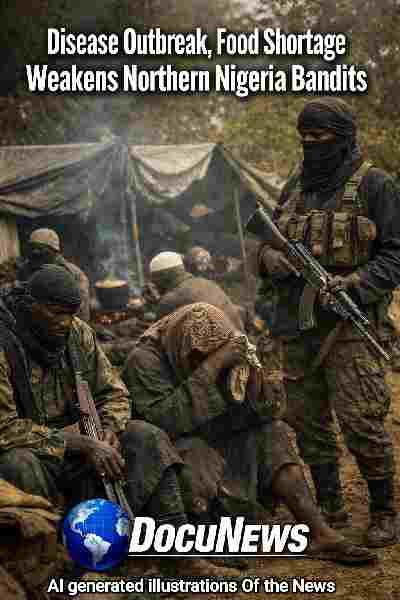
Northern Nigeria’s security environment is witnessing a significant shift as a disease outbreak and food shortage weaken armed groups operating across remote forest corridors. The central issue — Disease Outbreak, Food Shortage Weakens Northern Nigeria Bandits — now dominates security conversations, intelligence assessments, and grassroots reports. Widespread illness, hunger, and lack of medical supplies have disrupted daily operations inside forest camps. As a result, movement has reduced, coordination has slowed, and internal tensions have intensified. This development could reshape counter-banditry operations across the region.
Recent field reports from Zamfara State, Katsina State, Sokoto State, and Kaduna State indicate that forest-based criminal networks are battling health complications and limited food access. Local sources and an escaped captive described widespread sickness in camps located deep within the Rugu and Sububu forest belts. According to these accounts, medicines have become scarce, while supply routes have narrowed due to intensified patrols and community resistance.
Read also Edo Abduction: Gunmen Kill One Doctor, Second Remains Captive
Growing Health Crisis Inside Forest Camps
Infectious illnesses have reportedly spread quickly among fighters and their families. Crowded shelters, poor sanitation, and limited clean water have accelerated transmission. Minor injuries now worsen because antibiotics are unavailable. Fever-related complications have increased, and recovery rates have slowed.
Food scarcity has compounded the health crisis. Armed groups traditionally depend on stolen livestock, market raids, and forced levies. However, security operations have disrupted these channels. Increased patrols by the Nigerian Army and joint operations across forest corridors have restricted mobility. Consequently, supply movement has become risky and inconsistent.
An escaped captive revealed that meals had been reduced to once daily in some camps. In several cases, rations were reportedly reserved for active fighters. Dependents faced harsher conditions. Malnutrition signs appeared among younger members inside the hideouts.
Food Shortage Disrupts Bandit Logistics
Food shortages do more than weaken physical strength. They undermine internal command structures. Leaders distribute resources to maintain loyalty. When resources decline, loyalty weakens. Disputes over food allocation have reportedly increased inside camps.
Some factions blame commanders for mismanaging ransom funds. Others suspect collaborators of diverting supplies. As tension grows, splinter groups may emerge. Fragmentation reduces coordination and weakens large-scale attack planning.
Meanwhile, farmers around forest edges have adjusted planting patterns. Many cultivate smaller plots or relocate to safer zones. Vigilante groups intercept suspected suppliers. These actions further restrict access to grain and livestock.
You may have missed this Anger in Plateau as Youths Shut Down Highway Over 10 Deaths
Reduced Attacks Across Affected Areas
Communities in parts of Zamfara and Katsina have reported fewer coordinated raids in recent weeks. Although isolated incidents continue, large-scale assaults appear less frequent. Analysts attribute this trend to reduced operational capacity rather than permanent retreat.
Local observers in Sokoto State noted shorter attack durations. Armed men reportedly withdrew quickly after brief engagements. Fatigue and illness may explain these abrupt retreats.
Intelligence tracking also indicates decreased communication between certain factions. Limited mobility restricts planning meetings in remote enclaves. Complex operations require coordination, which now appears strained.
Medical Scarcity and Camp Instability
Medical shortages extend beyond basic drugs. Clean water access remains limited. During dry seasons, stagnant sources dominate. Waterborne diseases spread easily under such conditions.
Families often reside alongside fighters in forest camps. Therefore, outbreaks affect entire settlements. When caregivers fall ill, survival becomes harder for everyone. Informal herbal remedies have replaced standard treatment in many cases.
Without trained medical personnel, diagnosis remains uncertain. Treatable infections may turn fatal. Consequently, morale declines, and recruitment efforts suffer setbacks.
Community Resistance Gains Ground
As camps weaken, local communities sense opportunity. Vigilante networks have strengthened cooperation with formal security forces. Farmers share intelligence on suspicious movement. Youth volunteers monitor rural pathways.
Displaced residents have begun exploring cautious returns to abandoned homes. Although fear persists, reduced attack frequency encourages gradual rebuilding.
Joint patrols in parts of Kaduna State combine military units with community defenders. This cooperation strengthens public confidence. However, authorities must sustain momentum to prevent resurgence.
Strategic Implications for Security Forces
The current health and food crisis presents a tactical opening. Illness and hunger limit mobility. Therefore, targeted operations may achieve stronger results during this period.
Security planners can leverage intelligence from escaped captives and informants. Defections become more likely when morale declines. Safe surrender initiatives could further weaken networks.
However, long-term stability requires more than military gains. Rural development, agricultural support, and youth employment programs must complement security efforts. Without these measures, criminal groups may regenerate.
Economic Impact on Northern Communities
Banditry has disrupted northern markets for years. Livestock trade has declined. Transport routes have shifted. Many rural markets operate below capacity.
Now, as forest camps struggle, some traders cautiously reopen weekly markets. Transporters test rural roads. Nevertheless, uncertainty remains. Farmers still face risks during planting seasons.
Authorities must support economic recovery through targeted grants and infrastructure protection. Economic resilience reduces vulnerability to criminal influence.
Information and Public Perception
Armed groups rely on fear and perceived strength. Reports of illness weaken that image. Radio discussions and community briefings increasingly mention sickness inside camps.
However, misinformation can distort realities. Responsible reporting remains essential. Balanced coverage ensures that optimism does not evolve into complacency.
For continued in-depth reporting and verified updates, visit DocuNews Central.
Humanitarian Considerations
Women and children inside forest settlements face vulnerability during outbreaks. Rescue missions must prioritize medical screening and psychological support. Reintegration programs prevent future cycles of violence.
Public health outreach across rural districts can prevent secondary outbreaks. Coordinated humanitarian efforts support broader stabilization.
DocuNews Central Opinion
At DocuNews Central we believes that the reported disease outbreak and food shortage mark a critical moment in Northern Nigeria’s counter-banditry campaign. However, authorities must avoid premature celebration. Tactical advantage must translate into durable peace.
Security agencies should combine sustained pressure with rural healthcare expansion and agricultural investment. Transparent communication will strengthen community trust. Strategic patience, not complacency, will determine lasting success.
Conclusion
The evidence suggests that Disease Outbreak, Food Shortage Weakens Northern Nigeria Bandits is more than a headline. Illness spreads across forest camps. Hunger strains loyalty. Operational capacity declines. Internal tension increases.
Yet this moment represents opportunity as well as risk. If security forces sustain coordinated action and policymakers invest in rural resilience, the region could experience meaningful progress. If momentum fades, armed networks may recover. The coming months will shape the trajectory of security in Northern Nigeria.
.
For all Security Updates In Nigeria Visit Security updates Nigeria
