
Israeli-Iran-U.S War
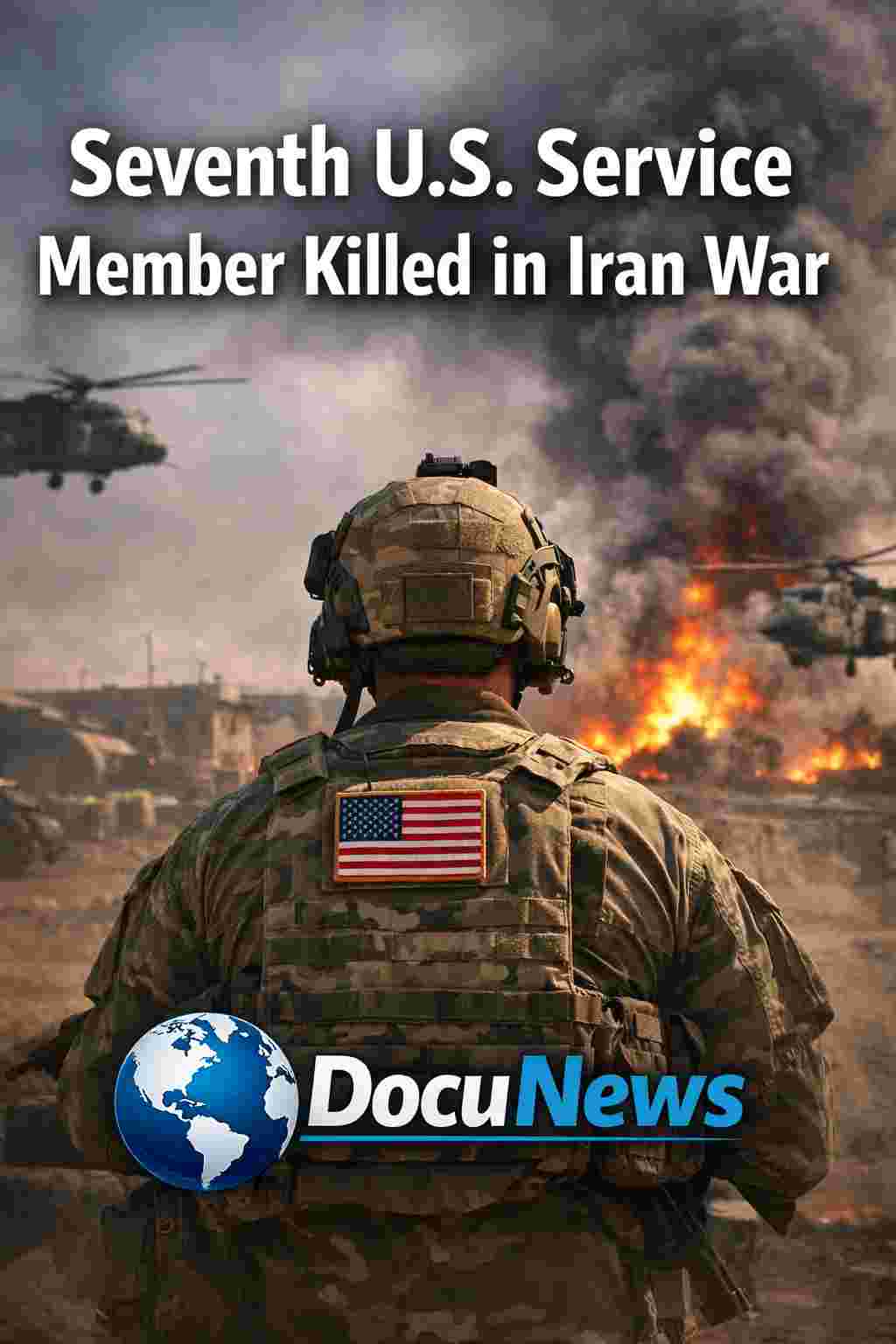
Seventh U.S. Service Member Killed in Iran War

Author: Jonadab| Publisher: DocuNews| Date: March 10, 2026
The Iran War has taken another deadly turn as the U.S. military confirmed that another U.S. service member has died from injuries sustained during recent hostilities in the Middle East. The tragic loss highlights the growing human cost of the expanding regional conflict. What a loss!. As tensions rise across multiple fronts, the headline “Seventh U.S. Service Member Killed in Iran War” now reflects the latest grim milestone in the confrontation between American forces and Iranian-aligned military operations.
According to DocuNews Central, On March 10, 2026 in Washington, D.C. The Pentagon confirmed the death during an official briefing, stating that the American troop died from critical wounds suffered during a recent Iranian missile and drone attack targeting coalition installations in the Gulf region. Military officials emphasized that the service member had been receiving intensive medical treatment before eventually succumbing to injuries.
The new fatality brings the total number of American military deaths in the Iran War to seven. Officials described the moment as deeply painful for the armed forces community. Furthermore, the Pentagon said the fallen soldier served with distinction and had been deployed as part of a regional force designed to deter Iranian aggression.
Rising Casualties in the Iran War
The confirmation that a seventh U.S. service member has been killed in the Iran War marks another escalation in the already volatile Middle East confrontation. Earlier incidents had already pushed tensions to dangerous levels. However, the latest loss underscores the growing risks faced by American troops stationed near strategic oil routes and defense installations.
According to the U.S. Department of Defense, American forces in the region have faced repeated missile strikes, drone incursions, and cyber disruptions in recent weeks. Consequently, defense analysts warn that the conflict could intensify further if diplomatic solutions fail to emerge.
Moreover, military planners say Iranian forces and allied militias have increasingly targeted radar facilities, air bases, and logistics hubs used by American troops. Because of these developments, U.S. commanders have ordered additional defensive systems and surveillance aircraft to the region.
For official military updates, the Pentagon frequently publishes reports through the U.S. Department of Defense. These updates provide verified information on troop deployments and regional security developments.
Also read Hundreds of Iran Missiles and Drones Hit Gulf Targets Full Details
Details Surrounding the Latest Fatality
Defense officials revealed that the American soldier suffered life-threatening injuries during a missile barrage launched toward coalition facilities. Initially, the wounded service member was stabilized at a forward military medical unit. Afterwards, the soldier was transferred to a larger military hospital for advanced treatment.
Doctors worked for several days to save the service member’s life. Nevertheless, the injuries proved too severe. Eventually, military authorities confirmed the death and notified the family before releasing information publicly.
Additionally, Pentagon officials noted that several other American troops were injured in the same attack. Fortunately, those personnel remain in stable condition and continue to recover.
Although the Pentagon did not immediately disclose the identity of the fallen soldier, officials said the name will be released after family members have been fully informed.
Strategic Importance of U.S. Bases in the Region
The Middle East hosts several key U.S. military installations that play vital roles in regional stability. These bases help monitor missile launches, protect maritime shipping routes, and support counterterrorism operations.
Because of these responsibilities, American forces often operate close to potential conflict zones. Consequently, they remain exposed to hostile actions from state actors and armed groups.
Meanwhile, Iranian military leaders have repeatedly criticized the presence of American forces near their borders. Tehran argues that foreign troops threaten regional sovereignty. However, U.S. officials maintain that the deployments aim to protect allies and maintain freedom of navigation.
International security experts frequently analyze these tensions through research institutions such as the Center for Strategic and International Studies, which monitors military developments across the Middle East.
Many people are reacting to this Over 100 Terrorists Storm Sokoto, Nigerian Army Neutralises 3
Escalating Tensions Between the United States and Iran
The death of a U.S. service member in the Iran War has intensified diplomatic tensions between Washington and Tehran. Leaders in the United States have condemned the attacks and warned that further aggression could trigger additional military responses.
At the same time, Iranian officials have rejected responsibility for several incidents, claiming that regional militias act independently. Nevertheless, American intelligence agencies believe that many of those groups receive training, weapons, and strategic guidance from Iran.
Furthermore, the conflict has expanded beyond isolated attacks. Missile strikes, drone interceptions, and cyber operations have become increasingly common across the region.
According to global security reporting by Reuters, multiple Gulf countries have strengthened air defense systems as a precaution against further escalation.
Impact on American Military Families
Every military casualty deeply affects families and communities back home. The confirmation that the U.S. troop death toll in the Iran War has reached seven has renewed concern among relatives of deployed soldiers.
Military support networks are now working closely with the family of the fallen service member. These programs provide emotional counseling, logistical support, and long-term assistance.
Additionally, fellow soldiers often form strong bonds during deployment. As a result, the loss of a comrade can affect morale across entire units. Nevertheless, commanders emphasize resilience and mission focus.
Organizations such as the American Red Cross also assist military families during times of crisis, helping maintain communication and support systems.
Global Reactions to the Latest Death
International leaders have expressed concern following the announcement that another American service member has been killed in the Iran War. Many governments are urging restraint while encouraging diplomatic engagement.
European officials have called for immediate dialogue between Washington and Tehran. Meanwhile, several Gulf states have pledged continued cooperation with U.S. forces to maintain regional security.
Additionally, analysts warn that prolonged confrontation could threaten global energy markets and shipping lanes. Therefore, many countries are carefully monitoring the situation.
The United Nations has also urged all parties to avoid actions that could escalate the crisis further.
Military Strategy Moving Forward
Following the death of the seventh American soldier, U.S. military planners are reviewing operational strategies across the region. Commanders are examining force protection measures, surveillance coverage, and missile defense readiness.
Consequently, additional Patriot and THAAD air defense systems may be deployed to protect bases and allied infrastructure. These systems can intercept incoming missiles and drones before they reach their targets.
Furthermore, naval forces operating in nearby waters are increasing patrol activities to secure maritime routes. The presence of these forces aims to deter further attacks while reassuring regional partners.
Defense experts note that maintaining deterrence remains a top priority for American commanders.
How the Conflict Could Shape Regional Stability
The Iran War is already reshaping the strategic landscape of the Middle East. Military alliances are evolving while governments adjust security policies to address new threats.
Meanwhile, energy infrastructure and shipping corridors have become central concerns. Any disruption could affect global markets and international trade.
Therefore, analysts argue that long-term stability will depend on diplomatic solutions alongside defensive preparedness.
Readers can follow continuing coverage and analysis through DocuNews Central, where regional developments are regularly examined.
Disclaimer
This report is based on publicly available information and verified news updates at the time of publication. Details may evolve as additional official statements and investigations emerge. Readers are encouraged to consult multiple reliable sources for the latest developments.
For more information, visit Israeli-Iran-U.S War