
Israeli-Iran-U.S War
Turkey Positions 6 Jets and Air Defenses in Northern Cyprus

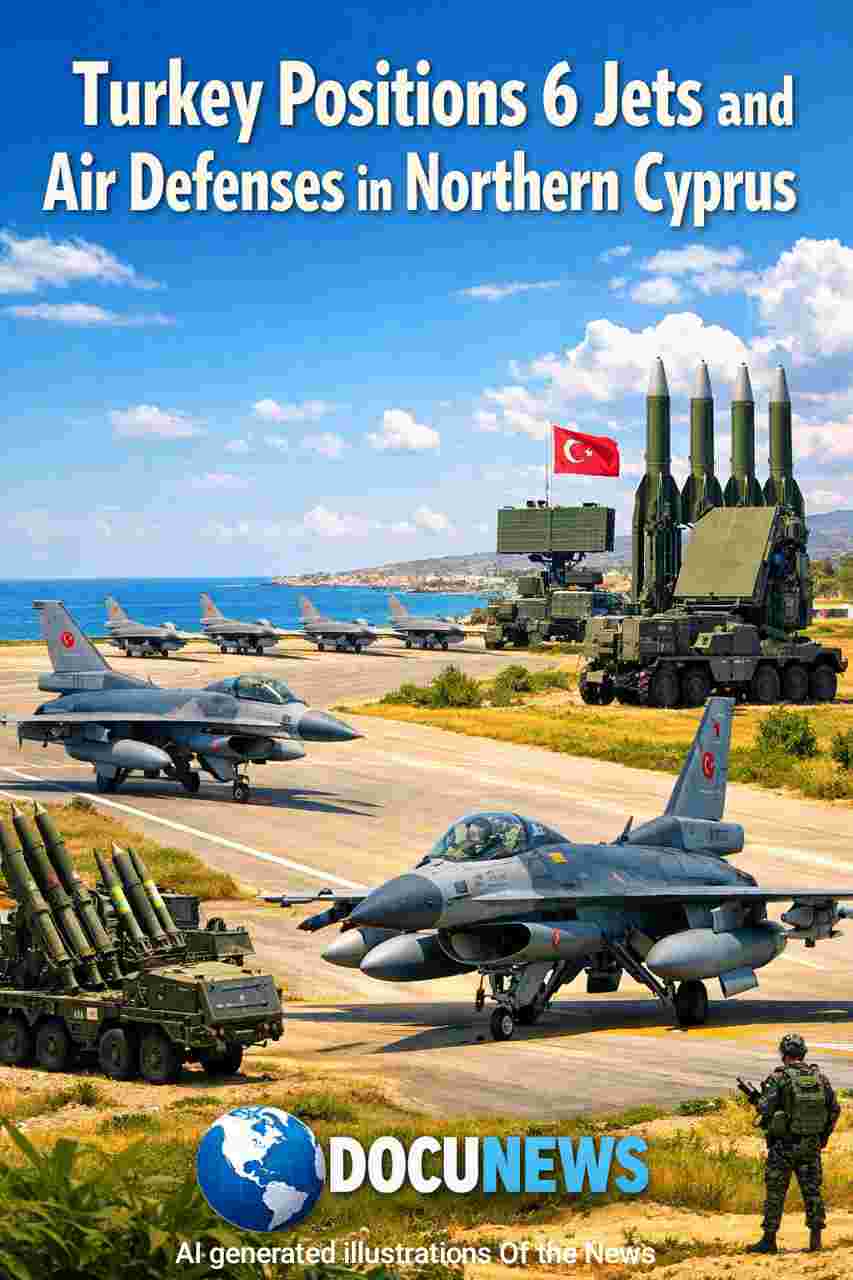
In a bold and calculated regional security move, Turkey positions 6 jets and air defenses in Northern Cyprus to strengthen air security amid rising tensions from the ongoing Iran Middle East crisis. The deployment of combat-ready F-16s and advanced anti-air defense systems highlights Ankara’s approach to deter threats, protect NATO infrastructure, and support the Turkish Republic of Northern Cyprus (TRNC) against potential spillover from nearby conflict zones. As events unfold rapidly, this decisive military action reinforces Turkey’s commitment to safeguarding strategic airspace and demonstrates its response to escalating regional dynamics.
Turkey’s latest defense deployment continues to dominate headlines worldwide, as it integrates air power with surface defense technologies to reinforce deterrence and resilience in a fracturing geopolitical landscape.
Strategic Deployment Amid Regional Instability
According to DocuNews Central news desk, On March 9, 2026, the Turkish Ministry of National Defense deployed six F-16 fighter jets and air defense systems to the Turkish Republic of Northern Cyprus (TRNC) after detailed planning aimed at strengthening security along the eastern Mediterranean flank amid the war involving Iran, the United States, and Israel. [Source]
Ankara stated the measures are part of a phased response to evolving regional developments, with readiness to introduce further defensive assets if the situation demands. The deployment comes against a backdrop of heightened military maneuvers by Greece, France, the UK, and other NATO allies around Cyprus following recent drone strikes that hit the British RAF Akrotiri base. [Source]
Also Read Massive Overnight Blasts: US-Israel Strikes Hit Tehran and Karaj Oil Depots
Regional Context and Strategic Importance
In recent weeks, Cyprus has shifted from relative calm to a frontline hotspot due to broader Middle East tensions spilling into the Eastern Mediterranean. Reports indicate that a drone attack affected the RAF airbase at Akrotiri, prompting Greek and European military reinforcements, including warships and air defense assets. [Source]
Turkey’s move to position F-16 fighters and surface-to-air defenses underscores its intent to protect the TRNC’s airspace and remaining NATO facilities from unpredictable threats, especially those emerging from missile or drone activity linked to Iran’s conflict engagements. [Source]
Military and Geopolitical Implications
Strengthening Air Policing Capabilities
By deploying combat aircraft and air defense systems, Turkey has enhanced its quick-reaction capacity over northern Cyprus. These assets will operate from strategic airfields, including Ercan International Airport and potentially Geçitkale Air Base, extending surveillance and interception range against hostile aircraft or unmanned systems approaching from the Mediterranean south. [Source]
This move also serves a broader preventative purpose: providing a credible deterrence against spillover threats such as missile and drone trajectories coming from the Middle East conflict zones. Enhanced air policing can help NATO allies in the region by creating a multilayered air defense buffer and deterring potential breaches of sovereign airspace.
NATO and Allied Responses
Turkey’s deployment is not an isolated action in the region. Several European nations have repositioned naval and aerial components near Cyprus, partly in response to Iranian threats and recent drone incursions. France, Spain, Italy, and the United Kingdom have all pledged to provide additional defense support, reinforcing the island’s defensive perimeter. [Source]
Moreover, Greece has stationed its own F-16 jets and naval units to assist the Republic of Cyprus, signifying wider strategic cooperation among NATO members and European Union states facing shared security challenges from external pressures in the south. [Source]
Local and International Reactions
Reactions in northern Cyprus reflect mixed sentiments. Local Turkish Cypriot leaders have generally welcomed the deployment, projecting it as necessary for ensuring regional stability and community defense. In contrast, Greek Cypriot institutions and EU officials criticize the measure as an escalation, urging diplomatic steps to reduce tensions while preventing military confrontation.
International analysts assess that although the presence of jets and defense systems strengthens deterrence, it could also fuel strategic competition around the island, especially as different blocs position assets and pursue security agendas in volatile circumstances.
Regional Security and Defense Outlook
Broader Defense Posture
The positioning of fighter jets and air defenses in northern Cyprus is more than symbolic — it represents an affirmation of Turkey’s role as a regional security actor. With advanced multirole fighters capable of air superiority and rapid interception, Turkey aims to fortify its eastern flank and assist in allied defense schemes.
Additionally, surface-to-air defenses augment the layered defense infrastructure, enabling detection and neutralization of aerial threats at various altitudes, from tactical drones to ballistic projectiles.
Security Challenges Ahead
Experts caution that with dynamic escalations in the Middle East, Cyprus might remain a sensitive area for military posturing. Open lines of communication and joint defense coordination among NATO members and regional partners will play a pivotal role in maintaining restraint and preventing unintended conflict escalations.
For more context on shifting military dynamics and comprehensive coverage of the Eastern Mediterranean security landscape, visit DocuNews Central, where detailed insights and expert analysis continue to be updated as the story develops.
People are reacting to this Hundreds of Iran Missiles and Drones Hit Gulf Targets Full Details
DocuNews Central Opinion
From around the globe, military analysts are weighing in on the implications of Turkey’s latest deployment. While strengthening air defense readiness in Northern Cyprus aligns with defensive security logic, the move also risks encouraging reciprocal postures from other regional powers.
DocuNews Central experts argue that although the deployment boosts deterrence against spillover attacks, it must be balanced with diplomatic outreach to mitigate escalation risks. Multinational frameworks such as NATO dialogue, confidence-building measures with neighboring states, and transparent communication channels are essential to maintain stability amid interconnected crises.
Conclusion
The deployment of fighter aircraft and air defense systems represents a significant development in the shifting military landscape of the Eastern Mediterranean. As Ankara positions key air assets and defensive hardware in northern Cyprus, it highlights its strategic priorities amid changing threats tied to the ongoing conflict in the broader Middle East.
With multidisciplinary layers of security cooperation and the potential for further deployments, regional stability hinges not only on military readiness but also on proactive diplomacy and united defense coordination.
Frequently Asked Questions
1. Why did Turkey position jets and air defenses in Northern Cyprus?
Turkey deployed six F-16 fighter jets and air defense systems to bolster security amid rising tensions and the potential spillover from the ongoing Middle East conflict. [Source]
2. Which military systems were deployed?
The deployment includes six Turkish F-16 fighter jets and strategic air defense systems designed to protect airspace and allied infrastructure. [Source]
3. What has triggered this military move?
The decision follows increased regional unrest, including drone strikes in Cyprus and broader tensions involving Iran, the U.S., and Israel. [Source]
4. How are other countries responding to the situation?
Several NATO allies, including Greece, France, the UK, and others, have reinforced defense postures around Cyprus with ships, air defense assets, and fighter jets. [Source]
5. Could this escalate tensions further?
While the deployment enhances deterrence, analysts warn it could fuel further military competition unless accompanied by diplomatic engagement.
Disclaimer: This news article summarizes factual developments based on multiple verified media sources, including official statements, international reporting, and defense analyses. Interpretation reflects broad trends and context; however, ongoing events may evolve rapidly.
For more information visit Israeli-Iran-U.S War