
Israeli-Iran-U.S War
Iran’s New Supreme Leader Mojtaba Khamenei Broke Silence

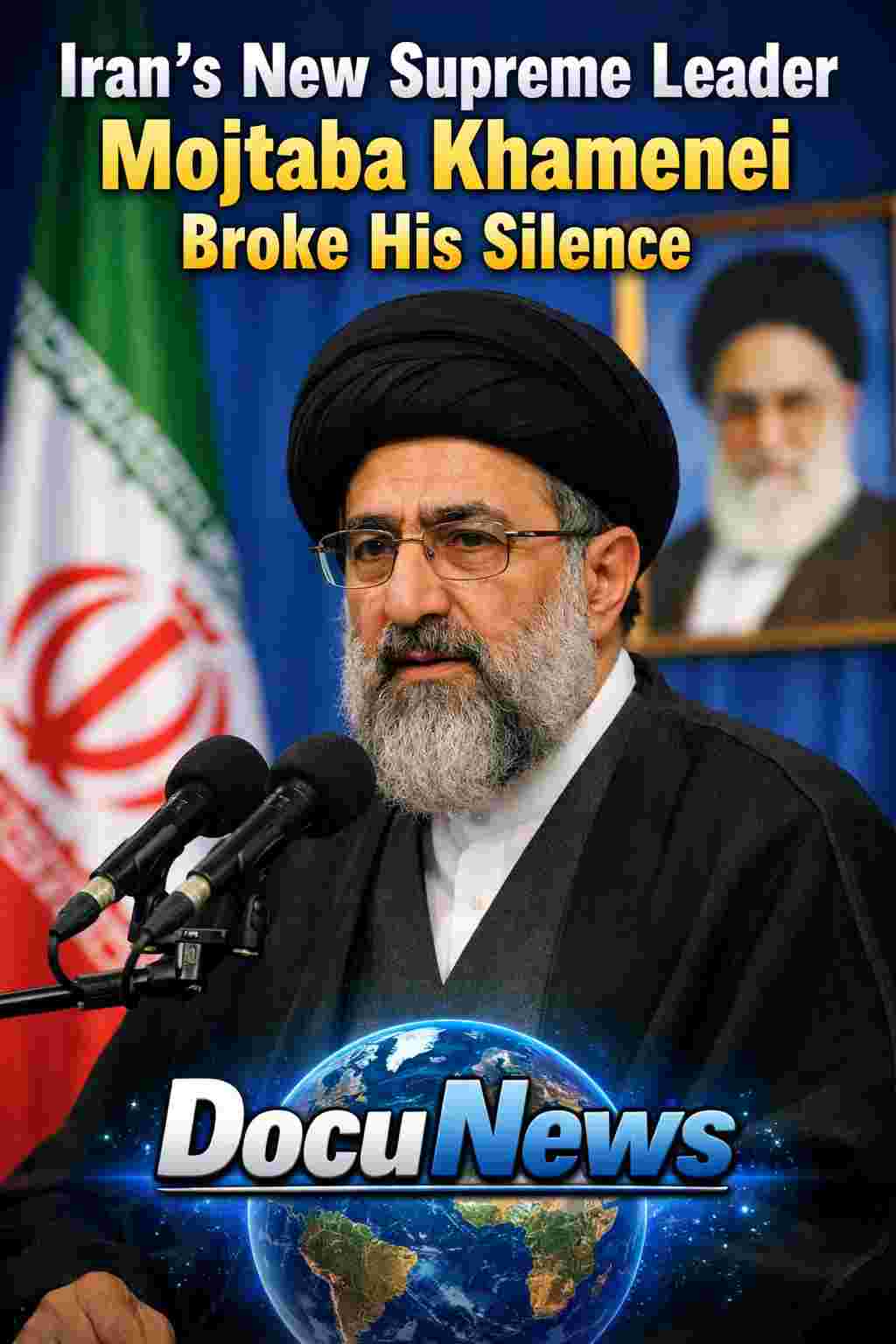
Author: Jonadab| Publisher: DocuNews. Date: March 12, 2026.
In a highly anticipated development in Iranian politics, Iran’s New Supreme Leader Mojtaba Khamenei Broke His Silence, delivering his first public remarks since reports emerged that he had assumed the most powerful position in the Islamic Republic. The statement quickly attracted global attention. Analysts, diplomats, and regional observers began examining every word for clues about Iran’s direction. Because the leadership of the country influences conflicts, diplomacy, and energy markets, the moment marked a turning point for the Middle East and the international community.
According to Docunews Central, The announcement came from Tehran, the capital of Iran. Officials close to the leadership circle confirmed that Mojtaba Khamenei had addressed senior clerics, security officials, and political figures. His remarks followed weeks of speculation after the declining public presence of his father, Ali Khamenei, who had served as Iran’s Supreme Leader for decades. Political observers described the speech as carefully measured. However, it also carried a strong message about continuity, power, and national resistance.
For years, the name Mojtaba Khamenei circulated quietly within Iran’s political system. Many insiders believed he had built deep connections inside the Revolutionary Guard, clerical institutions, and intelligence networks. Consequently, his first public words after emerging as the nation’s highest authority triggered intense analysis. Governments across Europe, Asia, and the Middle East began reviewing the implications for diplomacy, sanctions, and regional security.
The Moment Mojtaba Khamenei Spoke
The speech reportedly occurred during a closed gathering of senior religious authorities and military commanders in Tehran. Although the meeting was private, details soon reached international media outlets. According to participants, Mojtaba Khamenei emphasized stability. He told the audience that Iran would continue defending its sovereignty and strategic interests.
Observers noted that his tone balanced authority with caution. On one hand, he praised the resilience of the Iranian state. On the other hand, he acknowledged the economic hardships facing many citizens. Therefore, analysts believe he attempted to reassure domestic audiences while signaling strength abroad.
In addition, he referred to the legacy of his father. Ali Khamenei has shaped Iran’s ideological and political direction since 1989. Mojtaba described that legacy as “a path of resistance and independence.” He promised that Iran would continue following that path despite pressure from foreign powers.
Also read U.S. Navy to Begin Escorting Vessels Through the Besieged Strait of Hormuz
Political Background of Mojtaba Khamenei
Mojtaba Khamenei has remained one of the most mysterious figures within Iran’s leadership structure. Unlike many public politicians, he rarely appeared in media interviews. Instead, he operated quietly within influential circles.
He studied religious scholarship in Qom, Iran’s most prominent clerical center. There, he developed relationships with senior clerics who influence political decisions. Over time, those connections strengthened his influence within the religious establishment.
Furthermore, Mojtaba reportedly built ties with the Islamic Revolutionary Guard Corps. The military organization plays a crucial role in Iran’s national security and political balance. Analysts believe that support from elements within the Guard may have helped consolidate his position.
Nevertheless, the question of succession has always been sensitive in Iran. The constitution does not explicitly promote hereditary leadership. Instead, a body known as the Assembly of Experts appoints the Supreme Leader. Because of this process, some critics questioned whether Mojtaba’s rise represented political continuity or dynastic influence.
For further information about Iran’s political system visit:
Britannica – Government and Society in Iran
Why His Silence Had Raised Global Curiosity
Before the speech, Mojtaba Khamenei had remained silent for several days after speculation about leadership changes intensified. That silence created uncertainty both inside Iran and abroad.
Governments often rely on official statements to interpret the direction of a new leader. Without such signals, analysts struggle to determine whether policies will change or remain stable.
For example, Iran holds significant influence in several regional conflicts. Its relationships with groups across the Middle East often affect security calculations for neighboring countries. Consequently, diplomats waited for signs regarding future policy decisions.
When Mojtaba finally spoke, the silence ended. However, his words still left room for interpretation. He emphasized continuity rather than dramatic change. As a result, experts believe the speech aimed to calm fears while maintaining strategic ambiguity.
Domestic Reactions Across Iran
Inside Iran, reactions appeared mixed but cautious. State media outlets highlighted the speech as a moment of unity and stability. They praised Mojtaba Khamenei for demonstrating leadership during a sensitive period.
However, discussions on social media reflected a broader range of opinions. Some citizens welcomed the message of continuity. Others questioned how leadership transitions occur within the political system.
Economic concerns also shaped public reactions. Iran has faced years of sanctions, inflation, and currency pressure. Many citizens hope new leadership could open opportunities for economic improvement.
Political analysts believe Mojtaba understands this challenge. His speech included references to economic resilience and national productivity. He encouraged citizens to remain confident in Iran’s future despite external pressure.
International Response to the Speech
The international community reacted quickly. Governments issued cautious statements while evaluating the implications of the leadership transition.
Western officials focused on Iran’s nuclear program and regional activities. They want clarity on whether negotiations could resume or escalate.
Meanwhile, regional governments watched closely for security signals. Iran’s influence extends across multiple strategic areas, including Iraq, Syria, Lebanon, and the Gulf.
Diplomats from several countries called for dialogue and transparency. They emphasized the importance of maintaining stability during a leadership transition.
For ongoing international coverage visit:
Reuters International News
The Strategic Importance of Iran’s Supreme Leader
The role of Supreme Leader in Iran carries enormous power. Unlike presidents or ministers, the Supreme Leader oversees multiple branches of authority.
He influences military strategy, judiciary appointments, and key foreign policy decisions. The position also holds deep religious legitimacy among supporters of the Islamic Republic.
Therefore, when a new leader emerges, the impact extends beyond domestic politics. Energy markets, regional alliances, and international negotiations may shift accordingly.
For example, Iran plays a crucial role in global oil supply routes. Its proximity to the Strait of Hormuz makes it strategically important for world energy transportation.
Any policy decision from the Supreme Leader can influence geopolitical dynamics across continents.
Challenges Facing Mojtaba Khamenei
Although Mojtaba now commands immense authority, his leadership begins during a complicated moment.
Iran faces economic pressure from sanctions. Inflation remains a major concern for many families. In addition, youth unemployment continues to challenge policymakers.
At the same time, the country maintains complex relationships with global powers. Negotiations surrounding nuclear activities remain unresolved. Diplomatic tension with Western governments persists.
Furthermore, regional conflicts require careful navigation. Iran maintains alliances and rivalries that shape Middle Eastern politics.
Therefore, Mojtaba Khamenei’s leadership will require balancing domestic stability with international diplomacy.
Conclusion
The moment Iran’s New Supreme Leader Mojtaba Khamenei Broke His Silence has become a defining event in modern Iranian politics. His speech offered reassurance to supporters while signaling determination to international observers.
Nevertheless, words represent only the beginning of leadership. The coming months will reveal whether Mojtaba Khamenei introduces policy changes or continues the strategic path shaped by his father.
Governments, analysts, and citizens across the world will watch closely. The future of Iran’s domestic policies, regional influence, and global relationships now rests in the hands of its new leader.
Disclaimer
This article is published for informational and journalistic purposes. Global political situations can change rapidly, and details may evolve as new information becomes available. Readers should consult multiple credible sources for the latest updates.