
World
U.S. Navy to Begin Escorting Vessels Through the Besieged Strait of Hormuz

Author: Jonadab | Date: March 13, 2026 | Publisher: DocuNews Central
The global shipping industry is watching the Middle East closely as tensions rise around one of the world’s most important maritime routes. The situation has drawn urgent attention from governments, oil traders, and security analysts. As threats to commercial vessels increase, the U.S. Navy to begin escorting vessels through the besieged Strait of Hormuz has become a major international security development. The decision signals a new phase in efforts to protect global trade and stabilize energy markets during a period of escalating military tension in the Gulf region.
According to Docunews Central, On March 12, 2026 — Gulf Region. Military officials confirmed that the United States will deploy naval assets to escort commercial ships traveling through the Strait of Hormuz. The move follows several attacks on cargo vessels and tankers near the narrow waterway. The U.S. Department of Defense stated that the escorts will focus on protecting international shipping lanes and ensuring freedom of navigation through the region.
The Strait of Hormuz remains one of the most strategically significant waterways in the world. Nearly a fifth of global oil shipments move through the corridor each day. Therefore, any disruption in this channel can quickly affect global energy prices and supply chains. As a result, Washington has stepped forward with a security mission designed to reassure shipping companies and international partners.
Also read U.S tells Iranian civilians to avoid ports used by military
Why the Strait of Hormuz Matters to Global Trade
The Strait of Hormuz connects the Persian Gulf to the Gulf of Oman and the Arabian Sea. Oil producers in the Middle East rely on this narrow passage to transport crude oil and liquefied natural gas to global markets. Countries such as Saudi Arabia, Iraq, Kuwait, Qatar, and the United Arab Emirates ship massive volumes of energy through the strait every day.
Because of its geographic position, the waterway acts as a choke point for global energy supply. The channel measures only about 21 miles wide at its narrowest point. Shipping lanes within it are even tighter. Therefore, naval forces must carefully coordinate traffic to avoid congestion and maintain safe passage.
However, the region has become increasingly volatile. Missile launches, drone strikes, and naval harassment have placed commercial vessels at risk. Consequently, shipping insurance rates have increased sharply. Many shipping companies now demand stronger security guarantees before sending tankers through the route.
Escalating Security Threats in the Gulf
Several incidents over recent weeks have raised alarm among maritime security experts. Tankers reported drone activity near the shipping lanes. Meanwhile, other vessels described electronic interference affecting navigation systems. These events have created uncertainty for commercial shipping operators.
Furthermore, regional tensions have intensified as military exchanges continue across the Middle East. Analysts say that instability in nearby conflict zones has increased the risk of attacks on maritime infrastructure. Because of this, the United States and its allies have begun evaluating ways to protect shipping in the region.
Consequently, the U.S. Navy has chosen to implement an escort mission. Naval commanders believe the presence of warships will discourage attacks on civilian vessels. In addition, the escorts will provide immediate response capability if hostile forces attempt to interfere with commercial traffic.
How the Escort Operation Will Work
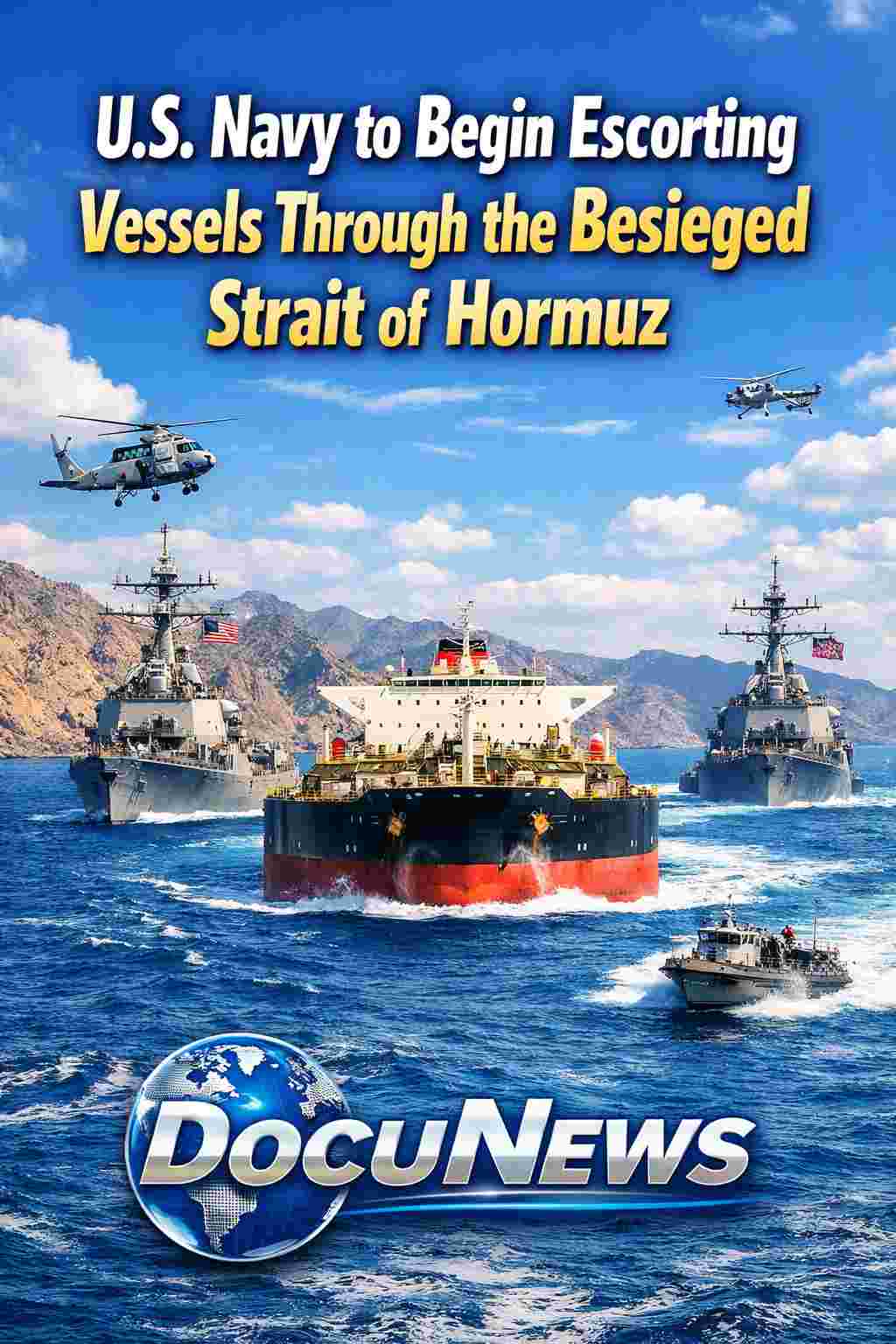
According to defense officials, the escort program will involve guided missile destroyers, surveillance aircraft, and reconnaissance drones. These assets will accompany groups of merchant vessels through the Strait of Hormuz. Ships will travel in coordinated convoys to reduce vulnerability during transit.
Naval officers explained that escort ships will maintain defensive positions around the merchant vessels. Radar systems will monitor airspace and surrounding waters for potential threats. If suspicious activity appears, naval crews will communicate directly with the convoy and take protective action if necessary.
Moreover, the operation will rely heavily on intelligence sharing. The United States will cooperate with regional partners and international maritime organizations. This cooperation will help identify potential risks before ships even enter the strait.
International Response to the Escort Plan
Global reaction to the escort plan has been mixed. Some governments welcomed the decision and described it as necessary for protecting international trade. European shipping associations, for example, have expressed strong support for the move.
However, other nations have urged caution. Some officials fear that increased military presence could raise tensions further. Diplomatic channels therefore remain active as governments attempt to balance security needs with regional stability.
Still, many analysts believe the escorts will provide reassurance to commercial operators. Without such protection, shipping companies might reduce traffic through the strait. That reduction could disrupt oil supplies and increase fuel prices worldwide.
Impact on Global Oil Markets
Energy markets reacted immediately to news of the naval escorts. Oil prices briefly rose as traders assessed the possibility of prolonged disruption in the Strait of Hormuz. However, prices stabilized after officials confirmed that shipping lanes would remain open.
Economists note that even minor disturbances in the strait can trigger market volatility. Because energy supplies depend heavily on this corridor, traders monitor every security update closely. Therefore, naval escorts may help calm markets by demonstrating that major powers remain committed to protecting maritime trade.
For more background on global oil shipping routes, readers can review research published by the U.S. Energy Information Administration at:
https://www.eia.gov/international/analysis/special-topics/World_Oil_Transit_Chokepoints
Challenges Facing Naval Escorts
Although escorts improve security, the mission still carries risks. The Strait of Hormuz experiences heavy traffic every day. Cargo ships, oil tankers, fishing boats, and military vessels share the same narrow waters. As a result, coordinating movement requires constant communication.
Weather conditions can also complicate operations. Strong currents and limited maneuvering space make navigation difficult for large ships. Therefore, escort commanders must carefully guide convoys through designated lanes while maintaining defensive readiness.
In addition, asymmetric threats remain a concern. Small boats, drones, and coastal missile systems can pose dangers even when major warships patrol nearby waters. Because of these factors, naval crews must remain alert throughout the entire escort mission.
Historical Context of Naval Escorts
Naval escort missions in the Persian Gulf are not new. During the 1980s Iran-Iraq war, the United States launched Operation Earnest Will. That mission involved escorting Kuwaiti oil tankers through the Strait of Hormuz after attacks threatened shipping.
The operation demonstrated how quickly maritime security issues can escalate in the region. Several ships were damaged by mines during that period. Nevertheless, the escorts eventually helped stabilize traffic through the corridor.
Today’s situation differs in several ways. Modern naval technology now includes advanced surveillance systems, satellite monitoring, and drone reconnaissance. These capabilities allow commanders to detect threats earlier and respond faster than in previous decades.
Role of International Maritime Cooperation
Security in the Strait of Hormuz depends heavily on international coordination. Many countries rely on the waterway for energy imports. Consequently, several nations have contributed naval forces to patrol the Gulf region in recent years.
Organizations such as the International Maritime Organization continue to promote safe navigation standards. Shipping companies also share intelligence through maritime security networks. These collaborations allow crews to report suspicious activity quickly.
Readers interested in maritime safety initiatives can review the International Maritime Organization website:
Economic Risks of Disrupting the Strait
If the Strait of Hormuz were to close even briefly, the economic consequences would be severe. Energy analysts estimate that nearly 20 percent of global oil flows through the passage daily. Therefore, any blockade could immediately affect fuel supplies across Asia, Europe, and North America.
Shipping disruptions could also impact global manufacturing. Many industries rely on petroleum products transported through the Gulf. Plastics production, transportation networks, and aviation fuel supplies all depend on stable oil shipments.
Because of these factors, governments across the world monitor the situation closely. They understand that maintaining open sea lanes protects not only regional trade but also the broader global economy.
Security Measures for Commercial Ships
Shipping companies have already begun implementing additional safety measures. Many vessels now maintain constant radar monitoring while crossing the strait. Crews also conduct emergency drills in case of sudden attacks.
Some companies employ private maritime security advisers who coordinate directly with naval forces. These specialists provide guidance on communication protocols, navigation routes, and defensive actions during emergencies.
Meanwhile, insurers continue evaluating risk levels in the region. Premium costs for tankers traveling through the strait have increased significantly. Therefore, naval escorts could help reduce those costs by improving overall security conditions.
Diplomatic Efforts to Reduce Tensions
Alongside military measures, diplomatic initiatives continue behind the scenes. Several governments have urged restraint and dialogue among regional powers. International mediators hope to prevent further escalation that could threaten shipping lanes.
Diplomatic channels remain active in Washington, European capitals, and Middle Eastern governments. Officials emphasize that maintaining freedom of navigation remains a shared global interest.
Experts argue that long-term stability in the Strait of Hormuz will require sustained diplomatic engagement. While naval escorts provide short-term protection, lasting security will depend on political agreements and regional cooperation.
DocuNews Central Analysis
Coverage from DocuNews Central suggests the escort mission reflects a broader strategic message. By committing naval resources to protect shipping lanes, the United States signals that it intends to maintain open trade routes regardless of rising regional tensions.
Analysts at DocuNews Central believe the move also aims to reassure international markets. Energy traders closely watch developments in the Strait of Hormuz. Therefore, visible naval patrols may reduce fears of supply disruptions.
At the same time, the operation highlights the fragile balance between deterrence and escalation. Strong military presence can discourage attacks. However, it can also raise concerns among rival powers. For this reason, diplomatic engagement remains just as important as naval protection.
Conclusion
The decision for the U.S. Navy to begin escorting vessels through the besieged Strait of Hormuz marks a significant development in global maritime security. Rising tensions and repeated threats against commercial ships forced policymakers to act quickly. Naval escorts now aim to safeguard trade routes, reassure international markets, and protect vital energy shipments.
Although the mission strengthens maritime security, it also underscores the fragile geopolitical environment in the Gulf. Sustained diplomatic engagement will remain essential for preventing further escalation. Ultimately, stability in the Strait of Hormuz depends not only on naval power but also on international cooperation and responsible political leadership.
Disclaimer
This report is published for informational and journalistic purposes by DocuNews Central. While every effort has been made to ensure accuracy, developments in international security situations can change rapidly. Readers are encouraged to consult official government statements and trusted global news organizations for the most current updates regarding maritime operations and regional developments.
For more information visit Israeli-Iran-U.S War
