
Israeli-Iran-U.S War
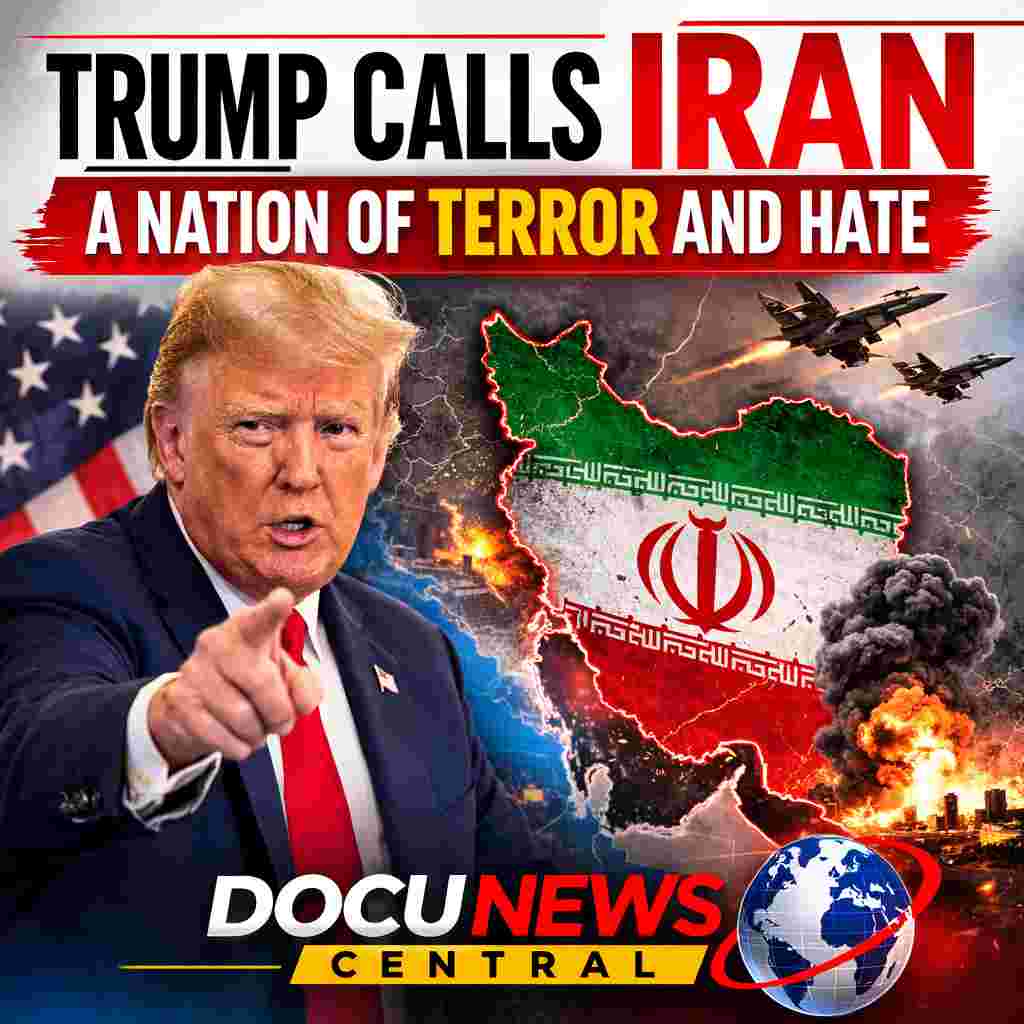
Trump Calls Iran a Nation of Terror and Hate

Author: Jonadab| Publisher: DocuNews. Date: March 12, 2026.
In a landmark geopolitical statement that reverberated around the world, Trump Calls Iran a Nation of Terror and Hate. The statement directly targets Tehran’s leadership and policies, and continues to shape international relations. Global audiences searching terms like Trump Iran terror accusation, Iran hate rhetoric Trump, US-Iran tensions 2026, and Trump statement Tehran terrorism are encountering widespread coverage. When Trump Calls Iran a Nation of Terror and Hate amid military pressure and conflict, the words carry significant strategic weight and raise urgent questions about peace, security, and foreign policy.
Washington, D.C. & Around the World
According to Docunews Central, On March 12, 2026, amid escalating military engagement and diplomatic strain, U.S. President Donald J. Trump publicly declared that Iran is a “nation of terror and hate”. The statement punctuated months of confrontation between the United States and Iran, including coordinated military actions with Israel and fierce condemnations from Tehran’s leadership. Source
This declaration followed significant military campaigns and geopolitical developments, including a joint U.S.–Israel offensive against Iranian strategic sites. Analysts reported coordinated strikes targeting military infrastructure while increasing regional instability. Read More
Iran’s new Supreme Leader, Mojtaba Khamenei, denounced the characterization, accusing the United States of escalating tensions and harming civilians. Live Updates
Political Background: Why Trump Used These Words
Trump’s rhetoric reflects years of friction, rooted in nuclear disputes and broader ideological conflicts. In 2025, the White House issued a Fact Sheet outlining a campaign to deny Iran a nuclear weapon and counter its alleged support for militant groups. Read Fact Sheet
Critics argue that labeling an entire nation as hateful or terror-centric oversimplifies complex realities. Iranian officials have denounced U.S. policies as unjust and politically motivated. Iran Reaction
Historical Context of U.S.–Iran Relations
Relations have been fraught since the 1979 Iranian Revolution and the U.S. embassy seizure. Diplomacy has repeatedly broken down amid distrust, sanctions, proxy conflicts, and nuclear negotiations.
Military Escalation and Strategic Choices
Over the past year, U.S. policy involved significant military pressure, including coordinated strikes with Israel to degrade Tehran’s nuclear and missile programs. ([ajc.org](https://www.ajc.org/news/the-iran-strikes-explained-how-we-got-here-and-what-it-means?utm_source=chatgpt.com))
Anti-government protests and external targeting have complicated relations. Analysts note internal instability is influenced by both domestic and external pressures.
Also read Iran Mocks Trump Over Social Media Oil Comment
International Reaction
World leaders and international institutions reacted widely. Some U.S. allies echoed concerns about Tehran’s policies. Others warned that public labeling of Iran as “terror and hate” could hinder peace efforts.
Organizations like the United Nations Security Council continue to call for restraint and dialogue. Experts suggest frameworks like the JCPOA, though compliance remains contested.
Regional Impacts and Civilian Costs
The ongoing conflict has humanitarian implications. Reports show civilian displacement, disruptions to oil markets, and regional instability due to missile and drone strikes. Source
While some U.S. officials see pressure as necessary for security, human rights organizations argue war and sanctions harm ordinary Iranians and undermine stability.
Economic Considerations: Sanctions, Oil & Global Trade
Sanctions targeting Iran’s energy sector have disrupted oil exports and global markets. The International Energy Agency warns this contributes to volatile energy pricing. More Info
Tehran threatening to close the Strait of Hormuz heightens global market risk. Economists warn that a prolonged confrontation could disrupt energy supplies worldwide.
Disclaimer: This article is for informational purposes and reflects widely reported developments as of March 12, 2026. It does not constitute legal, military, or investment advice. Coverage may evolve as new information emerges.