
Breaking news
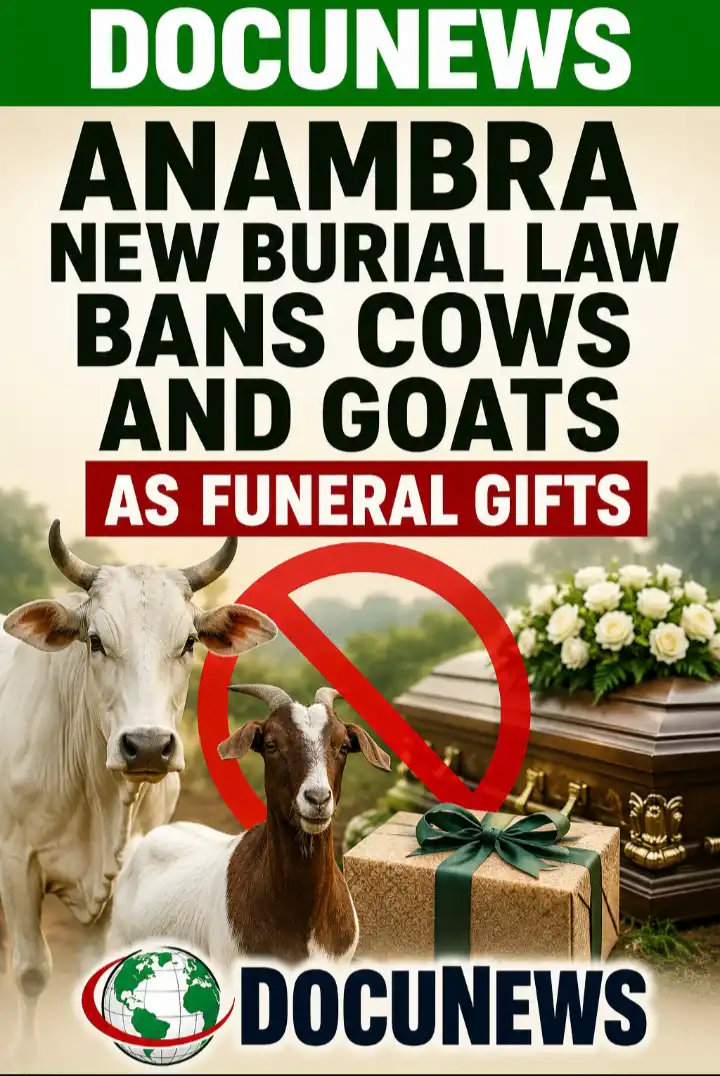
Anambra New Burial Law Bans Cows and Goats as Funeral Gifts

By Jonadab | DocuNews Central May 18, 2026
Anambra New Burial Law Bans Cows and Goats as Funeral Gifts. The law limits excessive burial spending and discourages social pressure linked to traditional funeral customs.
Under the law, families are prohibited from turning funerals into large public displays of wealth. That includes the presentation of expensive condolence gifts such as cows and goats, extended wake-keeps, and multi-day ceremonies.
On May 18, 2026, in Awka, Anambra State, Nigeria, state officials again highlighted the burial regulation while reminding residents that the law remains active and enforceable.
What Happened?
The renewed focus is on Anambra’s Burial/Funeral Ceremonial Control Law, first enacted to reduce the growing cost of burials in the state. Authorities say many families had been forced into debt because of cultural pressure to organize elaborate funerals.
As a result, the government introduced rules aimed at reducing that burden. The law limits how long funeral activities may last and restricts unnecessary spending.
According to DocuNews Central, the law specifically discourages ceremonial practices that create financial hardship for surviving relatives. Officials say the purpose is social relief, not cultural punishment.
Also read Why APC Disqualified Ben Murray-Bruce and 40 Other Aspirants From Senate Primaries
Where Did It Happen?
The enforcement applies across all 21 local government areas in Anambra State, located in southeastern Nigeria. State authorities say every community must comply, regardless of local burial customs.
Who Is Involved?
The Anambra State Government is leading implementation through relevant ministries and local authorities. Town unions, mortuary operators, families, and community leaders are directly affected.
Governor Charles Chukwuma Soludo previously described the burial law as a progressive policy. He said the law was created to reduce pressure on poor families and protect vulnerable residents from exploitative funeral expectations.
Key Restrictions Under the Burial Law
The burial law contains several important restrictions. Funeral ceremonies must remain modest and must not become public displays of wealth.
Families are discouraged from presenting cows, goats, or similar expensive condolence gifts during funeral activities. Officials say those practices often force relatives into avoidable financial stress.
The law also discourages long wake-keeps. Religious vigils must end early and cannot become all-night entertainment events.
Multi-day burials are also restricted. Authorities want ceremonies completed within a limited time frame.
Road closures without approval remain prohibited. Funeral organizers must seek local government permission before blocking public roads.
Public display of caskets for sale also remains banned under the law. Officials say this was included to reduce commercialization around death ceremonies.
Why the Government Says the Law Is Necessary
Officials argue that funeral costs had become unsustainable. Many households reportedly borrowed money simply to meet social expectations.
Some families delayed burials for months while saving funds. Others sold property to finance ceremonies.
The state says this pattern created avoidable poverty. Therefore, lawmakers introduced controls to break that cycle.
According to DocuNews Central, enforcement is intended to protect ordinary residents from financial exploitation linked to cultural pressure.
Public Reaction
Reaction across Anambra has remained mixed. Some residents support the law and say it protects low-income families.
Others argue that funeral customs are deeply cultural and should not face government interference. Traditional leaders in some communities have requested more consultation.
However, legal experts note that the law remains valid unless amended or overturned by the courts. Therefore, compliance remains mandatory.
Authority Comment
Governor Soludo previously praised the legislation, stating that the law was designed to remove pressure from poor families and promote what he called “befitting living” rather than expensive funerals. That remains the state’s central public position.
What Happens Next?
State authorities are expected to continue public awareness campaigns. Local officials may also increase monitoring during major burial ceremonies.
Families planning funerals in Anambra are advised to review current state guidelines before making arrangements. That includes consultation with local town unions and government offices where necessary.
According to DocuNews Central, the state government has signaled that enforcement will continue and violations may attract penalties under existing law.
For more Verified breaking news, please visit www.docunewscentral.com and Legit.ng