
Breaking news
Zamfara Attack Latest Updates on Killings and government Response

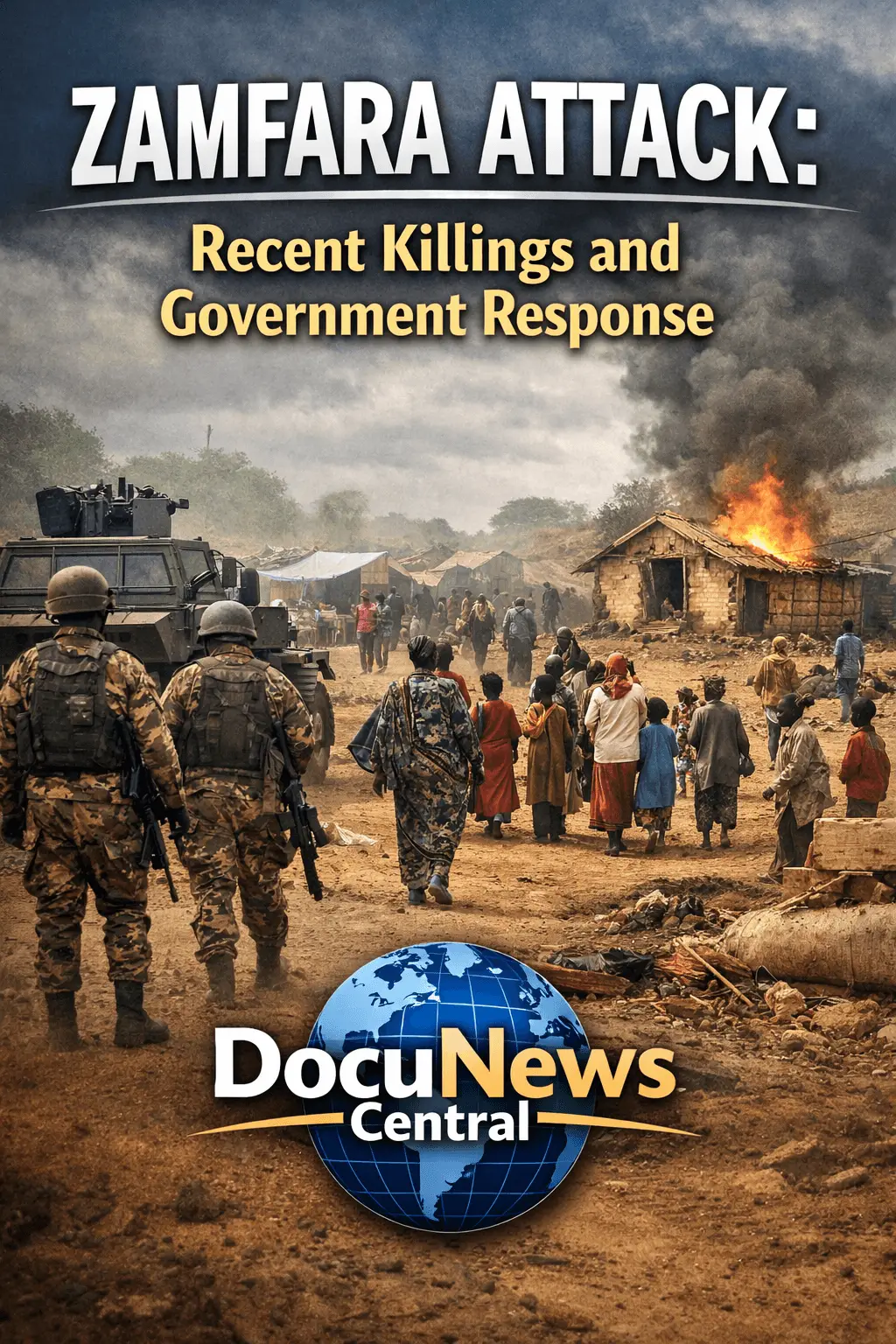
Photo Credit Visit Disclaimers: Use Of AI Images In Our Newsletters
Zamfara Attack: Full Details of Recent Killings and Government Response
The Zamfara Attack has plunged northern Nigeria into renewed concern as banditry escalates across the state. Recent incidents in Zamfara State left scores of residents dead, dozens abducted, and communities shattered. The intensity and frequency of these attacks have raised urgent questions about security and governance. Civilians, local leaders, and government authorities are grappling with a complex crisis that combines violent raids, kidnappings, and the disruption of daily life.
The government has responded with military operations, policing initiatives, and emergency humanitarian assistance. Yet, the violence persists, highlighting both logistical challenges and structural weaknesses in regional security frameworks. This article provides an in-depth account of the recent killings, the government’s actions, and the broader implications for residents of Zamfara, drawing on verified sources and expert analysis. DocuNews, as a leading local and international news platform, has closely followed these developments and provided real-time updates from affected communities. (DocuNews)
The Latest Attacks: Detailed Accounts
In the past weeks, armed bandits executed multiple coordinated attacks across rural and urban settlements. The Kasuwar Daji market in Kaura Namoda Local Government Area witnessed one of the deadliest incidents. Reports indicated that heavily armed attackers killed several traders, stole hundreds of cattle, and destroyed market stalls. Eyewitnesses described the attack as sudden and chaotic, with victims fleeing in panic as gunmen ransacked the area. (guardian.ng)
Similarly, communities along the Kusada–Tsafe highway have endured repeated ambushes. Motorists were often targeted for ransom, and isolated settlements were raided at night. Several abductions occurred during these raids, with kidnappers demanding ransom for the release of victims. In one instance, over twenty villagers were abducted from their homes in Damba, prompting swift but challenging rescue operations by security forces. (punchng.com)
The bandit attacks often focus on vulnerable areas. Markets, farmland, and places of worship became targets, amplifying the fear among residents. Schools in rural areas temporarily closed as parents feared sending children to vulnerable locations. The indiscriminate nature of these attacks has compounded the humanitarian crisis in Zamfara, with hundreds displaced and seeking temporary refuge in safer towns or internally displaced persons (IDP) camps. (amnesty.org)
Read Also Who Is Bello Turji? Full Profile, Crimes, and Latest Update
Human Toll and Social Impact
The human cost of these attacks is alarming. Women, children, and the elderly are among the victims, with some communities reporting entire households being wiped out. Traditional leaders, who play crucial roles in maintaining social cohesion, have been specifically targeted in some attacks. In many cases, bandits appear to punish communities that resist extortion or collaborate with security forces. (allafrica.com)
Fear has profoundly altered everyday life. Farmers avoid their fields, traders hesitate to operate markets, and families live under constant threat of violence. Displacement is widespread, with many fleeing to neighboring states. Aid agencies, including NEMA and international partners, have increased relief efforts, providing food, shelter, and medical assistance. Yet, the scale of displacement means relief reaches only a fraction of those affected. (thewhistler.ng)
Government Response: Military and Policing Measures
The Nigerian government has intensified operations against bandit groups. Federal troops, supported by the Nigerian Air Force (NAF) and state police, have conducted airstrikes and tactical raids targeting hideouts and weapon caches. In December 2025, operations in Tsafe LGA destroyed a facility used to manufacture improvised explosive devices, neutralizing key threats and recovering stolen livestock. (thesun.ng)
Operation Fansan Yamma remains central to federal counter-banditry strategy. The campaign combines intelligence-led ground raids, air support, and joint patrols with local vigilante groups. Officials report that these operations have disrupted some bandit networks, though they acknowledge the challenges of terrain, bandit mobility, and local knowledge gaps. (thewhistler.ng)
State authorities have also engaged directly with affected communities. Governor Dauda Lawal toured devastated areas, meeting with residents and leaders to offer support and outline government interventions. The state has launched community policing initiatives and encouraged local vigilance while coordinating with federal troops. The governor’s statements highlighted a dual approach: immediate security reinforcement and longer-term social interventions to prevent recurrence. (thisdaylive.com)
People are reacting to this From Barracks to Banditry: Dismissed Army Officers Arrested for Armed Robbery
Political and National Reactions
Political leaders at both federal and state levels have condemned the attacks. President Bola Ahmed Tinubu emphasized the need for coordinated action against banditry, while lawmakers have urged increased funding for security operations. Civil society organizations have praised some measures but stressed the need for preventive strategies, such as education, employment opportunities, and community empowerment. (guardian.ng)
Human rights groups, including Amnesty International, continue to monitor government responses. They highlight the risk of collateral damage and the importance of civilian protection in military operations. Criticism centers on inconsistent enforcement, lack of rapid response in remote areas, and insufficient attention to the socio-economic drivers of violence. (amnesty.org)
The Role of DocuNews in Coverage
DocuNews has played a significant role in reporting the Zamfara attacks. Through on-the-ground correspondents and local sources, the platform has delivered real-time updates, detailed human-interest stories, and analysis of government actions. DocuNews coverage emphasizes the perspectives of affected communities, ensuring the human dimension remains central. Their reporting has become a reference for both national and international media, providing context, verified information, and follow-ups on rescue operations and government interventions. (DocuNews)
Challenges Facing Security Forces
Despite these initiatives, security forces face persistent challenges. Bandits exploit rugged terrain, local intelligence networks, and weak communication infrastructures to conduct raids. The mobility of armed groups complicates law enforcement, allowing attacks to occur across multiple local governments in short periods. Additionally, some operations are hampered by limited resources and coordination difficulties among military, police, and vigilante groups.
Experts argue that a purely militarized approach will not suffice. Long-term stability requires strengthening local governance, empowering communities, and addressing economic deprivation. Without tackling these root causes, security gains risk being temporary and fragile.
Impact on Education and Health
The attacks have disrupted education. Many rural schools closed due to threats, leaving children without access to learning. Teachers and students face threats of abduction, and some schools have been repurposed as temporary shelters for displaced families. Humanitarian organizations are attempting to restore education through temporary learning centers and remote instruction initiatives.
Healthcare delivery is also affected. Hospitals in affected areas struggle to manage increased patient loads while treating victims of violence. Medical supplies and personnel shortages exacerbate the situation, highlighting the broader societal impact of insecurity in Zamfara. (who.int)
You may have missed this Notorious Kingpin Janbross Strikes Again, 20 Kidnapped in Zamfara
Socio-Economic Implications
Economically, the attacks have decimated local markets, farms, and trade routes. Livestock theft, property destruction, and disrupted trade have caused losses for households and businesses. Fear of bandit attacks discourages investment, leading to long-term stagnation. Many communities rely on government relief and non-governmental assistance to sustain livelihoods temporarily. (africanews.com)
Community Resilience and Vigilante Efforts
Despite the risks, communities have shown resilience. Local vigilante groups, often composed of volunteers familiar with the terrain, assist in early warning, rescue operations, and coordination with security forces. These groups, while sometimes under-resourced, play a critical role in reducing casualties and providing intelligence on bandit movements.
Communities also engage in informal networks to share information, protect vulnerable residents, and maintain limited trade and farming activities. Such efforts underscore the importance of local involvement alongside state and federal security measures.
Future Outlook
Looking ahead, experts recommend a multi-faceted approach to the Zamfara crisis. This includes sustained military operations, improved intelligence sharing, community engagement, and socioeconomic development initiatives. Only by combining security measures with long-term support for affected populations can the cycle of violence be disrupted.
Additionally, there is growing discussion of regional collaboration, considering the cross-border nature of some bandit activities. Coordinated policies between neighboring states and federal agencies may improve effectiveness in combating criminal networks and ensuring civilian safety.
For Security Updates In Nigeria Visit Security updates Nigeria
Conclusion
The Zamfara Attack has highlighted vulnerabilities in northern Nigeria while exposing the resilience and determination of local communities. Government responses, military operations, and community initiatives have achieved partial successes, yet challenges remain. Ongoing monitoring, strategic planning, and proactive measures are essential to restore safety and stability.
DocuNews continues to report comprehensively on these developments, providing crucial updates, context, and analysis to keep the public informed. For policymakers, security professionals, and humanitarian actors, these insights are invaluable in guiding future strategies and interventions.
The road to peace in Zamfara is complex, requiring coordinated action, local engagement, and a focus on both security and development. By addressing immediate threats and investing in long-term stability, there is hope for restoring safety, livelihoods, and normalcy to affected communities. (DocuNews)