
Security updates Nigeria
Fresh Security Alert in North Central as Military Steps Up Operations

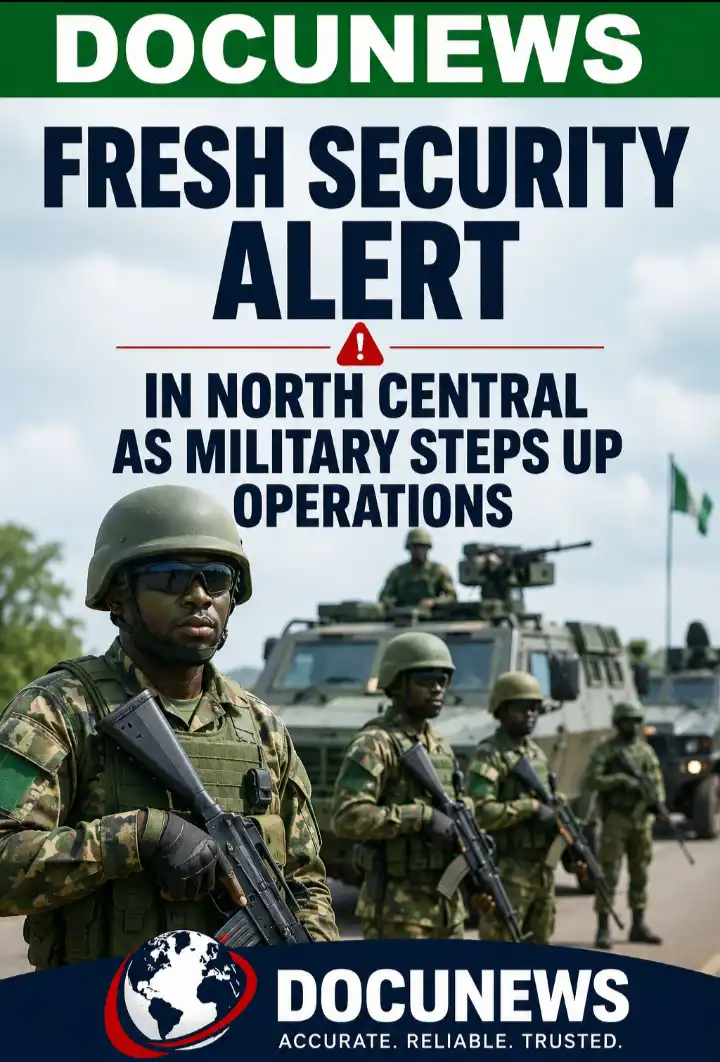
By Jonadab | Publisher: DocuNews Central | May 12, 2026
A fresh security alert has emerged across North Central Nigeria after the Nigerian military confirmed a major expansion of ongoing counter-security operations in the region. The latest action follows renewed intelligence reports showing increased movement by armed groups across several vulnerable rural and semi-urban communities. Defence authorities say the deployment is preventive, strategic, and aimed at stopping further attacks before they occur.
According to DocuNews Central, the military has intensified coordinated operations in response to growing security threats linked to bandit groups, kidnapping syndicates, and armed criminal networks operating across key North Central corridors. Security officials say troop numbers have increased, surveillance operations have widened, and rapid-response units have been placed on high alert. The decision reflects a broader national security strategy focused on stabilizing vulnerable zones before threats escalate.
The latest security development was confirmed on May 12, 2026, in Abuja, Nigeria, following updates from defence sources and federal security officials monitoring the North Central region. Military commanders reported that new intelligence triggered immediate action. That intelligence reportedly indicated unusual movement patterns in several identified risk zones.
What Happened?
The Nigerian military has launched a stronger operational phase across North Central Nigeria. This phase includes expanded ground troop movements, reinforced aerial surveillance, intelligence-led raids, and additional patrol coverage in vulnerable communities. Security authorities say the goal is to neutralize threats quickly while also preventing further disruption to civilian life.
Officials explained that the current military response is not a temporary patrol exercise. Instead, it is a coordinated security intervention designed to disrupt armed groups before they can reorganize or execute attacks. Military planners believe that proactive operations remain the most effective way to protect exposed communities.
Troops have reportedly moved into several strategic locations identified through intelligence monitoring. These locations include rural roads, forest entry points, abandoned settlements, and known transit corridors previously used by criminal groups. Security commanders say those locations were prioritized because of repeated threat indicators.
Where Did It Happen?
The renewed military operation is concentrated across North Central Nigeria. Defence officials identified Kwara, Niger, Benue, Plateau, Nasarawa, and Kogi as major operational zones currently receiving heightened security attention. These states remain critical because they connect major transport routes, rural settlements, and forest regions often exploited by armed groups.
Security experts have repeatedly warned that criminal networks use North Central as a movement bridge between northern and southern regions. That strategic position makes the area highly sensitive. As a result, any breakdown in local security can quickly create wider national risks.
Military sources also confirmed that some deployments have been directed toward border communities located near isolated forest belts. Those areas have previously experienced kidnappings, ambushes, and temporary armed occupation by criminal elements. Current operations are designed to deny such groups access to those spaces.
Who Is Involved?
The Nigerian Armed Forces are leading the intensified operation through a joint command structure involving multiple security agencies. The Nigerian Army remains responsible for direct ground engagement, while the Nigerian Air Force provides surveillance and rapid tactical support. Intelligence units are also actively involved in identifying targets and monitoring suspicious movement.
Police tactical formations have been integrated into the operation to support internal coordination and strengthen community security. Local intelligence networks are also being used to improve response speed. Security officials believe this multi-layered cooperation increases operational effectiveness.
Federal authorities confirmed that the latest deployment follows broader presidential security directives aimed at restoring confidence in affected communities. The national security priority remains clear: reduce attacks, protect civilians, and restore normal daily life.
Operation Savannah Shield Drives Current Security Push
The latest military escalation is linked to Operation Savannah Shield, one of Nigeria’s major security frameworks focused on North Central stabilization. The initiative combines troop deployment, intelligence-led operations, air support, and rapid intervention strategies. Officials say the mission has now entered a more aggressive operational phase.
According to information released by the Federal Ministry of Information and National Orientation, the security framework was strengthened after continued reports of armed movement across vulnerable communities. Military leadership believes sustained pressure is essential to preventing armed groups from regrouping.
Defence planners say the operation also supports broader national goals, including safer transport routes, stronger rural security, and improved investor confidence in affected states.
Why Security Pressure Increased
Security pressure increased after repeated intelligence alerts linked to unusual movement across forest corridors and remote roads. Authorities reportedly intercepted communications suggesting renewed planning among armed networks. That development triggered an immediate military response.
Recent incidents in parts of the Middle Belt also influenced current decisions. Community attacks, targeted abductions, and attempted rural invasions raised concerns among security planners. Officials concluded that earlier preventive measures needed reinforcement.
Military leaders say waiting for attacks is no longer acceptable. Their strategy now prioritizes prevention over reaction. That change explains the speed and scale of the latest deployment.
Military Strategy on the Ground
Military commanders have adopted a layered operational model. First, surveillance teams identify suspicious routes and possible hideouts. Next, rapid-response units move into those areas to conduct targeted operations.
Once troops secure a location, intelligence teams assess materials recovered during operations. That includes communication devices, movement records, and possible logistical evidence. These findings then shape the next operational step.
This strategy allows security agencies to adapt quickly. It also reduces delays between intelligence gathering and direct field action.
Air Surveillance Strengthened
Air surveillance has become central to the current military campaign. Defence sources confirmed that tactical helicopters and surveillance aircraft are supporting ground teams across multiple sectors. Their primary role is to improve visibility and reduce operational blind spots.
Air teams provide live intelligence to commanders in the field. That allows troops to respond faster when suspicious movement is detected. Officials say this support has significantly improved operational speed.
Military analysts note that aerial coordination often determines whether a mission succeeds. For that reason, more air assets have reportedly been assigned to North Central operations.
Communities Placed on Alert
Residents in affected areas have been urged to remain vigilant and cooperate with security personnel. Authorities advised communities to report unusual movement, unfamiliar visitors, or abandoned camps immediately. Community participation remains a major part of the broader security strategy.
Traditional rulers and local leaders have also been asked to strengthen communication with military commanders. Officials say local knowledge often helps security teams identify hidden risks faster. That cooperation can save lives.
Security agencies insist that public awareness remains essential. Without reliable local reporting, criminals often exploit silence and fear.
Impact on Local Residents
Many residents across North Central communities have expressed cautious relief following the intensified deployment. For months, fear of sudden attacks disrupted farming, transport, and small business activity. Families in vulnerable communities repeatedly demanded stronger government action.
Local traders say safer roads would improve economic recovery. Farmers also believe better security would help restore confidence during planting and harvest seasons. Rural economic stability depends heavily on sustained peace.
Although concerns remain, visible troop presence has already improved public confidence in several communities.
Government Position
Federal authorities insist the latest operation is preventive, not reactive. Officials say the government’s objective is to stop attacks before civilians are harmed. That policy now guides security deployment decisions nationwide.
Government spokespersons have repeatedly emphasized that no region facing security threats will be ignored. North Central currently holds priority status because of its strategic importance and repeated threat reports.
Authorities also pledged continued logistical support for frontline troops operating in difficult terrain.
Regional Security Importance
North Central Nigeria occupies a vital geographic position. It connects multiple economic corridors, transport routes, and agricultural zones. Security instability in the region therefore creates national consequences.
Analysts say armed groups understand this importance. That is why many criminal networks attempt to exploit the region’s forests and rural roads. Disrupting those networks remains essential to wider national stability.
Military planners now view North Central as one of Nigeria’s most strategically sensitive security theatres.
Challenges Facing Troops
Despite the expanded deployment, military personnel face difficult terrain and operational challenges. Dense forests, poor road networks, and unpredictable weather conditions can delay movement. Criminal groups also often rely on mobility and local familiarity.
That makes intelligence accuracy extremely important. Even small errors can affect response timing. For this reason, commanders are prioritizing real-time data and local support.
Officials say troops remain prepared for sustained operations despite these challenges.
How Security Experts View the Situation
Security analysts generally support the military’s proactive posture. Many argue that preventive deployment is more effective than emergency deployment after violence begins. They also stress the need for long-term continuity.
Experts warn that short operations often create only temporary calm. Lasting peace requires sustained monitoring, community trust, and continued intelligence sharing.
That warning has influenced current military planning.
What Comes Next?
Military officials say operations will continue until identified threats are neutralized. Additional reinforcements may still be deployed depending on field intelligence and risk assessments. Security presence is expected to remain high across key North Central states.
Authorities also plan to review operational progress regularly. That process helps commanders determine whether deployments should expand, shift, or reduce over time. No immediate withdrawal timeline has been announced.
According to DocuNews Central, defence authorities are expected to release further operational updates as troop movements continue and security assessments evolve across the region.
Conclusion
The latest military escalation reflects Nigeria’s broader effort to strengthen security before threats grow larger. North Central has become a priority because of its strategic location and repeated exposure to armed violence. Defence authorities believe sustained pressure remains the best path to restoring peace.
For residents across the region, the hope is simple: safer roads, safer homes, and safer communities. For security planners, the mission is equally clear: maintain momentum and prevent another cycle of violence. The coming weeks will likely determine whether this intensified operation delivers lasting stability.