
Security updates Nigeria
Boko Haram Used Call to Prayer to Gather Victims for Deadly Attack

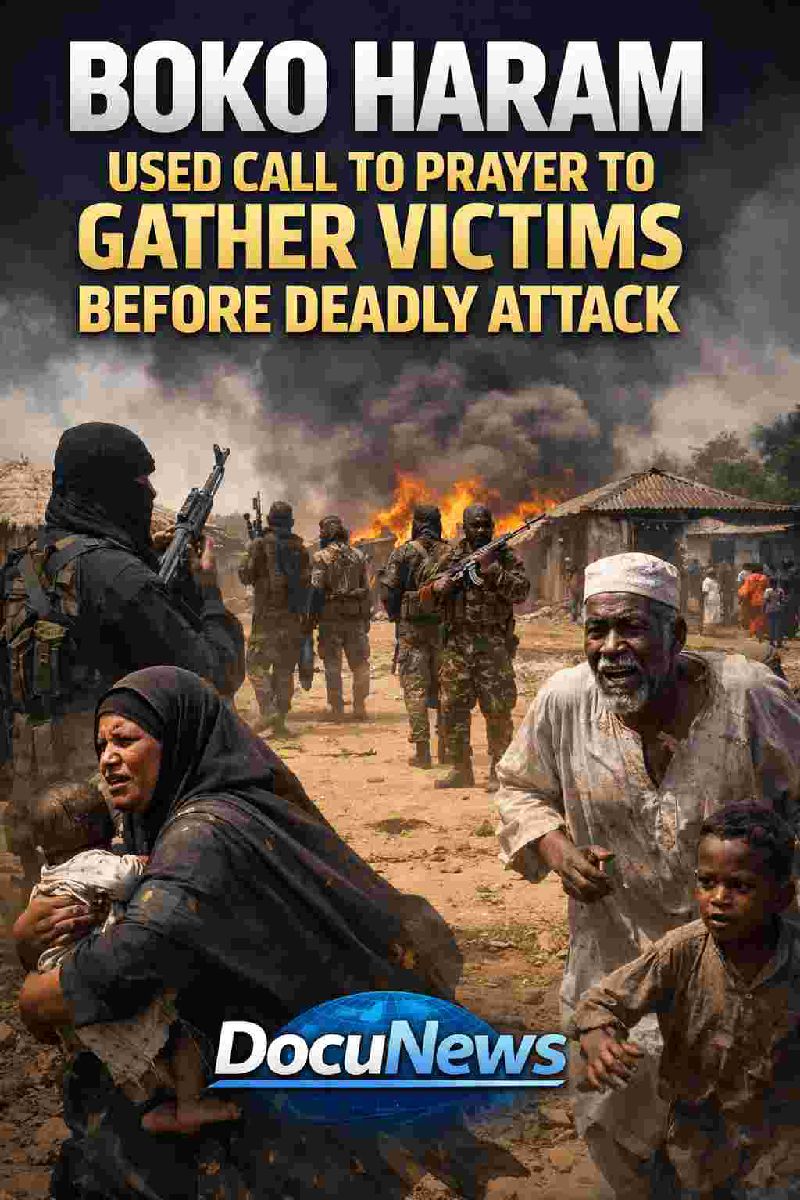
Boko Haram has changed their traps to lure their victims to Death. This is an eye opener to all. This is so serious as Boko Haram reportedly exploited the Muslim call to prayer to lure unsuspecting residents into the open, where a deadly attack awaited them. Eyewitnesses and security sources indicate that the attackers used religious cues to mask their intentions, turning a moment of worship into a trap that claimed dozens of lives. This incident has drawn widespread condemnation and raised concerns about evolving insurgent tactics in northeastern Nigeria.
According to DocuNews Central, The attack occurred on February 10, 2026, in Maiduguri, Borno State, Nigeria, a region long plagued by insurgent violence. Authorities reported that the attackers strategically positioned themselves near areas where residents typically gather for prayer, making it difficult for anyone to suspect danger until it was too late. The aftermath left a community shaken, families displaced, and security forces scrambling to reinforce local safety measures. Such attacks highlight the persistent threat posed by Boko Haram despite ongoing military operations and regional cooperation.
How the Attack Unfolded
The perpetrators demonstrated a calculated understanding of local routines. By using the azan, or Muslim call to prayer, they managed to assemble civilians at predictable locations. Witnesses described the attackers blending into the environment, waiting for the precise moment to strike. Authorities noted that such methods reflect a disturbing evolution in insurgent tactics, where cultural knowledge becomes a weapon. Ordinary activities, like attending prayer, transformed into life-threatening situations for residents.
Immediately after the attack, Nigeria’s National Emergency Management Agency (NEMA) deployed emergency teams to affected areas. First responders reported dozens of fatalities and numerous injuries, though precise numbers remained under review. Hospitals were overwhelmed with the injured, forcing temporary clinics and mobile medical units to be set up. The swift response by local authorities likely prevented an even higher casualty count.
Eyewitness and Survivor Accounts
Residents who spoke with DocuNews Central said. “We heard the call to prayer and assumed it was normal,” he explained. “Then the gunfire started, and people ran in every direction. The attackers seemed to know exactly where to target us.” Another witness noted the rapid arrival of emergency services, emphasizing the value of community alert systems. These testimonies highlight the psychological impact of using trusted cultural signals, like the prayer call, to orchestrate violence.
Survivors received immediate medical attention, while humanitarian organizations moved quickly to provide shelter, food, and counseling services. Local aid groups coordinated with international agencies to ensure that trauma support reached affected families. According to the United Nations High Commissioner for Refugees (UNHCR), rapid humanitarian response is crucial in mitigating both physical and psychological harm following insurgent attacks.
Read also El-Rufai Still in EFCC Custody as Surety Backs Out.
Security and Law Enforcement Response
The Nigerian military increased patrols and established checkpoints in Maiduguri and neighboring towns. Intelligence units began tracing potential collaborators and analyzing patterns of insurgent activity. Experts emphasized that community engagement is essential to counteract insurgent strategies that exploit cultural practices. Training local residents to report suspicious activities has become a priority in reducing vulnerability to attacks.
According to the Council on Foreign Relations, insurgent groups like Boko Haram increasingly exploit predictable civilian behavior. Routines such as attending prayer gatherings, market days, or school schedules can be manipulated to stage ambushes. Security forces must balance maintaining public freedoms with safeguarding lives, creating a delicate operational challenge in affected regions.
Boko Haram’s History and Evolving Tactics
Boko Haram emerged in northeastern Nigeria in 2002, initially promoting an extremist ideology opposing Western education. Over the years, the group has escalated attacks to include schools, religious institutions, and public spaces. Experts observe that the organization now incorporates psychological manipulation alongside conventional attacks. Using religious signals like the call to prayer represents a new dimension in the group’s operational sophistication.
The United Nations and multiple NGOs have documented Boko Haram’s pattern of targeting vulnerable populations to instill fear. By exploiting daily routines, insurgents achieve tactical surprise and create lasting psychological trauma. The UN Security Council has repeatedly called for international support to strengthen intelligence-sharing and enhance civilian protection measures in northeastern Nigeria.
You may have missed this Troops Destroy Three Bandit Camps, Free Kidnap Victims in Kogi
Regional Security Implications
The spillover effect of Boko Haram’s activities impacts neighboring countries such as Chad, Cameroon, and Niger. Regional forces coordinate to monitor border areas, preventing insurgents from moving freely and establishing new bases. Cross-border security initiatives, supported by the African Union, aim to strengthen early warning mechanisms and enhance rapid response capabilities. Experts argue that only integrated regional approaches can effectively counteract Boko Haram’s mobility and adaptability.
Local governments continue to coordinate with military and civilian agencies to improve surveillance and communication systems. Technologies like drone monitoring, real-time reporting apps, and rapid intervention units are increasingly deployed. Analysts note that while these measures help, insurgents’ ability to blend into communities and exploit cultural norms remains a significant challenge.
Impact on Civilian Life
Beyond immediate casualties, attacks like this disrupt education, trade, and community cohesion. Families live in fear of daily activities, from attending school to visiting markets or places of worship. Economic losses accumulate as businesses close temporarily and humanitarian resources divert to emergency response. Children and women, in particular, suffer long-term consequences, including trauma, displacement, and interrupted education.
Humanitarian organizations, including International Committee of the Red Cross and UNICEF Nigeria, emphasize that comprehensive aid must address both physical survival and psychosocial recovery. Programs focusing on community resilience, trauma counseling, and educational continuity are crucial to rebuild confidence and normalcy in affected areas.
Government Measures and Public Awareness
Borno State authorities have urged residents to remain alert and report suspicious behavior. Educational campaigns explain risks without inciting panic, fostering a culture of vigilance. Local leaders are facilitating neighborhood watch programs and community meetings to share intelligence. Experts note that building trust between authorities and communities is essential, as civilians often possess critical knowledge that can prevent future attacks.
Coordination with international organizations ensures that medical, logistical, and psychosocial support is timely and effective. Government strategies now blend military, social, and humanitarian measures. Analysts argue that this multi-layered approach increases resilience against insurgent manipulation and reduces the likelihood of repeat attacks.
Expert Analysis of Tactics
Security analysts observe that using religious cues in attacks represents a psychological dimension of modern insurgency. It exploits trust in sacred practices and creates cognitive dissonance among victims. Such tactics complicate counterterrorism efforts, requiring more nuanced approaches than conventional military responses. Training local populations to recognize and report unusual patterns is increasingly vital to maintaining safety.
According to Brookings Institution research, insurgent groups adapt rapidly, blending traditional attacks with psychological and social strategies. This requires intelligence agencies, humanitarian actors, and community leaders to anticipate creative methods of manipulation to prevent civilian harm effectively.
DocuNews Central Opinion
At DocuNews Central, we assess that Boko Haram’s exploitation of religious rituals demonstrates an alarming trend in which insurgents manipulate cultural norms for lethal purposes. This attack underscores the necessity of proactive intelligence, community vigilance, and comprehensive regional collaboration. Beyond security operations, supporting affected communities with education, psychological counseling, and humanitarian assistance is crucial. Only a holistic approach can mitigate long-term consequences and restore confidence among residents.
Conclusion
The deadly use of the call to prayer by Boko Haram highlights the adaptive, insidious nature of modern insurgency. Authorities, local communities, and international partners must work together to protect civilians, counter extremist tactics, and strengthen social resilience. This incident underscores the reality that even routine activities, like attending prayer, can be weaponized by those intent on harm. Vigilance, preparedness, and coordinated action remain essential to prevent further tragedies and ensure the safety of vulnerable populations in northeastern Nigeria.
For More Security Updates In Nigeria Visit Security updates Nigeria