
National
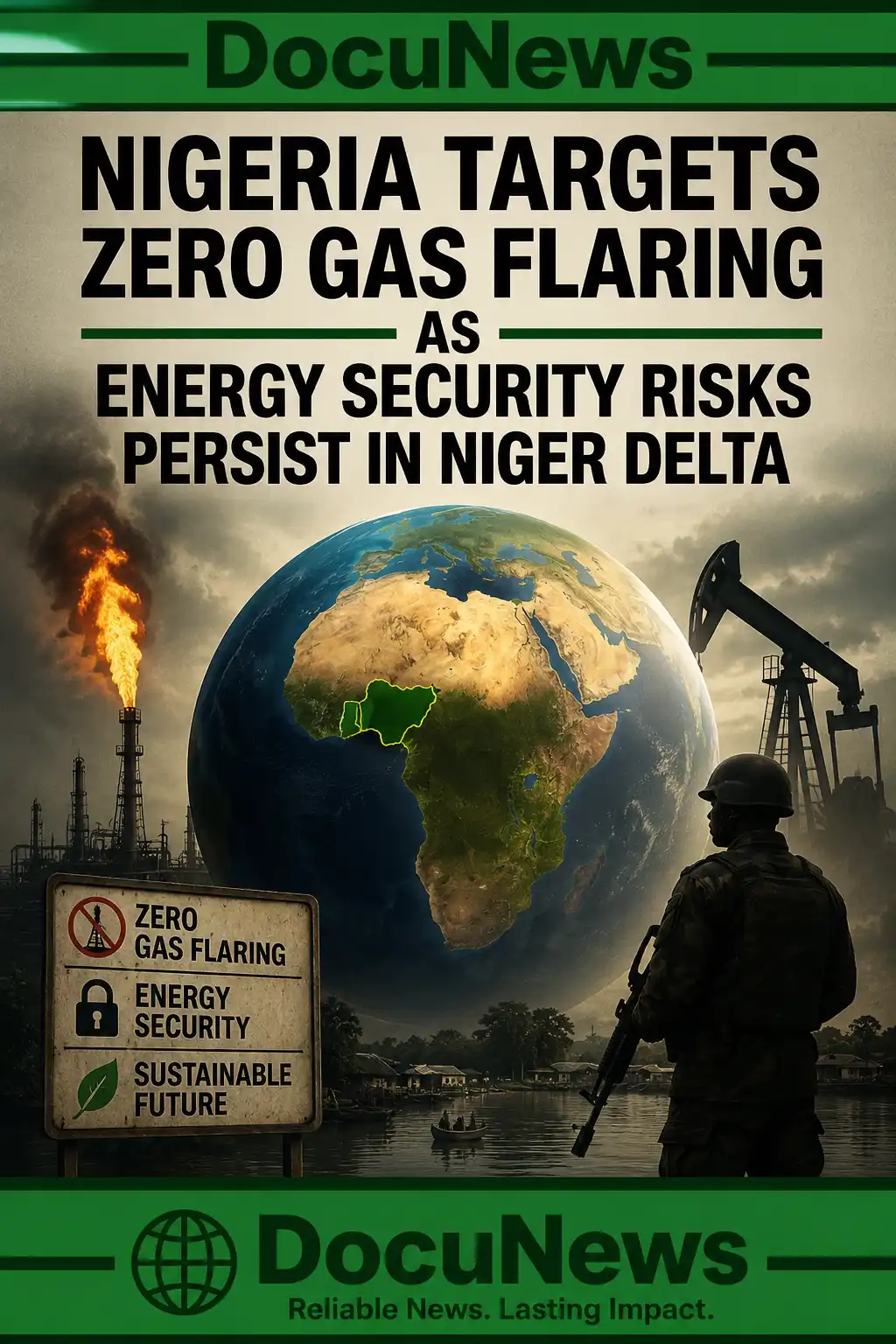
Nigeria Targets Zero Gas Flaring as Energy Security Risks Persist in Niger Delta

By Jonadab
Publisher: DocuNews Central
May 6, 2026
Nigeria Moves to End Gas Flaring Amid Energy Challenges
Nigeria Targets Zero Gas Flaring as Energy Security Risks Persist in Niger Delta. Yes the Nigerian Government has renewed its push to eliminate gas flaring across oil-producing regions. The government says the move is critical for energy security and environmental protection. Officials confirm that enforcement measures have increased in recent months.
At the same time, energy risks continue to affect oil production and gas utilization. Disruptions linked to infrastructure damage and security threats remain persistent. As a result, authorities are balancing environmental goals with operational realities.
On May 6, 2026, in the Niger Delta region of southern Nigeria, federal officials outlined new enforcement strategies. The announcement followed a high-level review of oil and gas operations across key producing states. The location remains central to Nigeria’s energy output.
The policy shift focuses on reducing emissions while improving domestic gas supply. Consequently, the government aims to redirect flared gas into productive use. This includes power generation and industrial development.
Also read Anambra Senator Victor Umeh Dumps ADC for NDC
What Happened?
Nigeria intensified its campaign to achieve zero gas flaring. Authorities introduced stricter compliance requirements for oil companies. In addition, penalties for violations have been strengthened.
Regulators also announced expanded monitoring systems. These systems track gas emissions in real time. As a result, enforcement agencies can respond faster to breaches.
Furthermore, new partnerships have been established to support gas capture projects. The initiative targets unused gas that would otherwise be burned. Therefore, the program aligns with national energy goals.
Where Did It Happen?
The developments are centered in the Niger Delta region. This area hosts the majority of Nigeria’s oil and gas infrastructure. It includes states such as Rivers, Bayelsa, and Delta.
However, the region continues to face environmental and security challenges. Oil spills, pipeline vandalism, and illegal refining remain widespread. These issues complicate enforcement efforts.
Meanwhile, communities in the region have long raised concerns about gas flaring. The practice contributes to pollution and health risks. Consequently, the government faces pressure to deliver measurable results.
Who Is Involved?
The Nigerian federal government leads the initiative through its regulatory agencies. Key institutions include the Nigerian Upstream Petroleum Regulatory Commission. These agencies oversee compliance and enforcement.
Oil companies operating in the Niger Delta are also directly involved. Both international and local firms must adhere to new regulations. Failure to comply may result in financial penalties or operational restrictions.
Local communities and environmental groups remain critical stakeholders. They continue to demand accountability and transparency. Therefore, public engagement has become a key part of the process.
Government Strategy on Gas Utilization
The government is shifting focus toward gas commercialization. Instead of flaring, companies are encouraged to capture and process gas. This approach supports electricity generation and industrial use.
In addition, investment incentives have been introduced. These incentives aim to attract private sector participation. As a result, several new gas projects are currently under development.
Authorities also emphasize infrastructure expansion. Pipelines and processing facilities are being upgraded. Consequently, the capacity to handle gas output is expected to improve.
Energy Security Risks Persist
Despite policy progress, energy security risks remain significant. Pipeline vandalism continues to disrupt supply chains. This leads to production losses and operational delays.
Furthermore, illegal refining activities damage infrastructure. These activities often result in fires and environmental hazards. Therefore, enforcement agencies face ongoing challenges.
Security concerns also affect investor confidence. Companies require stable conditions to commit long-term investments. As a result, uncertainty may slow progress toward zero flaring.
Impact on Local Communities
Communities in the Niger Delta experience the direct effects of gas flaring. Air pollution and heat emissions impact daily life. Health concerns remain a major issue.
However, the new policy aims to address these challenges. Reduced flaring is expected to improve environmental conditions. Consequently, residents may benefit from cleaner air.
In addition, gas utilization projects could create jobs. Economic opportunities may increase as infrastructure expands. Therefore, local participation is seen as essential.
Environmental Implications
Gas flaring contributes significantly to greenhouse gas emissions. Nigeria ranks among countries with high flaring levels globally. Therefore, reducing flaring supports climate goals.
The government’s initiative aligns with international commitments. These include emission reduction targets under global agreements. As a result, Nigeria aims to strengthen its environmental profile.
Moreover, improved monitoring systems enhance accountability. Data-driven enforcement ensures better compliance. Consequently, environmental outcomes may improve over time.
Industry Response and Compliance
Oil companies have acknowledged the government’s directive. Many firms are investing in gas capture technologies. These investments support compliance efforts.
However, challenges remain in implementation. High costs and technical constraints affect project timelines. Therefore, collaboration between stakeholders is necessary.
Regulators continue to engage industry players. Regular consultations aim to resolve operational issues. As a result, progress is being monitored closely.
Infrastructure Development and Investment
Infrastructure remains a critical component of the strategy. Gas pipelines and processing plants are essential for utilization. Without them, flaring cannot be effectively reduced.
The government has prioritized key projects across the region. These projects aim to increase capacity and efficiency. Consequently, long-term benefits are expected.
Private sector investment is also encouraged. Financial incentives and regulatory support are in place. Therefore, investor participation continues to grow.
Future Outlook for Zero Gas Flaring
Nigeria’s target of zero gas flaring remains ambitious. Progress depends on sustained enforcement and investment. Authorities emphasize long-term commitment.
Meanwhile, monitoring systems will continue to evolve. Technology plays a key role in tracking emissions. As a result, transparency is expected to improve.
Ultimately, success will depend on coordination among stakeholders. Government, industry, and communities must work together. Therefore, collaboration remains essential.
Conclusion
Nigeria’s renewed push to eliminate gas flaring reflects a broader energy strategy. The initiative addresses both environmental and economic concerns. However, challenges persist in the Niger Delta.
Security risks, infrastructure gaps, and community issues remain key factors. Despite this, progress is being made through policy reforms and investment. Consequently, the path toward zero flaring continues to develop.
The coming months will determine the effectiveness of these measures. Stakeholders will closely monitor outcomes. As a result, Nigeria’s energy future remains under active review.
