
National
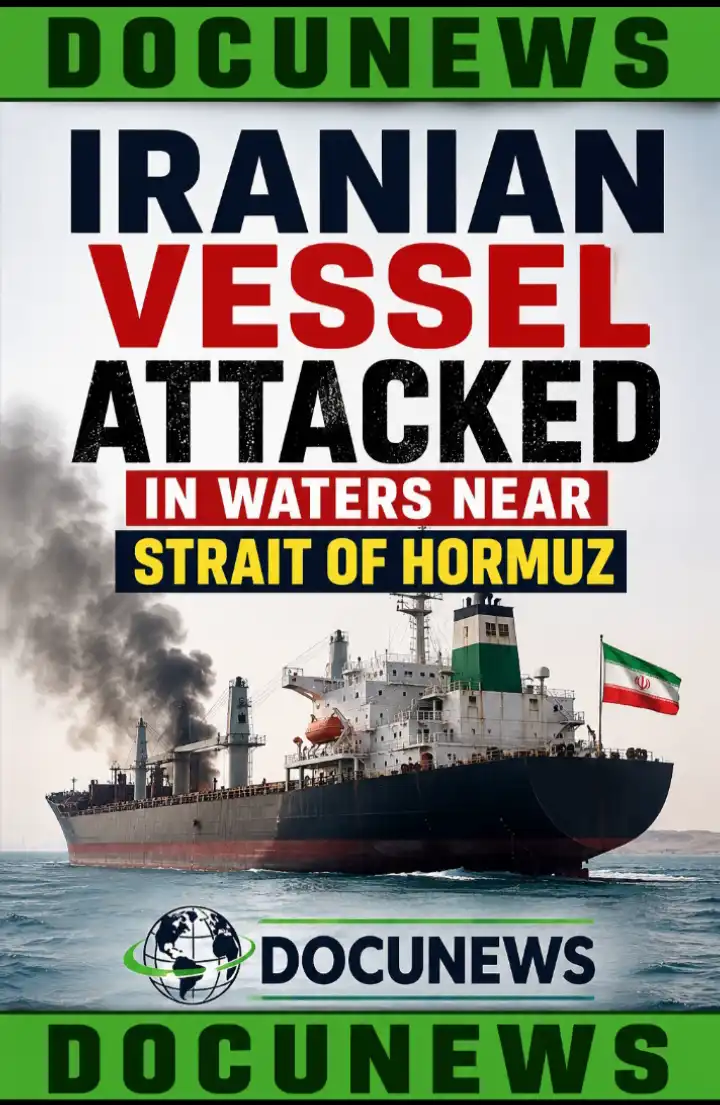
Iranian Vessel Attacked in Waters Near Strait of Hormuz

By Jonadab | Publisher: DocuNews Central 2026-05-08T14:30:00+01:00
An Iranian-flagged commercial vessel was reportedly attacked overnight in waters near the Strait of Hormuz, according to Iranian state-linked media reports released early Friday. Several crew members sustained injuries during the incident. Meanwhile, search efforts continued for other crew members who were still reported missing hours after the attack.
The incident has triggered immediate security concerns across one of the world’s most sensitive maritime corridors. Regional authorities and international shipping monitors began reviewing vessel movement data soon after the first reports emerged. At the same time, maritime security agencies increased surveillance across nearby shipping lanes.
On 2026-05-08, the reported attack occurred in waters close to the Strait of Hormuz, the narrow but strategically critical channel linking the Persian Gulf to the Gulf of Oman. The area remains one of the world’s most closely watched maritime zones because of its importance to global oil and gas shipments.
What Happened?
Iranian media reported that an Iranian-flagged commercial ship came under attack during overnight navigation near the Strait of Hormuz. Early details indicated that multiple crew members suffered injuries. However, the exact number of casualties had not been independently confirmed at the time of reporting.
Search and rescue operations began shortly after the incident. Emergency crews reportedly moved toward the vessel after distress alerts were received. Rescue teams then focused on locating missing crew members believed to have gone overboard or become trapped during the incident.
Authorities have not publicly confirmed the method of attack. Initial reporting did not specify whether the vessel was struck by missiles, drones, explosives, or direct armed assault. Consequently, investigators began collecting evidence before drawing official conclusions.
Because the event occurred during nighttime navigation, visibility conditions may complicate the investigation. Maritime analysts noted that darkness often delays immediate damage assessments. Therefore, additional technical reviews are expected over the next several hours.
Also read Troops Kill 3 Terrorists, Recover 571 Ammunition Rounds in Zamfara
Where Did It Happen?
The reported attack occurred near the Strait of Hormuz. This waterway sits between Iran and Oman and connects the Persian Gulf with the Arabian Sea. Every day, large volumes of crude oil and liquefied natural gas pass through this corridor.
Because of its strategic value, the Strait of Hormuz remains one of the world’s most heavily monitored maritime routes. Any disruption there can affect international shipping schedules. Moreover, energy markets often react immediately to security threats in the area.
The surrounding waters host commercial tankers, container vessels, naval patrol ships, and security escorts. As a result, vessel traffic density remains extremely high throughout most hours of the day. That heavy traffic also increases the urgency of any maritime emergency.
Shipping databases show that thousands of vessels pass through the broader Gulf region each month. Therefore, any confirmed attack quickly becomes a matter of international concern rather than a localized security event.
Who Is Involved?
The vessel involved was identified by Iranian media as an Iranian-flagged commercial ship. Officials did not immediately release the vessel’s full registry information. However, maritime authorities began checking public tracking databases after the report emerged.
The crew members aboard the ship are central to the ongoing rescue effort. Medical teams reportedly treated the injured soon after emergency response units arrived. Meanwhile, officials continued efforts to account for every crew member listed on the vessel’s manifest.
Iranian authorities are expected to lead the initial investigation. However, international maritime organizations may also review the incident because of its location in a globally significant shipping corridor.
Regional naval forces operating nearby may also contribute situational intelligence. Their radar, patrol, and surveillance systems could provide key evidence regarding vessel movement before and after the reported attack.
Immediate Security Response
Following the incident, maritime security agencies issued alerts to vessels operating in nearby waters. Ships transiting the area were advised to increase watchkeeping standards. Many operators also instructed crews to review emergency response procedures.
Commercial shipping firms often react quickly to threats in the Strait of Hormuz. Some vessels reduce speed to improve navigation awareness. Others temporarily alter routing until security conditions become clearer.
Regional naval patrols also tend to increase after such incidents. That response helps reassure merchant vessels and creates a stronger monitoring environment. Therefore, shipping traffic often continues, although under heightened caution.
Insurance providers may also reassess risk exposure in the area. If risks rise sharply, freight and energy transportation costs can increase within days.
Strategic Importance of the Strait of Hormuz
The Strait of Hormuz remains one of the most critical maritime chokepoints in the world. Energy-producing states in the Gulf rely heavily on it for exports. Consequently, disruptions there can have immediate global consequences.
Oil traders watch the strait closely because roughly one-fifth of global oil trade passes through it. Even limited threats can trigger market anxiety. Therefore, shipping security in the area carries international significance.
The narrow waterway also has military importance. Regional navies, international coalitions, and commercial escorts regularly patrol nearby waters. This constant activity reflects the route’s economic and geopolitical value.
Over the last decade, security planners have repeatedly identified the Strait of Hormuz as a high-risk maritime zone. That assessment has not changed.
Previous Maritime Incidents in the Region
The Gulf region has experienced several maritime security incidents over the years. Tankers, cargo ships, and support vessels have all faced varying levels of threat. Some incidents involved sabotage allegations, while others involved seizures or armed confrontations.
Because of this history, commercial operators maintain elevated awareness while transiting the area. Many vessels use enhanced communication systems. In addition, some operators employ private maritime security advisors.
International maritime organizations regularly publish updated transit guidance for the region. These advisories often include recommended routes, reporting procedures, and risk mitigation steps.
Friday’s reported attack now adds another serious event to that security record.
Impact on Global Shipping
Shipping companies closely monitor incidents near the Strait of Hormuz because delays can affect global supply chains. Energy cargoes often receive priority attention. However, container shipments and industrial cargoes can also experience disruptions.
If vessel operators decide to reroute, shipping times may increase. That change can raise fuel consumption and operational costs. Eventually, those added costs can affect consumers and industries worldwide.
Ports across the Gulf region may also implement tighter vessel screening procedures. Although those measures improve security, they can slow departures and arrivals.
As a result, even a single maritime incident can produce wider commercial consequences.
Energy Market Concerns
Energy traders often react quickly to reports involving the Strait of Hormuz. The route remains essential to global crude oil flows. Therefore, any threat raises immediate concern over supply stability.
Oil price volatility often follows major regional security incidents. Even before official confirmation, market participants usually reassess risk. That reaction can produce short-term price spikes.
Natural gas markets may also respond, especially in regions dependent on Gulf exports. Consequently, governments and industry analysts watch these developments carefully.
Friday’s reported attack is likely to remain a key market focus until more operational details emerge.
Investigation Underway
Investigators are expected to examine vessel communications, radar data, and physical damage reports. These findings will help determine what happened. They will also clarify whether the ship was deliberately targeted.
Maritime investigators often rely on voyage data recorders, satellite tracking, and crew testimony. Therefore, establishing a timeline usually takes time.
Authorities may also review nearby vessel traffic records. That process helps identify ships operating in the area before and after the incident.
Until that work is complete, officials are unlikely to confirm a final cause.
Rescue Operations Continue
Rescue teams reportedly remained active hours after the first reports emerged. Their priority was locating missing crew members. Search operations included surface patrol vessels and aerial support where available.
Maritime rescue missions often depend on weather, visibility, and sea conditions. Fortunately, those factors can improve survival chances when response begins quickly.
Medical personnel also continued treatment for injured survivors. Some may require transfer to larger medical facilities depending on the severity of injuries.
Officials have not yet released the identities of those affected.
Regional Diplomatic Attention
Incidents near the Strait of Hormuz often attract rapid diplomatic attention. Governments usually request verified information before issuing formal responses. Nevertheless, security coordination frequently begins immediately.
Regional stability remains a shared concern among Gulf states and international partners. Therefore, maritime incidents in the area rarely remain isolated security matters.
Diplomatic channels may now focus on preventing escalation. That effort becomes especially important when the cause of an incident remains unclear.
For now, official statements remain limited as investigations continue.
International Maritime Guidance
Commercial operators are expected to follow updated maritime advisories issued after the incident. These notices often recommend enhanced communication protocols and defensive navigation procedures.
Masters of vessels transiting the region may receive instructions to maintain tighter reporting schedules. In addition, bridge teams may increase visual and radar monitoring.
These steps are routine during elevated risk periods. Their purpose is to reduce vulnerability and improve response readiness.
What Comes Next?
More information is expected once investigators access the vessel and complete preliminary assessments. Authorities will likely confirm the ship’s identity, cargo status, and damage extent.
Rescue updates may also clarify how many crew members remain unaccounted for. That information will determine the next phase of emergency response.
Meanwhile, shipping operators across the Gulf will continue monitoring security conditions closely. Additional advisories may follow if new risks emerge.
Until then, the reported attack remains a developing maritime security event with regional and international significance.
Source monitoring: Iranian media reports, maritime traffic observations, and regional shipping security updates.
Relevant external resources: International Maritime Organization | MarineTraffic | Reuters
