
Politics
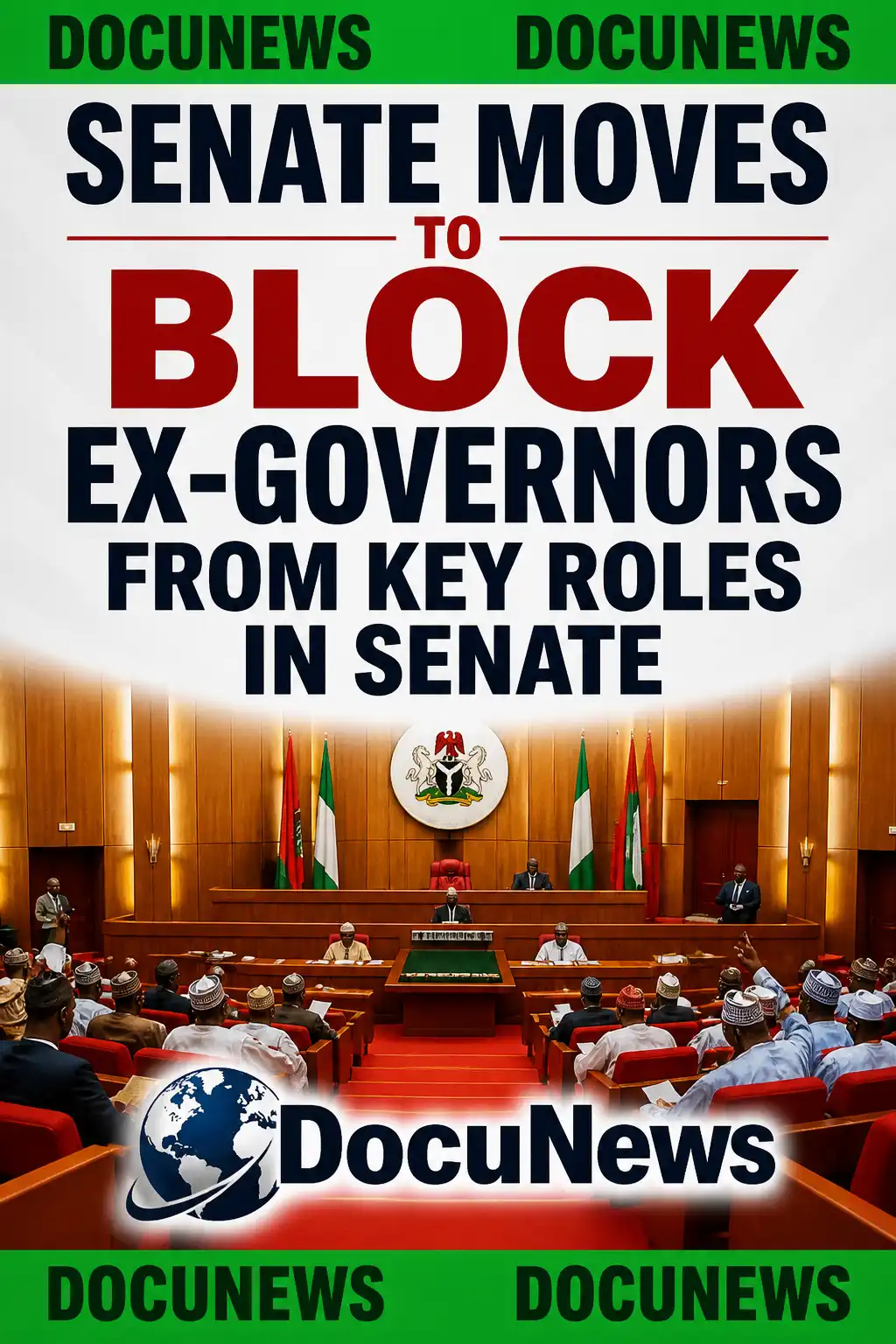
Senate Moves to Block Ex-Governors From Key Roles in Senate

Author: Jonadab
Publisher: DocuNews Central
Date: 2026-05-06T10:00:00+01:00
Overview of the Proposed Legislative Reform
The Senate has begun reviewing a new legislative framework aimed at restricting former state governors from occupying key leadership positions within the National Assembly. Consequently, the proposal is gaining attention across political circles due to its potential to reshape legislative power dynamics in Nigeria. Moreover, lawmakers supporting the bill argue that it will promote internal democracy and reduce excessive influence from politically powerful former governors.
In addition, the proposed rules are designed to strengthen institutional independence within the Senate. Therefore, discussions have intensified as stakeholders examine how the reforms may affect party structures and future elections. Furthermore, the bill is being positioned as part of a broader effort to balance political representation at the federal level.
What Happened?
The Senate introduced a motion to regulate eligibility criteria for leadership positions in the upper chamber. Specifically, the motion seeks to prevent former governors from automatically transitioning into influential Senate leadership roles. As a result, this has triggered nationwide debate among political analysts and party leaders.
Additionally, supporters of the motion claim that it will prevent political domination by a few elite figures. However, critics argue that it could be seen as politically targeted legislation. Nevertheless, deliberations are ongoing as lawmakers evaluate constitutional implications.
Also read Tinubu Opposition Coalition Cracks as Obi, Kwankwaso Pull Out of Alliance
Where Did It Happen?
The discussions are taking place at the National Assembly complex in Abuja, Nigeria’s capital city. Consequently, the Senate chambers have become the central venue for debates surrounding the proposed reforms. Moreover, committee hearings are expected to continue over the coming weeks as stakeholders present their positions.
Furthermore, political observers in Abuja have noted increased engagement from civil society groups. In contrast, some political blocs have expressed concern about the broader implications for democratic participation.
Who Is Involved?
The initiative involves members of the Nigerian Senate, particularly those advocating for legislative restructuring. In addition, former governors who have previously transitioned into federal legislative roles are indirectly affected. As a result, political parties are closely monitoring developments to assess potential impacts on internal leadership strategies.
Moreover, constitutional law experts and policy analysts are contributing to the ongoing debate. Therefore, the discussion has expanded beyond the Senate floor into broader national political discourse.
Political Reactions and National Implications
Reactions to the proposed reforms have been mixed across political lines. On one hand, reform advocates insist that limiting repeated political dominance will improve governance quality. On the other hand, opponents warn that the move could restrict experienced political figures from contributing effectively to legislative processes.
Meanwhile, civil society organizations are calling for transparency in the review process. In addition, they emphasize the importance of aligning any changes with constitutional provisions. Therefore, the debate continues to evolve as more stakeholders weigh in on the matter.
Furthermore, analysts suggest that the outcome of this legislative process could influence future electoral arrangements. As such, attention remains high across political institutions and media platforms nationwide.
Background Context of the Reform Proposal
The proposal emerges amid ongoing discussions about political restructuring within Nigeria’s governance system. Over time, concerns have been raised regarding the concentration of political power among a small group of influential figures. Consequently, lawmakers are exploring mechanisms to encourage broader representation and accountability.
In addition, the Senate has previously considered similar reform proposals aimed at improving legislative independence. However, this latest initiative is drawing more attention due to its direct implications for former governors.
Next Steps in Legislative Process
The bill is expected to undergo further readings and committee evaluations in the Senate. Subsequently, lawmakers will debate its provisions before any final decision is reached. Therefore, the legislative process remains ongoing and subject to further amendments.
Moreover, public consultations may be introduced to gather broader input from stakeholders. In addition, political parties are expected to issue formal positions as discussions progress.
Conclusion
The Senate’s move to regulate the participation of former governors in leadership roles continues to generate significant political interest. Although opinions remain divided, the reform effort highlights ongoing attempts to reshape Nigeria’s legislative structure. Ultimately, the outcome will depend on further deliberations within the National Assembly.
