
Politics
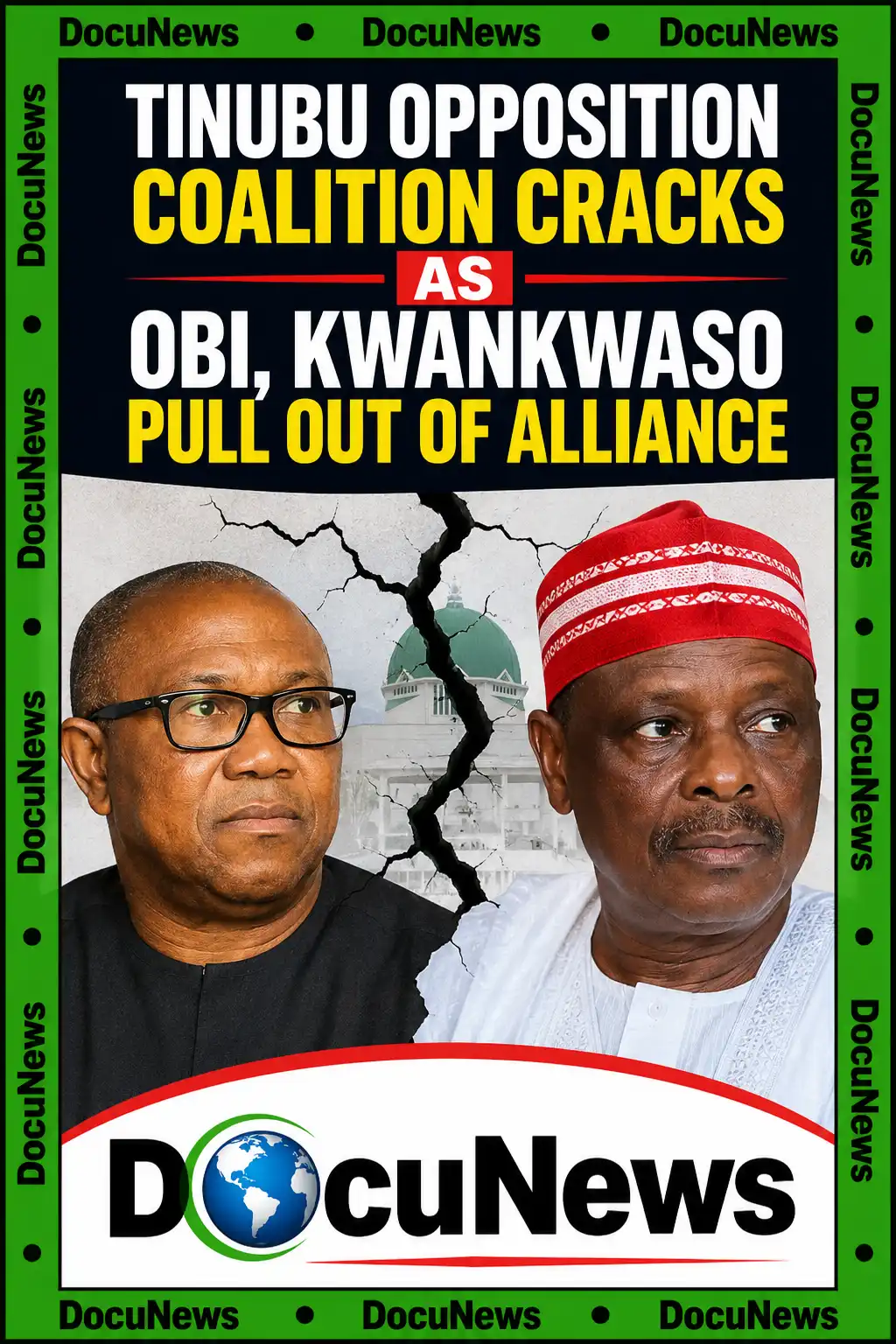
Tinubu Opposition Coalition Cracks as Obi, Kwankwaso Pull Out of Alliance

By Jonadab | May 6, 2026
Publisher: DocuNews Central
Tinubu Opposition Coalition Cracks as Obi, Kwankwaso Pull Out of Alliance. The proposed opposition coalition targeting President Bola Tinubu has suffered a major setback. Peter Obi and Rabiu Kwankwaso have withdrawn from the alliance. The development signals a deepening fracture within Nigeria’s opposition bloc.
Earlier talks had aimed to unite major political figures. However, disagreements over structure and leadership stalled progress. As a result, both camps decided to exit negotiations.
On May 6, 2026, in Abuja, the Federal Capital Territory, discussions collapsed after hours of closed-door meetings. The talks involved senior aides and political stakeholders. The outcome confirmed growing mistrust among coalition partners.
What Happened?
Negotiations broke down after both sides failed to agree on key terms. Leadership structure remained a major point of contention. While some members pushed for a rotational model, others insisted on a consensus candidate.
Moreover, internal disagreements widened during final deliberations. Sources confirmed that attempts to salvage the alliance failed. Consequently, Obi and Kwankwaso formally withdrew.
Also read Nigeria Targets Zero Gas Flaring as Energy Security Risks Persist in Niger Delta
Where Did It Happen?
The breakdown occurred in Abuja. Meetings took place at a private political venue within the capital. The location hosted multiple rounds of coalition talks in recent weeks.
Who Is Involved?
Key figures include Peter Obi, former presidential candidate of the Labour Party. Rabiu Kwankwaso, leader of the New Nigeria Peoples Party, also played a central role. Other stakeholders include opposition party leaders and political strategists.
President Bola Tinubu remains the central figure the coalition aimed to challenge. However, his position remains unaffected by the failed alliance. Political analysts note that the development strengthens his standing.
Leadership Disputes Deepen Crisis
Leadership disagreements triggered the coalition’s collapse. Obi’s camp demanded transparency in candidate selection. Meanwhile, Kwankwaso’s camp sought recognition of regional political strength.
As negotiations continued, both sides hardened their positions. Consequently, compromise became increasingly difficult. The talks eventually reached a deadlock.
Political Implications for 2027
The collapse raises concerns about opposition readiness for future elections. A united front had been seen as critical. However, fragmentation now threatens that strategy.
Political observers believe the opposition may struggle to consolidate support. Without unity, voter alignment could weaken. This situation may benefit the ruling party.
Reactions from Political Circles
Reactions have emerged across political circles. Some stakeholders expressed disappointment. Others described the collapse as inevitable.
Analysts argue that ideological differences contributed to the breakdown. Furthermore, personal ambitions also played a role. These factors combined to derail the coalition.
Attempts to Revive Talks
Efforts to revive discussions may continue. Some insiders believe reconciliation remains possible. However, no formal meetings have been scheduled.
Despite this, both camps have shifted focus. They are now strengthening their individual political platforms. This move suggests a prolonged separation.
Impact on Grassroots Support
The coalition’s collapse may affect grassroots mobilization. Supporters had anticipated a unified opposition. Now, uncertainty surrounds political direction.
Local party structures may face challenges. Coordination efforts could weaken. As a result, campaign strategies may require adjustments.
Regional Political Dynamics Shift
Regional dynamics could also change. Kwankwaso maintains strong influence in northern Nigeria. Meanwhile, Obi holds significant support in the southeast.
Without collaboration, regional voting patterns may remain divided. This division could shape future electoral outcomes. Analysts continue to monitor developments closely.
Historical Context of Coalition Failures
Nigeria has witnessed similar coalition challenges in the past. Previous alliances often collapsed due to internal disagreements. Leadership struggles frequently played a role.
This pattern appears to persist. The current situation reflects ongoing structural issues within opposition politics. Experts highlight the need for reforms.
Economic and Governance Considerations
The political shift may influence governance discussions. Opposition voices often contribute to policy debates. A fragmented opposition could reduce coordinated criticism.
Economic policy discourse may also shift. Analysts expect increased focus on individual party agendas. This could affect legislative engagement.
International Observers React
International observers are monitoring the situation. Political stability remains a key concern. Coalition breakdowns can influence investor confidence.
However, Nigeria’s democratic institutions remain intact. Observers emphasize the importance of political engagement. Developments will continue to attract global attention.
Future Outlook Remains Uncertain
The future of opposition collaboration remains uncertain. While new alliances may emerge, trust issues persist. Political actors may proceed cautiously.
For now, the coalition appears effectively dissolved. Attention has shifted to individual political strategies. The coming months will determine the next phase.
For more political updates, visit DocuNews Central and Independent National Electoral Commission.
