
Security
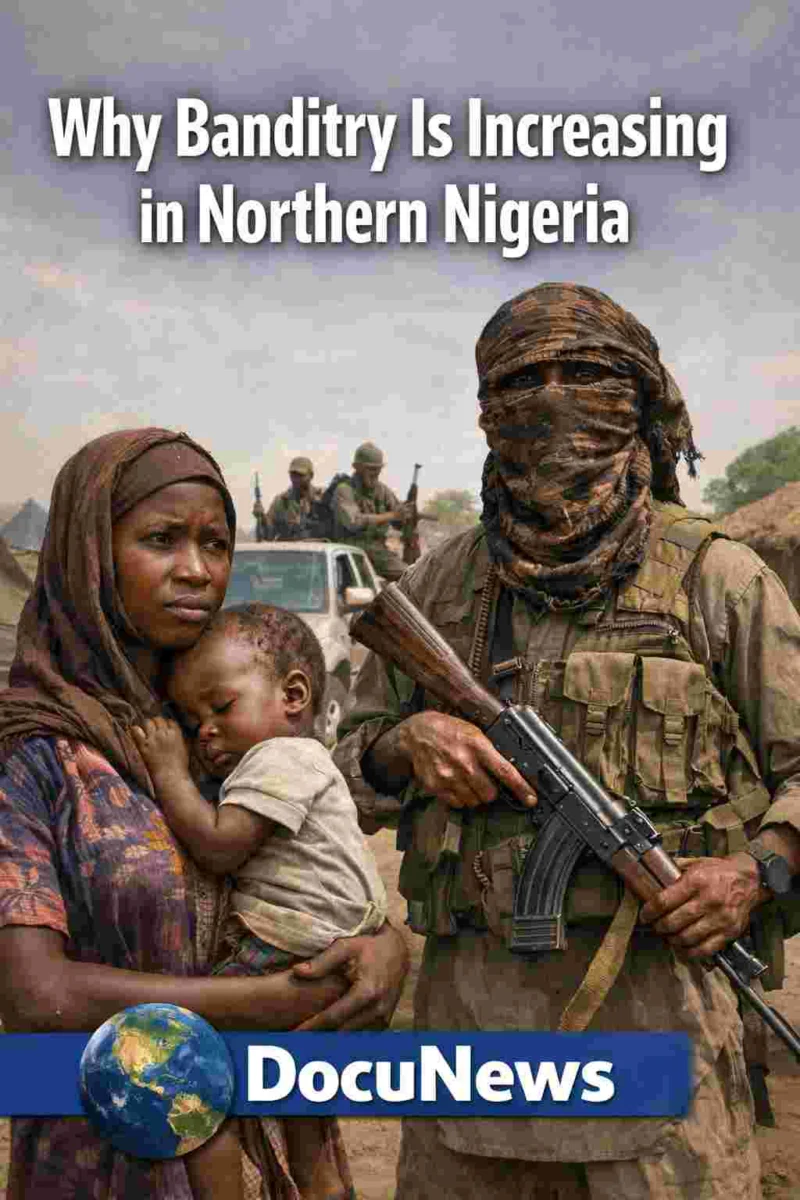
Why Banditry Is Increasing in Northern Nigeria

By Jonadab | April 6, 2026 | DocuNews Central
Banditry across Northern Nigeria continues to intensify, with repeated attacks affecting villages, highways, and farming communities. In recent years, armed groups have expanded their operations across several states, leaving residents exposed to kidnapping, displacement, and economic disruption. As a result, insecurity has become a persistent reality in many rural areas.
Security experts and local authorities increasingly link the rise in banditry to a combination of structural and immediate factors. While military operations have recorded some successes, the broader environment still enables criminal groups to regroup and launch fresh attacks. Consequently, the situation remains fluid and difficult to fully contain.
On March 18, 2026, armed bandits attacked communities in Zamfara State, forcing dozens of families to flee their homes. The incident occurred in the early hours of the morning, according to local sources. Officials later confirmed casualties and destruction of property, reflecting a pattern seen across the northwest region.
Also read Kaduna Attack: Why Bandits Are Winning the War
Definition and Evolution of Banditry
Banditry in Northern Nigeria refers to organized criminal activity involving armed groups that carry out kidnappings, cattle rustling, and violent raids. These groups operate primarily for financial gain rather than ideology. However, over time, their structure has evolved into coordinated networks capable of executing large-scale attacks.
Initially, banditry appeared as localized crime linked to cattle theft and rural disputes. However, it has gradually transformed into a broader security challenge affecting multiple states. Today, these groups often operate with advanced weapons and communication systems, allowing them to strike quickly and withdraw before security forces arrive.
Geographical Challenges and Ungoverned Spaces
The geography of Northern Nigeria plays a major role in sustaining banditry. Large forest reserves and remote rural landscapes stretch across Zamfara, Katsina, Kaduna, and Sokoto states. These areas remain difficult to monitor due to limited infrastructure and sparse security presence.
As a result, armed groups establish camps within these forests and use them as operational bases. The terrain provides natural cover, making surveillance and military operations more complex. In addition, poor road networks and communication gaps further delay emergency response efforts.
Economic Hardship and Youth Recruitment
Poverty and unemployment continue to drive recruitment into bandit groups. Many young people in affected regions lack access to stable income, education, or vocational opportunities. Consequently, criminal networks exploit this vulnerability by offering financial incentives.
At the same time, repeated attacks on farming communities reduce agricultural output. Farmers abandon their lands due to fear, leading to declining food production and rising local prices. This economic strain deepens hardship and increases the pool of individuals willing to join armed groups.
Porous Borders and Arms Proliferation
Northern Nigeria shares extensive borders with neighboring countries, particularly Niger Republic. These borders remain largely unregulated, allowing the movement of arms and fighters. As a result, bandit groups gain access to weapons that increase their operational strength.
Security analysts note that the spread of small arms has significantly escalated the scale of violence. Armed groups now carry out coordinated attacks using firearms that were previously less accessible. This shift has made confrontations more dangerous for both civilians and security personnel.
Weak Security Infrastructure
Limited security presence in rural areas continues to challenge efforts to curb banditry. Police units often operate with inadequate resources, while military deployments cover vast territories. Consequently, response times to attacks can be delayed.
In some communities, residents rely on vigilante groups for protection. Although these groups provide immediate support, they lack formal training and coordination. This situation reflects broader gaps in national security infrastructure.
Social Tensions and Resource Conflicts
Long-standing disputes between farming and herding communities also contribute to instability. Competition over land and water resources often leads to clashes. Over time, these tensions create opportunities for criminal groups to exploit divisions.
Additionally, environmental changes, including desertification, increase pressure on available resources. As herders move in search of grazing land, conflicts intensify. These dynamics add another layer to the growing insecurity in the region.
Humanitarian Impact on Communities
The impact of banditry on civilians remains severe. Thousands of people have been displaced from their homes, while many others live under constant threat. Families lose livelihoods as farms, markets, and local businesses shut down.
Kidnapping for ransom has become a common tactic. Schools, travelers, and rural residents are frequent targets. These incidents disrupt education and movement, creating long-term social consequences.
Government Response and Ongoing Efforts
The Nigerian government continues to deploy military operations aimed at dismantling bandit camps. Authorities also implement surveillance measures and collaborate with local communities. However, challenges persist due to the scale of the problem.
Experts recommend a comprehensive approach that combines security operations with economic development. Investment in education, job creation, and infrastructure may reduce the conditions that enable banditry. Stronger border control and intelligence sharing are also critical.
Conclusion
The increase in banditry across Northern Nigeria reflects a complex mix of economic, geographic, and institutional factors. No single solution can address the crisis in isolation. Instead, coordinated efforts across multiple sectors are required.
Without sustained intervention, the situation may continue to evolve. Therefore, long-term strategies must focus on both security and development. This balanced approach offers the best chance of restoring stability in affected communities.
For Security Updates Visit Security updates Nigeria, Legit.ng
